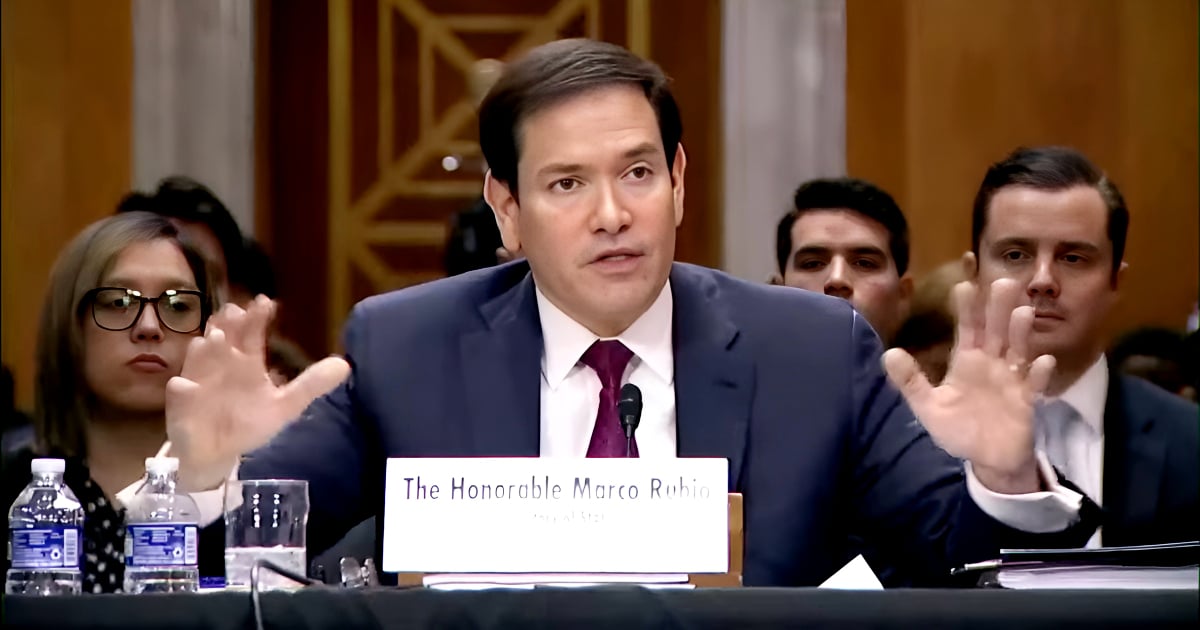
On Wednesday, U.S. Secretary of State Marco Rubio drew parallels between the political rebuilding process in Venezuela and Spain's democratic transition following the death of dictator Francisco Franco. Rubio suggested that Spain's model could provide a blueprint for Venezuela in the aftermath of Nicolás Maduro's regime.
Speaking before the Senate Foreign Relations Committee, Rubio emphasized that historical precedents illustrate the possibility of shifting from an autocratic regime to a democratic system, albeit with patience and time. He cited Spain and Paraguay as historical examples where gradual reforms returned power to civil institutions and the will of the people.
"There are precedents. I can cite several examples, like Spain or Paraguay, places where there was a transition from autocratic rule to democracy, and it took time," Rubio stated during the hearing.
While Rubio acknowledged the inability to provide an exact timeline for Venezuela's transition, he asserted that the process "cannot last indefinitely." He projected that within a three to six-month period, significant progress should be observed towards political and economic normalization.
"I will probably be able to give a better response once we have personnel on the ground, such as our ambassador," Rubio mentioned, hinting at the upcoming formal reestablishment of the U.S. diplomatic mission in Caracas.
Rubio highlighted a "real opportunity for change" in Venezuela for the first time in over a decade. He stressed the importance of engaging in dialogue with interim President Delcy Rodríguez while working directly with civil society and local authorities to ensure a stable and inclusive transition.
The Secretary of State reiterated the Trump administration's goal of fostering a "democratic, prosperous, and allied Venezuela." However, he cautioned that Washington is prepared to implement additional pressure tactics, including the potential use of force, if the interim government fails to fully cooperate with the transition process.
By referencing Spain, known for one of the most successful transitions of the 20th century, Rubio aims to provide historical legitimacy to Venezuela's uncertain transition, complicated by the legacy of Chavismo, Cuban involvement, and new conditions set by the United States.
Understanding Venezuela's Transition Process
Why did Marco Rubio refer to Spain's transition?
Marco Rubio used Spain's transition as a historical precedent to illustrate that a shift from an autocratic regime to a democracy is feasible, providing a framework for Venezuela's potential political rebuilding.
What are the expected outcomes for Venezuela's transition?
The expected outcomes include significant political and economic advancements within three to six months, aiming for a democratic, prosperous, and allied Venezuela as envisioned by the U.S. administration.