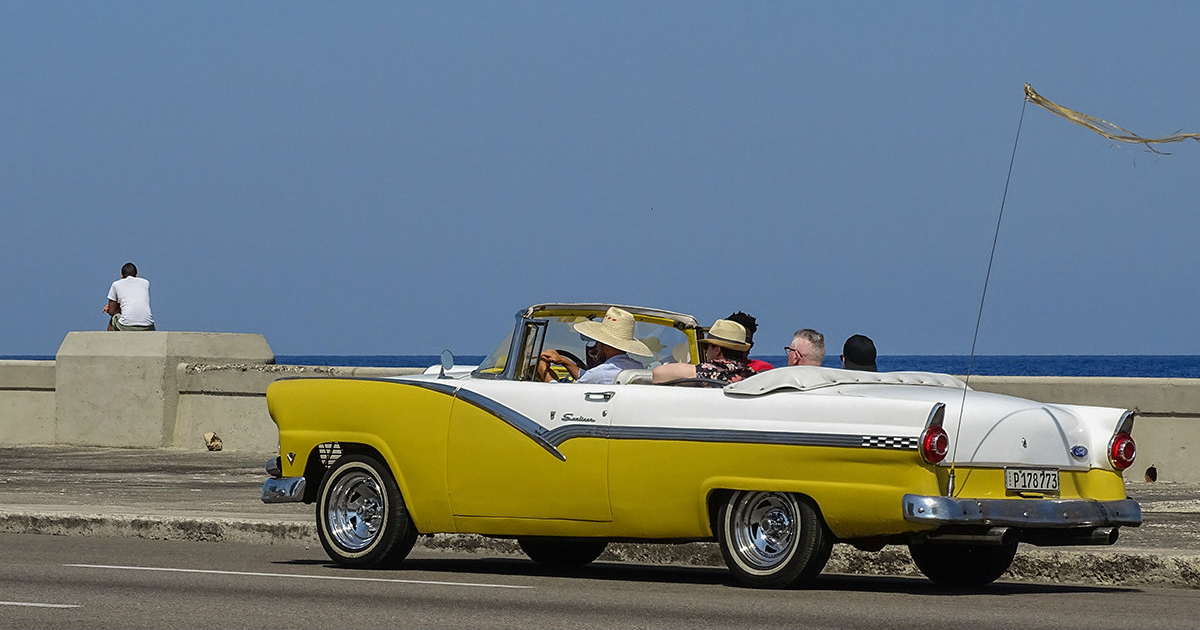
As the clock strikes noon, a small group of tourists disembark from a bright yellow minibus along Havana’s iconic Malecón. They eagerly dash towards a lineup of gleaming classic cars, eager to capture the moment with some photographs.
While the drivers, hopeful for their first fare of the day, rise in anticipation, their optimism quickly fades. The visitors snap a few selfies and depart without taking a ride.
According to a report by the Associated Press (AP), this scene plays out repeatedly in Cuba’s capital, which has witnessed a dramatic drop in tourism—down by more than half since 2018. This decline is threatening the livelihoods of countless Cubans who rely on the tourism industry.
The crisis is further exacerbated by power outages, fuel shortages, and the dwindling oil shipments from Venezuela following the U.S. military operation that toppled Nicolás Maduro. As a result, Havana finds itself nearly devoid of its usual tourist influx.
“Things are really bad; we're just waiting for tourists to come so we can work,” laments Reymundo Aldama, the driver of a pink 1957 Ford Fairlane.
He explains that in the past, he worked until nine at night, but now he spends the entire day without a single customer.
The lack of demand has driven down tour prices from $50 to $25, and even to $20 if tourists are persistent in negotiating.
Impact on Street Vendors
The tourism slump has also hit street vendors hard, like 30-year-old Rosbel Figueredo, who makes ends meet by selling fried dough with sugar.
Previously, he could sell 150 bags a day; now, he struggles to carry 50 and often returns home with unsold goods.
“I’m trained as an industrial technician, but now I sell sweets to make a living,” he says, worried about supporting his partner and three children.
Tourism Numbers Plummet
Official statistics highlight the severity of the decline. Between January and November 2025, only 2.3 million tourists visited Cuba, compared to 4.8 million in 2018, AP noted.
Restrictions imposed by President Donald Trump on travel and cruises to the island, along with tightened sanctions that cost the Cuban regime nearly $8 billion between March 2024 and February 2025, have shut off one of the few remaining sources of foreign currency that kept the economy afloat.
Gaspar Biart, a tourist bus driver, recalls a time not long ago when eight double-decker buses crisscrossed the city thrice daily, full of passengers.
Now, only four buses operate, often nearly empty: “What we lack are clients. Tourism drives the economy, and without it, there is no country,” he summarizes.
Havana's Decline Evident
The scene along the Malecón mirrors the broader decline. Restaurants sit empty, tables dressed in tablecloths flapping in the breeze, while employees gaze hopelessly at the horizon.
In the most touristy neighborhoods, trash piles up, water is scarce, and blackouts grow increasingly frequent.
Despite this, some visitors still come out of curiosity. Vincent Seigi from Russia, seated near El Morro Castle, came expecting chaos but was taken aback by the lack of connectivity and the time-warped atmosphere.
“It’s like time stands still here,” he observes.
With the Venezuelan crisis and the fall of its primary ally, many in Cuba wonder if Russia or China will step in as economic benefactors.
For now, support is limited to political statements, while tourism—the economic engine for decades—sinks amid shortages, sanctions, and bleak prospects.
In a quiet Havana, colorful classic cars wait in vain for customers who never arrive. And with fuel becoming scarcer, many drivers know it won't be long before they can’t even start their engines.
FAQs on Cuba's Tourism Crisis
Why has tourism declined so significantly in Cuba?
Tourism in Cuba has plummeted due to a combination of factors, including U.S. travel restrictions, economic sanctions, power outages, and a decrease in oil shipments from Venezuela.
How are classic car drivers affected by the tourism downturn?
Classic car drivers are struggling to find customers, leading to a significant reduction in fares, dropping from $50 to as low as $20 in some cases.
What other sectors are impacted by the decline in tourism?
Besides classic car drivers, street vendors and restaurant workers are also heavily impacted, facing reduced sales and increased economic hardship.