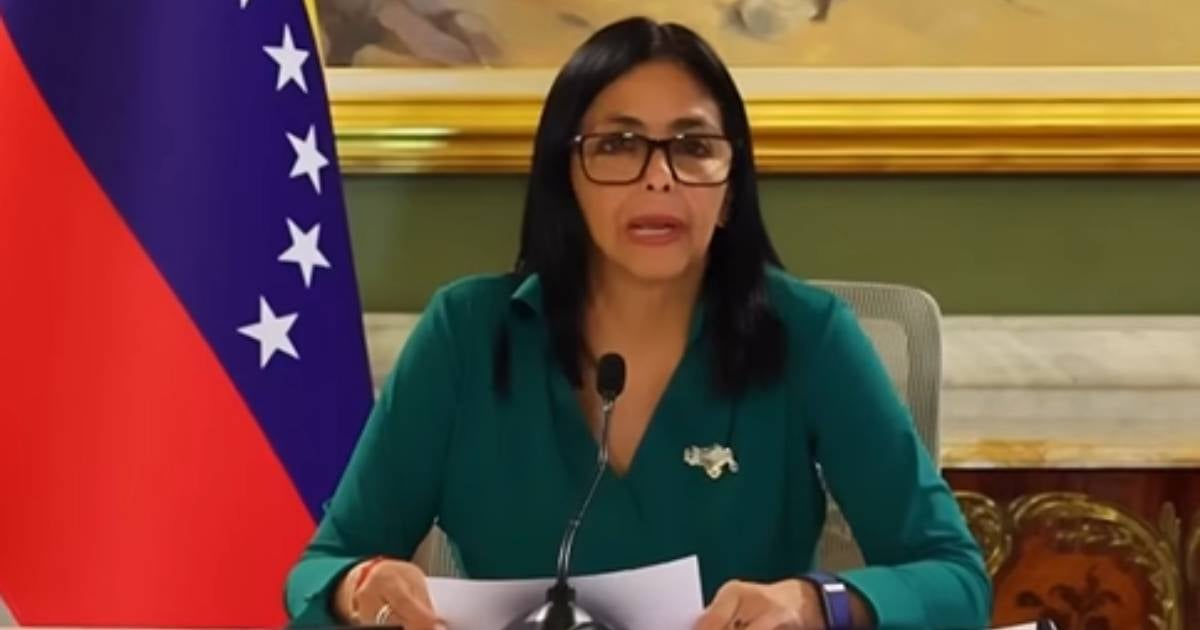
Recent evaluations by the Central Intelligence Agency (CIA) have raised doubts about whether Venezuela's interim president, Delcy Rodríguez, is willing to fully comply with the demands of the Trump administration, particularly in terms of severing relationships with the key international allies of the ousted Nicolás Maduro.
According to four sources cited by Reuters, the intelligence reports are inconclusive regarding Rodríguez's willingness to follow the U.S. directive to cut ties with nations like Iran, China, and Russia, as well as with Cuba, which has historically been the strongest political and military supporter of the Chavista regime.
The report highlights that Rodríguez, whose swearing-in ceremony was attended by representatives from these countries, has not publicly announced the expulsion of diplomats or foreign advisors associated with these governments, despite pressure from Washington.
As per the sources consulted, CIA Director John Ratcliffe traveled to Caracas on January 15 to meet with Rodríguez and discuss the country's political future, although internal reports do not clarify if this meeting altered the intelligence community's perspective.
U.S. officials consulted by Reuters expressed that President Trump continues to execute his "maximum pressure" strategy on Venezuela and expects complete cooperation from the interim government.
"The president continues to exert maximum influence over Venezuelan leadership and expects such cooperation to persist," stated a senior administration official who requested anonymity.
Reports indicate that the White House is urging Rodríguez to decisively break ties with the regimes in Tehran, Moscow, and Beijing, which could pave the way for new U.S. investments in Venezuela's energy sector.
However, analysts warn that maintaining Maduro's close associates in power remains a risk to Washington's credibility and political control during the transition.
Since assuming the interim presidency following Maduro's capture, Rodríguez has taken conciliatory actions, including the release of political prisoners and authorizing the sale of 30 to 50 million barrels of oil to the United States.
Despite these measures, in a recent speech, she expressed frustration with American interventions, though she assured that she maintains "respectful" communication with the Trump administration.
State Department sources confirmed to Reuters that the U.S. currently has no plans to replace Rodríguez, although it is engaging in parallel discussions with Venezuelan military leaders in case of a shift in direction. Within the White House, some advisors have mentioned opposition leader María Corina Machado as a potential long-term leader for the country.
The tensions between Caracas and Washington unfold as the interim president announced on Tuesday the unblocking of Venezuelan assets in the United States, following dialogues with President Donald Trump and Secretary of State Marco Rubio.
Simultaneously, the State Department notified Congress of its intention to move forward with reopening the U.S. embassy in Caracas. Marco Rubio publicly warned that Washington "is prepared to use force" if the Venezuelan government does not cooperate with U.S. objectives.
U.S.-Venezuela Relations and Future Implications
Will Delcy Rodríguez cut ties with Iran, China, and Russia?
The intelligence reports are inconclusive, and Rodríguez has not publicly committed to severing these relationships despite U.S. pressure.
What actions has Delcy Rodríguez taken since becoming interim president?
Rodríguez has adopted conciliatory measures, such as releasing political prisoners and permitting oil sales to the U.S.
What is the U.S. strategy towards Venezuela under Trump?
President Trump maintains a strategy of "maximum pressure" on Venezuela, seeking full cooperation from its interim government.