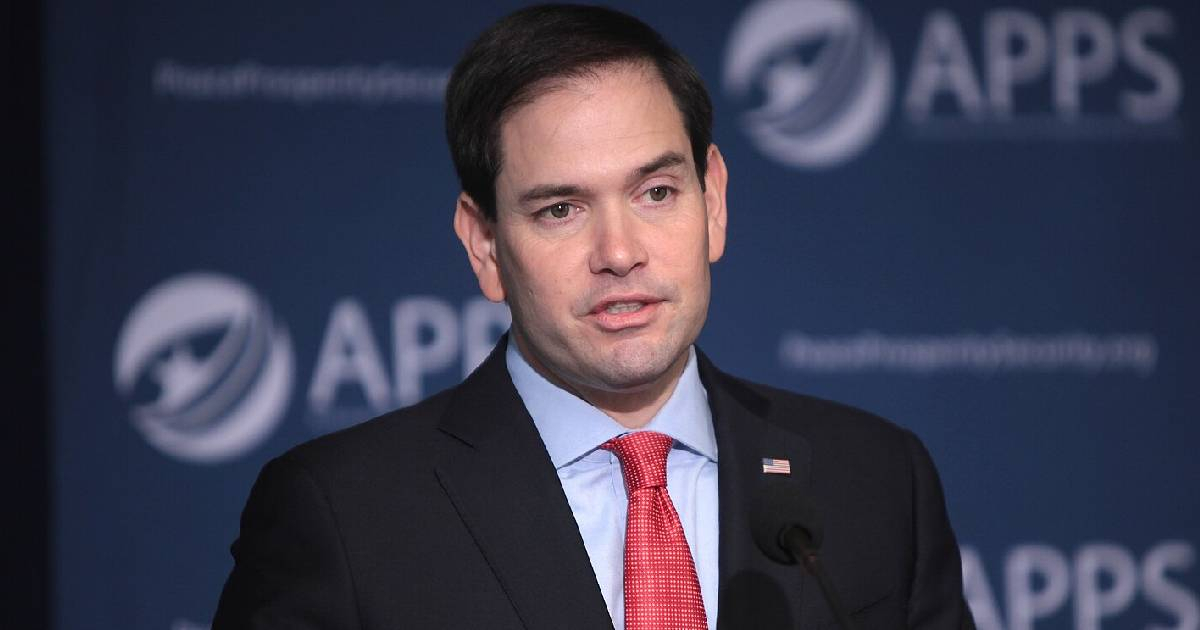
On Tuesday, U.S. Secretary of State Marco Rubio issued a stern warning to Venezuela's interim leader, Delcy Rodríguez, stating she could face a fate similar to that of the ousted Nicolás Maduro if she fails to meet Washington's demands.
Speaking at a Senate Foreign Relations Committee hearing, Rubio emphasized that the Trump administration is "ready to employ military force" to ensure full cooperation from Venezuelan authorities if diplomatic efforts prove ineffective, as reported by AFP.
"Delcy Rodríguez is well aware of Maduro's fate," Rubio stated, referencing the former president's capture by U.S. special forces on January 3.
"Make no mistake: as the president has stated, we are prepared to use force to ensure maximum cooperation if other measures fail," reiterated the Cuban-American politician.
Rubio praised the military operation in Caracas, describing it as an "unprecedented success," highlighting that Maduro and his wife, Cilia Flores, were apprehended without U.S. casualties or military occupation.
"History offers few examples of achieving such significant outcomes at such low cost," he noted.
The senator justified the military action, labeling Maduro as "an accused drug trafficker, not a legitimate head of state," while acknowledging the operation resulted in over 100 Venezuelan and Cuban casualties, according to Venezuelan government statistics.
According to Reuters, U.S. intelligence agencies have expressed skepticism about Delcy Rodríguez's willingness to cooperate with Washington. Four sources cited by the outlet mentioned that recent reports are inconclusive regarding the interim president's intent to formally sever ties with the deposed regime's international allies, including Iran, China, Russia, and Cuba.
Despite Rodríguez's inauguration being attended by representatives from these nations, she has not publicly announced any measures to expel their diplomats or advisors.
However, the CIA maintains direct communication with Caracas. Its director, John Ratcliffe, traveled to Venezuela on January 15 to discuss the country's political future, though Reuters could not verify if that meeting influenced the agencies' assessment.
Trump administration officials argue that Washington should maintain "maximum pressure" on Venezuela and use the transition period to reorient the country's international relationships.
"President Trump continues to exert maximum influence over Venezuelan leaders and expects that cooperation to persist," stated a high-ranking official under anonymity.
Sources cited by Reuters noted that the U.S. government is urging Rodríguez to distance Venezuela from its former allies, which could open doors to increased American investments in the oil sector.
However, they acknowledge that retaining figures loyal to Maduro poses risks and contradictions within the overall strategy.
Since assuming power, Rodríguez has taken steps to partially align with Washington, such as releasing political prisoners and authorizing the sale of 30 to 50 million barrels of crude oil to the United States.
Nonetheless, in a recent speech, she expressed frustration with U.S. interventions, although she maintained that she has a "respectful communication" with Trump administration officials.
Currently, Washington does not plan an immediate replacement for Rodríguez, though it remains in touch with high-ranking Venezuelan military officials as a potential alternative, according to Reuters.
Within the internal debate, some White House advisors have mentioned opposition leader María Corina Machado as a "long-term" leader prospect for the country, according to sources consulted by Reuters.
Meanwhile, Rubio reiterated to the Senate that the White House "will not negotiate with drug traffickers or enemies of freedom," asserting that Venezuela "will be free and prosperous under a government that fully cooperates with the United States."
Rubio's statements come as the United States considers reopening its embassy in Caracas and formally reestablishing diplomatic relations with Venezuela's interim government.
In parallel, interim President Delcy Rodríguez announced the unblocking of Venezuelan assets in U.S. banks, attributing this to dialogues held with President Donald Trump and the Secretary of State himself.
Questions on U.S.-Venezuela Relations
What was Marco Rubio's warning to Delcy Rodríguez?
Marco Rubio warned Delcy Rodríguez that she might face a similar fate to Nicolás Maduro if she doesn't comply with U.S. demands, indicating that the Trump administration is prepared to use military force if necessary.
What is the U.S. strategy towards Venezuela's interim government?
The U.S. strategy involves maintaining maximum pressure on Venezuela to reorient its international relationships, encouraging the interim government to distance itself from former allies like Iran, China, Russia, and Cuba.
How has Delcy Rodríguez aligned with Washington?
Delcy Rodríguez has taken steps such as releasing political prisoners and authorizing crude oil sales to the United States to partially align with Washington.