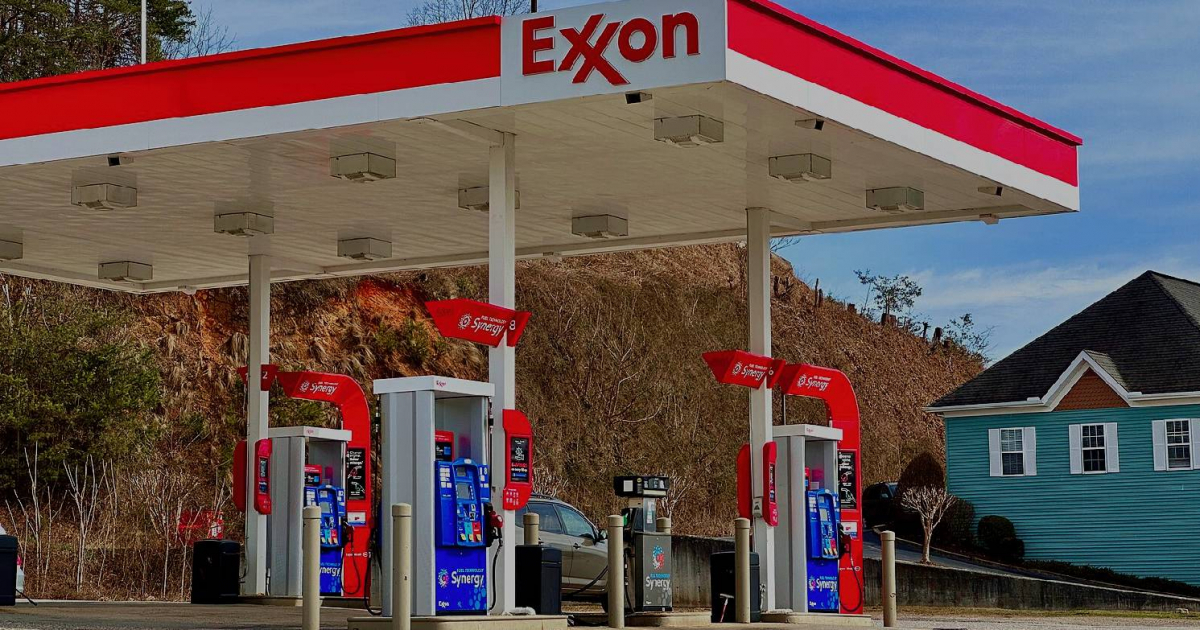
The ongoing legal struggle over properties seized following the Cuban Revolution is once again at the forefront of the U.S. judicial system. The administration of Donald Trump has officially decided to support ExxonMobil in its Supreme Court case, seeking compensation for oil assets expropriated in Cuba over sixty years ago. This decision could significantly influence the future enforcement of the Helms-Burton Act.
The Supreme Court has permitted the Department of Justice to share argument time with the oil company during the hearing scheduled for February 23, in the case of Exxon v. Corporación Cimex. According to a report by E&E News by POLITICO, this move highlights the political interest surrounding the litigation.
Exxon is demanding approximately $70 million, based on 1960 prices, for gas stations and oil refineries once owned by its Panamanian subsidiary, Esso Standard Oil, which were nationalized by the Fidel Castro government in 1960. The company argues that Cuban state entities such as CUPET and the military conglomerate CIMEX are directly accountable for these losses.
The legal confrontation hinges on the Foreign Sovereign Immunities Act, which typically prevents states from being sued in foreign courts, except under very specific conditions.
In 2024, a Washington appeals court ruled that Exxon did not meet these conditions. However, instead of backing down, the oil giant elevated the case to the Supreme Court, requesting the complete removal of Cuba's state immunity, asserting that Title III of the Helms-Burton Act permits such action.
The Trump administration endorses this view. In an amicus curiae brief, the government argued that sovereign immunity places "undue burdens" on plaintiffs and that the Helms-Burton Act alone should suffice to allow claims to proceed.
The Attorney General defended the stance as a matter of "paramount foreign policy interests," referencing a January 2025 presidential memo on tightening Cuba policy.
Nonetheless, legal experts acknowledge contradictions in this approach. Even if Exxon secures a favorable ruling, the question remains on how it would be enforced, given Cuba's lack of significant assets in the United States. "You've got your Helms-Burton judgment, where are you going to enforce it?" questioned Robert Muse, a lawyer specializing in Cuba-related litigation.
Exxon's case is not isolated. Other lawsuits initiated by American companies are proceeding simultaneously, such as Havana Docks Corporation against several cruise lines for using Havana docks between 2016 and 2019. Both cases will be heard on the same day by the Supreme Court, an unusual occurrence for a law that, over nearly three decades, has resulted in few effective rulings.
For many analysts, these legal actions are part of a broader strategy that combines economic pressure, political lobbying, and U.S. courts to lay the groundwork for a potential regime change in Cuba.
ExxonMobil's Legal Battle and the Helms-Burton Act
What is ExxonMobil seeking in the Supreme Court case?
ExxonMobil is seeking approximately $70 million in compensation for oil assets that were expropriated in Cuba over sixty years ago.
How does the Helms-Burton Act relate to the case?
The Helms-Burton Act is central to the case as ExxonMobil argues that Title III of the Act allows for the removal of Cuba's state immunity, enabling claims for compensation to proceed.
Why is the Trump administration involved in this case?
The Trump administration is involved because it supports the interpretation that sovereign immunity should not prevent claims under the Helms-Burton Act, viewing it as a matter of significant foreign policy interest.