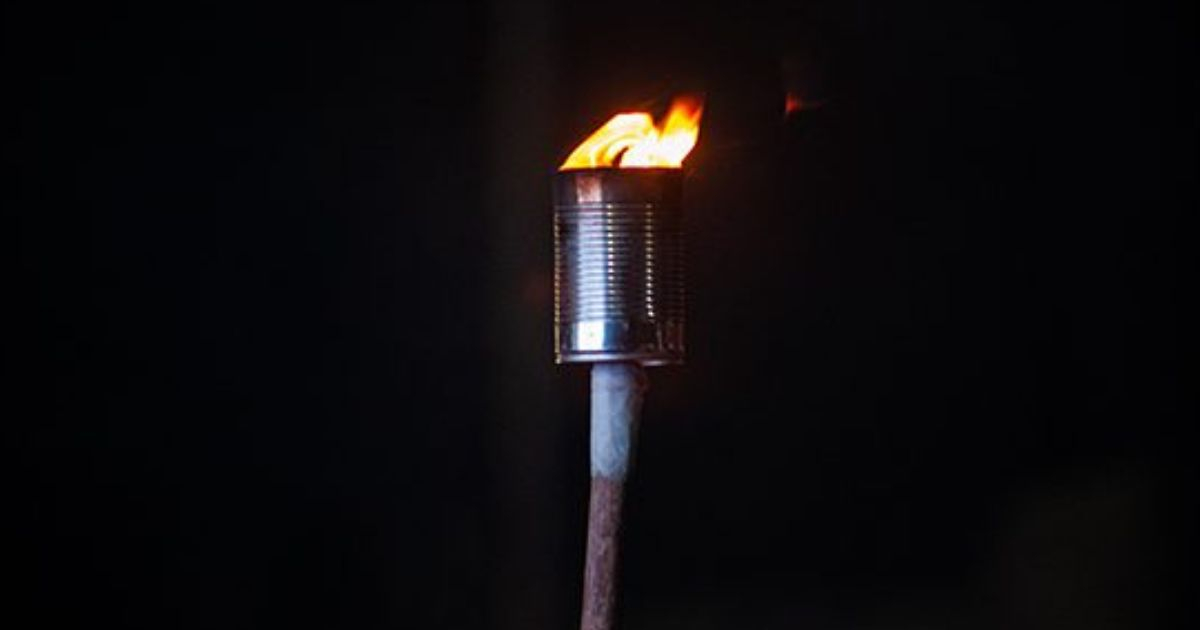
Every January 27th, on the eve of José Martí's birthday, the Cuban regime reveals its true priorities. This year, once again, it calls upon the citizens to participate in a torchlight parade, even as much of the country remains engulfed in darkness.
In Havana, power outages have extended beyond 15 hours, with some provinces experiencing over 30 hours without electricity. This stark reality paints a picture more telling than any official rhetoric, showcasing the stark contrast between regime propaganda and the everyday struggles Cubans face.
The pro-government outlet Cubadebate announced the official call for the March of the Torches in the capital, set for January 27th, under the theme “Centennial Anti-Imperialist Torch.”
The state-run media claims the event will feature the younger generations who “pay homage to national history” during the year marking the centennial of Fidel Castro's birth.
Student organization representatives are set to reaffirm their “commitment” to honor National Hero José Martí on the 173rd anniversary of his birth, emphasizing the “historical continuity” of the revolutionary process.
Leader Miguel Díaz-Canel took to social media, stating: “As we did 73 years ago, we will light torches on the eve of José Martí's birthday, the Apostle of Cuban independence and anti-imperialism. Tonight, we march united by another inspiration: Fidel's Centennial, from the University where he became a revolutionary.”
Official channels echoed similar sentiments, with spokesperson Gerardo Nordelo declaring: “See you tonight!”
Nonetheless, the call to march has sparked criticism among Cubans, who question the regime's priorities amidst a national energy crisis.
Elizabeth González Aznar remarked, “If this march could give rise to a new centennial generation inspired by Martí's values, it would be worth it. Sadly, today’s reality does not allow for a generation to rise up for freedom and speak the truth fearlessly.”
Nelson Garrido sarcastically asked, “Is there fuel for that?” while Carlos Andino added, “It will be the most beautiful parade ever, seen clearly when all of Havana is in a blackout.”
Others, like Âustín Quevedo and Beatriz Estupiñán, criticized the disparity between government narratives and the ongoing crisis.
Quevedo lamented, “So much marching and yet the people remain without food, without electricity, without medicine—it’s an insult.” Estupiñán suggested, “Why not call it the blackout parade?”
Danny Roque humorously advised, “Bring rechargeable flashlights instead of torches,” while Abel A. Castro questioned, “Where did the fuel come from to mobilize people?”
China Sotolongo Tunón jested, “Oh, so that's why there are blackouts—to save fuel for the torches,” and Yusmel R. Padrón summed up the sentiments of many: “If Martí saw what they've done to Cuba…”
Insights on Cuba's Torchlight Parade Amidst Energy Crisis
Why does the Cuban regime organize a torchlight parade on January 27th?
The torchlight parade is organized annually on January 27th to commemorate the eve of José Martí's birthday, and it serves as a symbolic gesture of homage to the national hero and Cuban revolutionary ideals.
What criticisms has the torchlight parade faced this year?
The parade has been criticized for prioritizing a symbolic event over addressing the severe energy crisis, as many regions suffer prolonged blackouts while resources are seemingly allocated for the parade.