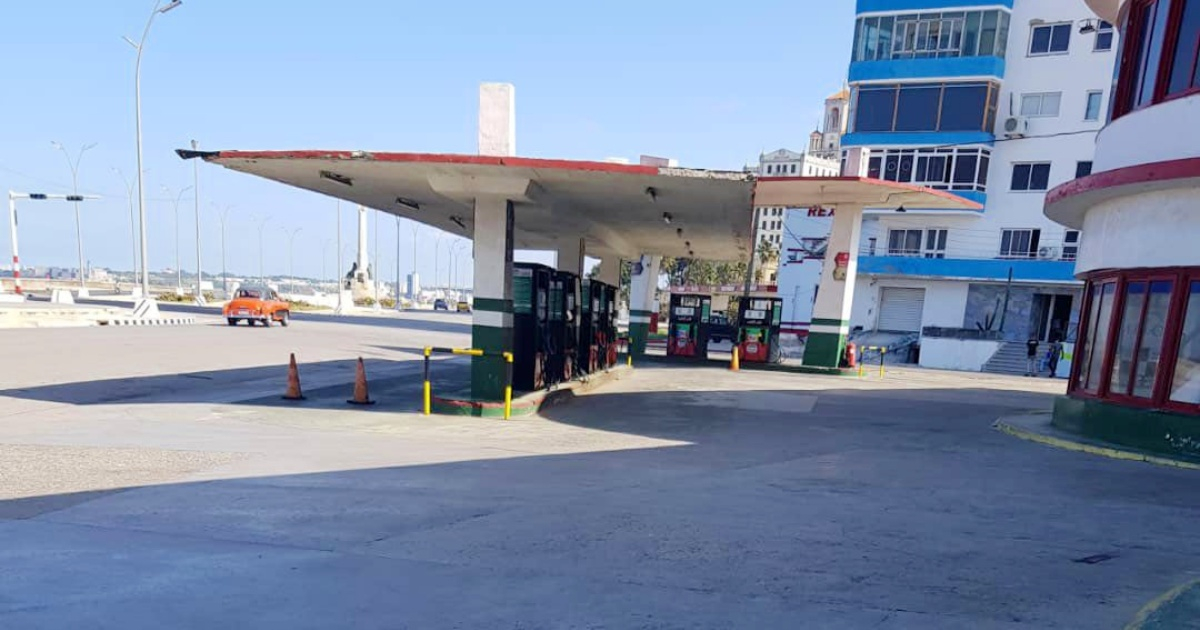
Cuba is grappling with yet another fuel crisis, one that hits harder than its predecessors. The ongoing instability in supply is now compounded by the loss of one of its crucial energy sources—Venezuelan oil.
The disruption in oil shipments from Caracas has triggered a series of visible repercussions across the nation: closed gas stations, long lines, and exorbitant prices on the black market.
"Those who have it, sell it at any price they want," summarized an activist interviewed by Martí Noticias.
This statement encapsulates the essence of the underground market, which has become the sole option for many Cubans.
Unregulated Market: Gas Prices Skyrocket to 1,500 Pesos
The scarcity has forced people to turn to the black market, where prices have skyrocketed to unimaginable levels just months ago.
In areas like Quivicán and Santiago de las Vegas, a liter of gasoline ranges from 700 to 900 pesos; in San Antonio de los Baños, it's about 1,000 pesos, while in Camagüey, prices have soared to between 1,300 and 1,500 pesos.
"There's no gasoline in Havana, not even in 'Americano' (dollars)," complain drivers and residents.
Even those who had prioritized allocations, such as users with power generators, are not receiving fuel.
A mother shared that she had to purchase two liters for 1,500 pesos just to cook due to power outages. "I couldn’t buy more because the situation here doesn’t allow it," she explained.
The urgency surpasses economic logic, highlighting the severity of the shortage.
Long Lines and Fear of Total Depletion
In provinces like Camagüey, according to Cuba Herald, the crisis manifests in mile-long queues starting at dawn.
Private drivers and transport operators keep vigil for hours, uncertain about availability or schedules.
Tension is heightened by the lack of official information and unpredictability in distribution.
"The lines are no longer just to wait for the tanker truck. Now they are out of fear. People come to stock up for fear of running out," a Havana driver reported.
What were once “phantom lines” are now scenes of collective anxiety.
This situation has forced many to limit their travels, reduce services, and, in some cases, store fuel at home, reviving practices from the Special Period.
Energy Blow After Maduro's Fall
The arrest of dictator Nicolás Maduro and his wife on January 3, during a U.S. military operation, marked the sudden end of one of Cuba's main supporters.
In recent quarters, Venezuela had been supplying Cuba with 32,000 to 35,000 barrels of crude oil daily, crucial for sustaining transportation, industry, and especially electricity generation.
"If they lose those 35,000 barrels from Venezuela, it’s basically a major collapse. It’s the collapse of the Cuban economy," warned Jorge Piñón, director of the Latin America and Caribbean Energy Program at the University of Texas.
As reported by EFE, “in 2025, Venezuelan oil covered about 30% of Cuba’s energy needs.”
This loss is a structural blow that the Cuban state can hardly offset through other means, especially amid the simultaneous reduction of shipments from Mexico and chronic currency shortages.
The decline of Venezuelan oil not only leaves cars without gasoline but homes without power, hospitals, factories, and schools without activity. The impact multiplies.
Gasoline in Dollars, Salaries in Pesos
One of the most aggravating factors is the inequality imposed by the partial dollarization of the economy. While stations selling in the national currency remain closed, those dealing in foreign currency are prioritized. The paradox is stark: most Cubans do not earn dollars.
“They haven’t supplied more in the national currency, so you have to buy in foreign currency. You well know that no one here earns in dollars,” declared a citizen who had been waiting four hours to fill his tank.
This gap drives many to resort to the black market or exchange their scarce pesos for dollars at astronomical rates, exacerbating inflation and general impoverishment.
A Warning of a Greater Storm
Economist Miguel Alejandro Hayes warned that cutting Venezuelan oil could translate into a 27% drop in Cuba’s GDP, a 75% increase in transportation costs, and a 60% food price surge. This in a country already struggling with negative figures in these indicators.
Furthermore, international reports indicate that the United States might consider completely blocking oil imports to Cuba, and Mexico is also contemplating revising its shipments. This leaves the island in an energy crossroads with few exits.
Understanding Cuba's Fuel Crisis
What caused the current fuel crisis in Cuba?
The fuel crisis in Cuba is primarily due to the suspension of Venezuelan oil shipments, compounded by the country's long-standing issues with energy supply.
How has the crisis affected Cuban citizens?
The crisis has led to closed gas stations, long lines, and inflated prices on the black market, forcing citizens to resort to alternative and often costly measures for fuel.
What are the potential economic impacts of the oil shortage?
Economists predict a significant drop in GDP, increased transportation costs, and a rise in food prices, further straining Cuba's already struggling economy.