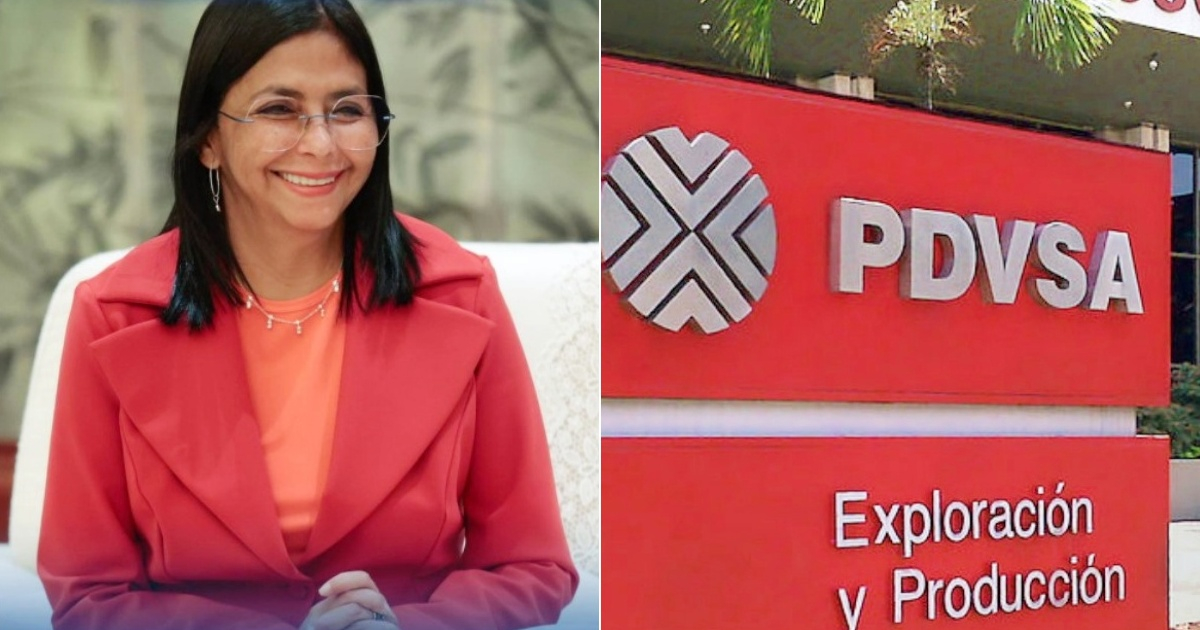
Venezuela's acting President, Delcy Rodríguez, has exuberantly revealed that the South American nation is planning a $1.4 billion investment in its oil sector by 2026, a notable increase from the nearly $900 million allocated in 2025.
This announcement was made during a public consultation regarding the reform of the Organic Hydrocarbons Law, which is currently under discussion in the country's National Assembly.
"Last year, the investment was almost $900 million, and this year we are estimating and projecting an investment of $1.4 billion," Rodríguez declared during the event, which was broadcast on the state-run channel Venezolana de Televisión (VTV).
Governmental Push for Energy Development
The planned investment is part of a renewed governmental push to enhance the country's energy development. This initiative is supported by contractual mechanisms introduced by the controversial Anti-Blockade Law, which was enacted in 2020 to circumvent international economic sanctions.
Strategic Contracts and Partnerships
Rodríguez underscored the pivotal role of Productive Participation Contracts (PPCs) in the strategy to recover and expand the sector, seeing them as an effective means to boost production and attract capital.
Venezuela currently holds 29 active productive participation contracts, which operate alongside joint ventures and technical-financial alliances.
While not delving into the technical specifics of these mechanisms, Rodríguez emphasized that they are part of a legal and economic framework aimed at bypassing sanctions and revitalizing the nation’s primary industry.
"We must transition from being the country with the largest oil reserves on the planet to becoming a giant producer. Enough of just holding the title of having the largest reserves without translating it into development for Venezuela," Rodríguez stated, urging a more practical view of the country's oil wealth.
Petrochemical Reform: Consultations and Political Dynamics
The proposed reform of the Organic Hydrocarbons Law has passed its first parliamentary discussion and now awaits a second round of voting, which will evaluate each article individually, allowing for amendments to the final text.
As part of these public consultations, Rodríguez engaged with workers at the Puerto La Cruz refinery in Anzoátegui state. Her brother, Jorge Rodríguez, president of the National Assembly, also participated in similar consultations with other sectors the previous Saturday.
This petroleum reform comes amid significant political maneuvers, both domestically and internationally. The capture of Nicolás Maduro and Cilia Flores in Caracas on January 3 has altered relations with the United States, where the Trump administration has shown interest in controlling Venezuela's oil destiny.
Chevron's Role in Venezuela's Energy Future
A highlight of the event was the participation of Mariano Vela, a representative from the American company Chevron in Venezuela. Vela confirmed the company's commitment to the country's new phase of reforms and energy revitalization.
"We are ready to continue contributing our expertise in managing operations with technological innovation, hard work, and the goal of creating a more competitive oil and gas sector," declared the executive.
Chevron, a key player in Venezuela's national industry for over a century, has maintained limited operations despite recent sanctions. Its renewed presence could pave the way for easing commercial and technical relations with Washington if the reform process solidifies.
Vela also expressed gratitude towards the Parliamentary Energy and Oil Commission, which coordinates consultations and evaluates proposals for legal reform. He stressed the company's ongoing focus on the safety of its personnel and the integrity of its assets.
"Our focus remains on the safety of our people, which is unchanged, and the integrity of the assets we've managed for so long," Vela emphasized.
Prospects and Challenges: Navigating Sanctions and Reforms
The investment announced by Delcy Rodríguez marks a significant leap from the previous year and represents an effort to revive Venezuela's oil industry, which has been plagued by structural crises over the past decade, worsened by institutional collapse, corruption, and foreign sanctions.
The success of this new plan will hinge on legal certainty, the effective implementation of legal reforms, and the Venezuelan State's ability to foster trust among both domestic and international investors. The evolution of relations with the United States and other strategic players will also be pivotal.
If the oil reform can overcome the political and technical hurdles it faces, and the projected investment materializes, Venezuela might begin a slow but steady recovery of its production capacity, turning its natural wealth into a lever for development.
FAQs About Venezuela's Oil Investment Plan
What is the projected oil investment for Venezuela in 2026?
Venezuela plans to invest $1.4 billion in its oil sector by 2026, a significant increase over the nearly $900 million invested in 2025.
How does the Anti-Blockade Law affect Venezuela's oil industry?
The Anti-Blockade Law, enacted in 2020, creates contractual mechanisms that help Venezuela bypass international economic sanctions, aiming to revitalize its oil industry.
What role does Chevron play in Venezuela's oil reforms?
Chevron is committed to contributing expertise and innovation to Venezuela's oil sector, playing a crucial role in the nation's new phase of energy reforms and revitalization efforts.