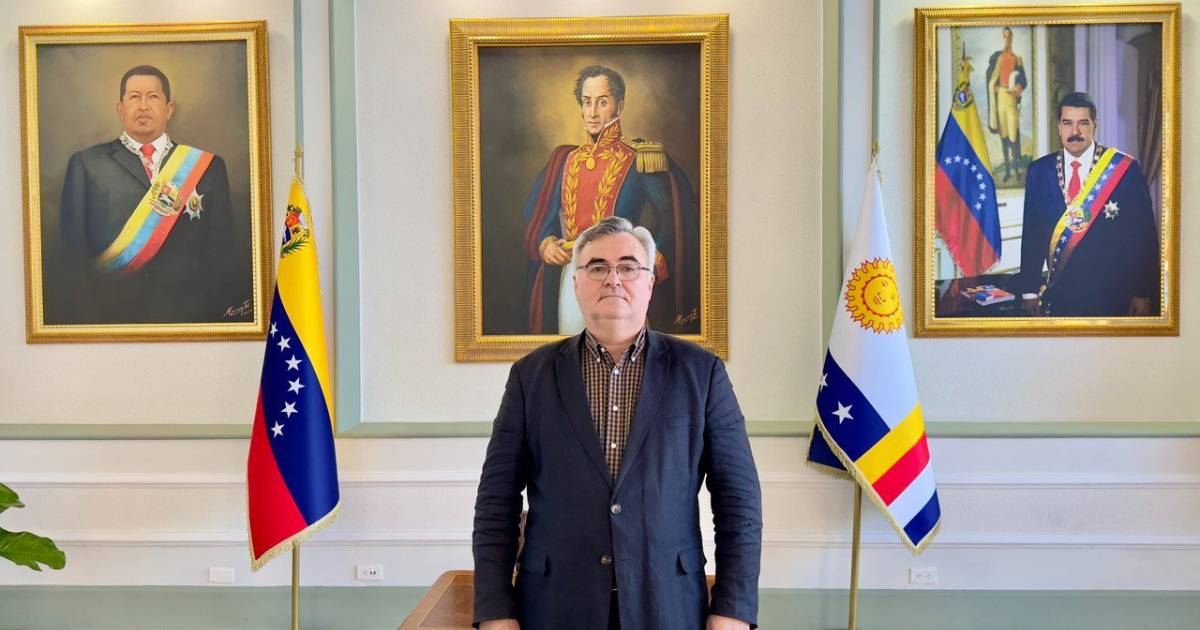
The Russian ambassador to Venezuela, Sergei Melik-Bagdasarov, has sparked controversy with his comments regarding the capture of former dictator Nicolás Maduro during a U.S. military operation. He later issued a clarification to refine his initial statements.
In an interview broadcast on the Russian state channel Rossiya-24, Melik-Bagdasarov discussed the possibility that certain factions within Venezuela's political and security elite may have cooperated with U.S. intelligence services, indirectly aiding the operation that led to the capture of Maduro and his wife on January 3, 2026.
The diplomat asserted that in Venezuela, "the names of those who betrayed their country, honor, and oath are well known," and that some individuals "systematically worked for U.S. special services."
Following these remarks, which international media outlets used to suggest divisions within the Chavista faction, Melik-Bagdasarov took to his official social media accounts to temper his message and reject interpretations that he claimed distorted his words.
The ambassador clarified that his comment referred to events "widely known in Venezuelan society" and that he did not intend to fuel impromptu conspiracy theories but rather highlight a history of past betrayals that had already led to the exile of some officials.
In his clarification, Melik-Bagdasarov even mentioned figures such as Manuel Cristopher Figuera, the former director of the Bolivarian National Intelligence Service (SEBIN), as examples of individuals who left Venezuela and were marked by accusations of collaboration with foreign interests.
This episode unfolds amid ongoing tensions between Russia and the United States over the Venezuelan situation. Moscow has condemned the U.S. military actions in Caracas and demanded explanations for Maduro's capture, denouncing what it considers an aggression and violation of Venezuelan sovereignty.
The Russian ambassador's clarification aims to cool down the media frenzy and emphasize Moscow's support for the Chavista regime while reiterating that interpretations of internal betrayals should be handled "in the realm of facts" and without manipulation.
Key Questions on Venezuela's Political Intrigue
What did the Russian ambassador claim about betrayals in Venezuela?
The Russian ambassador stated that certain individuals within Venezuela knowingly betrayed their country by working with U.S. intelligence services. He mentioned that the names of these individuals are well-known in Venezuelan society.
How did the ambassador clarify his statements?
The ambassador clarified that his comments were about well-known historical betrayals, not new conspiracy theories. He emphasized that these events are already part of the public discourse in Venezuela.