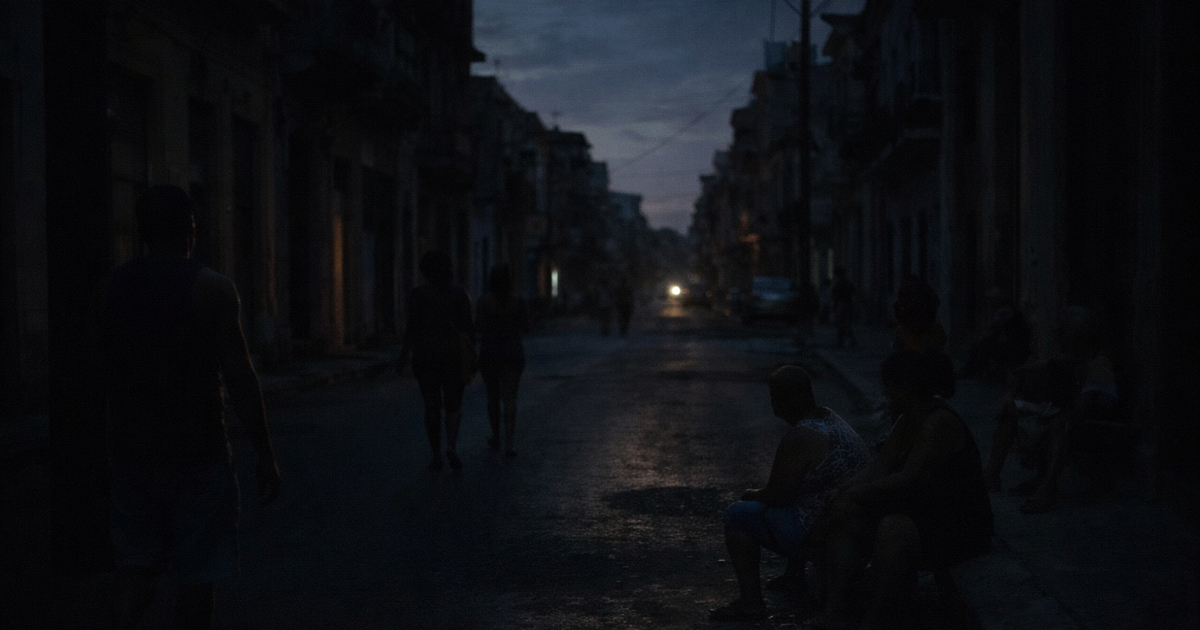
The ongoing energy crisis in Cuba has once again hit Matanzas hard, where residents in the municipality of Colón are reporting electricity outages lasting more than 40 continuous hours. This situation has led to widespread frustration, exhaustion, and material losses, all amidst soaring temperatures and a pervasive scarcity of resources.
According to accounts shared on social media and compiled by the Cuban American National Foundation, Joankelin Sánchez, a local resident, reported that Colón experienced 41 hours without electricity. The power returned briefly for just an hour and 35 minutes before going out again. Other users' comments confirm that this is not an isolated incident, but a recurring issue in various neighborhoods of the municipality.
“Food spoils, sleep is impossible, and children and the elderly can't handle the heat,” note residents in their remarks, with many asserting that conditions in Colón are even more dire than in other parts of the country.
The electric grid's failure isn't confined to Matanzas alone. In Guanabacoa, Havana, outages have lasted over 20 consecutive hours, sparking public protests, as reported by Martí News. Activist Evelyn Pineda noted that neighbors have taken to the streets, "raising their voices and demanding freedom," worn out by what they describe as an untenable situation.
These extended blackouts are causing food spoilage, daily life disruptions, and increasing social unrest. Entire families are left without electricity, ventilation, and reliable access to basic services for days, while the heat and scarcity exacerbate their desperation.
Despite the regime's claims of "stability" and "gradual recovery," reports from Matanzas, Havana, and other provinces paint a different picture: a nation struggling through blackouts exceeding 48 hours, extreme heat, and a crumbling infrastructure.
The question echoing on social networks and in the streets is the same: How much longer can this go on?
Understanding Cuba's Energy Crisis
What is causing the prolonged power outages in Cuba?
The prolonged power outages in Cuba are largely due to a combination of an aging and failing energy infrastructure, economic mismanagement by the government, and increased demand during extreme weather conditions.
How are residents coping with the lack of electricity?
Residents are struggling to cope with the lack of electricity, facing spoiled food, lack of sleep, and health risks, especially among vulnerable groups like children and the elderly. Protests and public demonstrations have also emerged as a way for citizens to express their frustration.
What has been the government's response to these power outages?
The government has been making speeches about "stability" and "gradual recovery," but these claims are contradicted by the severe and ongoing outages reported across the country, highlighting a disconnect between official statements and the lived reality of residents.