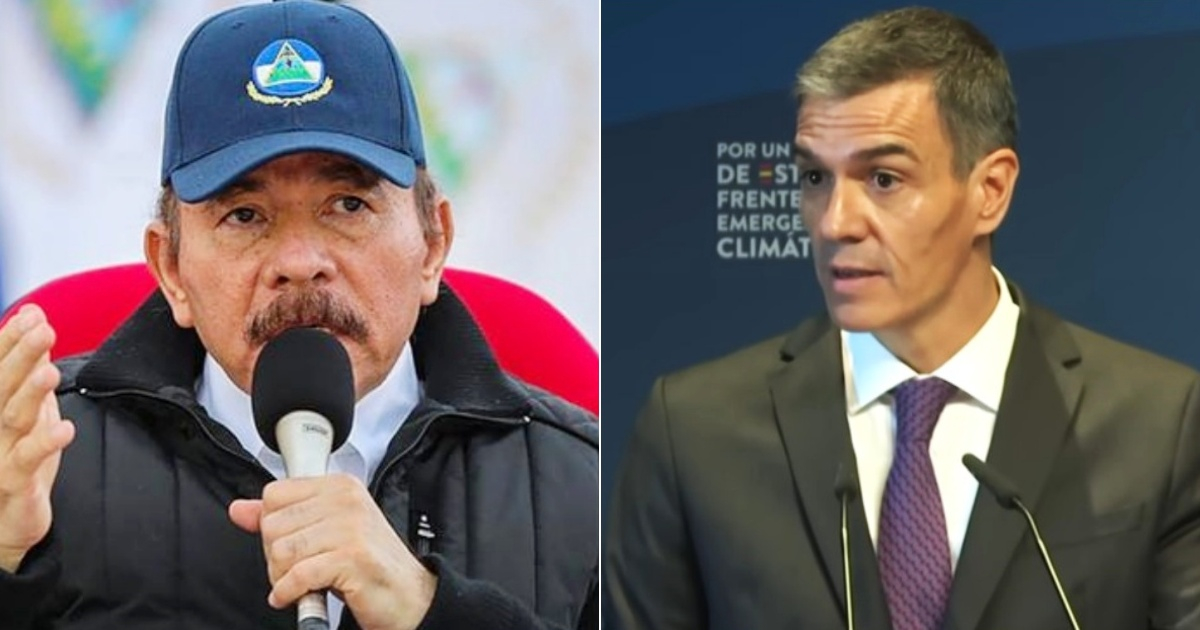
The already fragile diplomatic ties between Nicaragua and Spain have entered a critical phase following a sudden series of diplomatic expulsions.
Within just 24 hours, both nations ordered the expulsion of each other's ambassadors, heightening tensions and putting efforts to mend relations on hold. This move underscores years of mutual accusations, international condemnation, and allegations of interference.
The current crisis not only leaves both nations without formal representation but also highlights the deteriorating relationship between Spain and the authoritarian regime of Daniel Ortega.
Chain of Expulsions: Immediate Trigger
On Sunday, Nicaragua ordered the expulsion of Spain's ambassador to Managua, Sergio Farré Salvá, and the second-in-command, Miguel Mahiques Núñez. The Spanish Ministry of Foreign Affairs deemed the action "unjust," prompting a swift response from Madrid.
In a reciprocal move, Spain demanded the departure of Nicaragua's ambassador in Madrid, Mauricio Carlo Gelli, along with another Nicaraguan diplomat. "The Government of Spain will continue to strive for the best relations with the Nicaraguan people," the Ministry emphasized in a statement, attempting to separate the Nicaraguan populace from its regime.
The Spanish ambassador had only recently assumed his role, having presented his credentials in early January. His expulsion occurred shortly after he began his diplomatic mission in the Central American nation. Euronews highlighted the expulsion as particularly noteworthy due to the ambassador's brief tenure.
Mauricio Carlo Gelli confirmed to EFE that he had already left Spain after being notified on Sunday. "Spain applied reciprocity," he remarked before heading back to Managua with a stopover in Rome.
Lack of Clarity and Repressive Context
To date, neither the Nicaraguan government nor its Foreign Ministry has provided formal reasons for Farré's expulsion. Several Spanish media outlets have noted the absence of official explanations for the decision.
This lack of transparency fuels perceptions of arbitrariness and political repression by Ortega's government. The expulsion occurs amid widespread international condemnation of the regime's practices.
Organizations like the United Nations have warned that Nicaragua's basic rights have been eroded by Ortega's reforms, while the international community largely rejected the 2021 presidential elections, which saw Ortega claim victory for the fourth consecutive time.
In 2023, the Nicaraguan government expelled and stripped hundreds of opposition figures, former officials, human rights defenders, journalists, and activists of their nationality. In a diplomatic gesture, Spain offered citizenship to many of them, a move seen as provocative by the regime.
Recurring Crises: History of Tensions
This latest episode adds to a long history of friction between Madrid and Managua. Since 2018, when mass protests against Ortega erupted and were met with systematic repression, Spain has maintained a critical stance.
In 2021, Spain withdrew its ambassador in Managua, María del Mar Fernández-Palacios, citing "serious and unfounded accusations" from the Nicaraguan regime. Ortega's Foreign Ministry accused Spain of interference, even referencing the GAL and Catalonia's situation as political attacks.
In March 2022, when Spain attempted to restart relations by appointing a new ambassador, Nicaragua refused to accept the nominee. In response, Spain withdrew its proposal, and Managua recalled its ambassador in Madrid, leading to a diplomatic freeze.
An attempt at normalization occurred in July 2022, with a new Spanish ambassador, Pilar María Terrén, presenting her credentials in February 2023. However, the fragile balance has once again been disrupted.
Spain's Condemnation of Ortega's Regime
Last March, the Spanish Congress passed a non-binding resolution condemning "the systematic violation of human rights in Nicaragua," calling for an immediate end to repression and urging new European sanctions against the Ortega regime.
The initiative garnered support from both the government and opposition, reflecting a political consensus in Madrid regarding the severity of the situation in Nicaragua.
Spain's stance has been unequivocal: non-recognition of the 2021 elections, support for democratic opposition, and strong opposition to the repressive policies of the Ortega-Murillo regime.
As a result, diplomatic relations have been marked by distrust and confrontation, culminating in the current open crisis.
Understanding the Nicaragua-Spain Diplomatic Crisis
Why were the ambassadors expelled between Nicaragua and Spain?
The expulsion of ambassadors was triggered by mutual accusations and longstanding tensions between the two governments, with no formal explanation provided by Nicaragua.
What is Spain's stance on Nicaragua's political situation?
Spain has consistently criticized the Nicaraguan regime for its human rights violations and lack of democratic processes, refusing to recognize the 2021 election results.