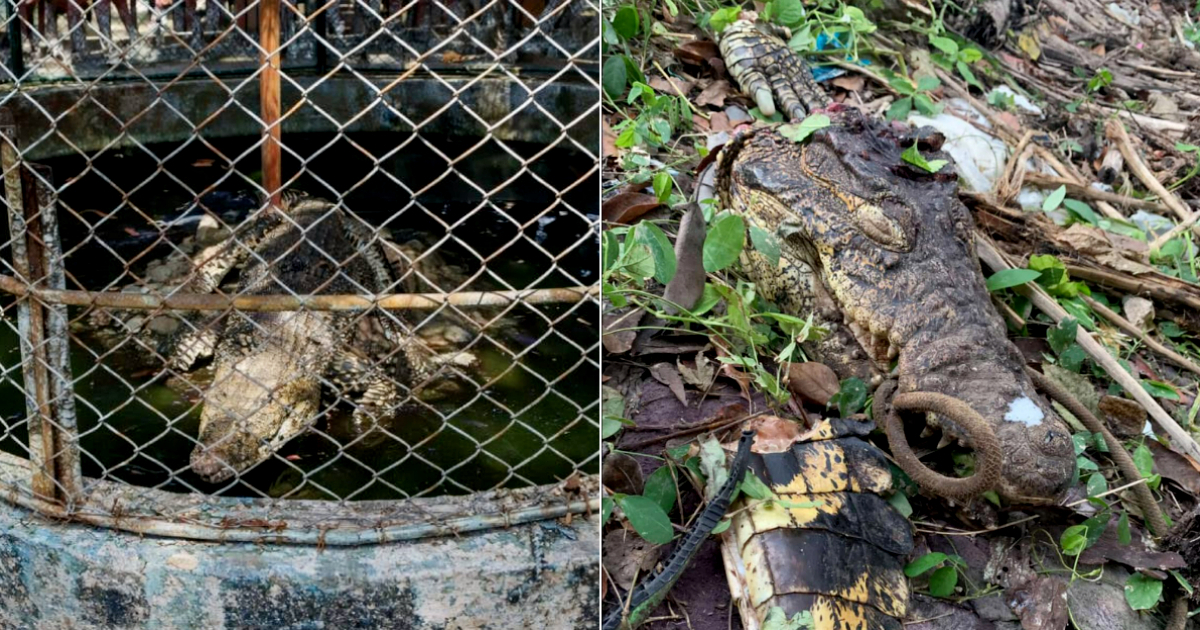
This past Saturday, images surfaced on social media depicting what appear to be the remains of the crocodile that escaped from the Caibarién Zoo in Villa Clara province earlier in the week.
Photos shared by local witnesses indicate that the animal was found dead in a wooded area, concealed among bushes, with clear signs of having been dismembered.
According to reports from the independent outlet La Tijera, the head and parts of the reptile's body were discovered in a location known as La Picadora, a site commonly used for dumping waste.
Residents in the vicinity raised the alarm about the discovery and alleged that the animal had been discarded like trash.
A few hours earlier, municipal authorities claimed the crocodile had been located alive and was back under the zoo's care. However, animal welfare volunteers have disputed this account, asserting that the creature died without receiving any aid or rescue.
A local activist from Bienestar Animal Cuba (BAC) stated on social media that she personally visited the dump where the reptile's body lay, confirming its death and alleging manipulation of the official narrative.
The cause of death remains unclear, though some locals speculate that it may have been hunted for its meat or skin, an illegal yet plausible theory given the severe food shortages on the island.
So far, Caibarién authorities have not released an official statement regarding the discovery.
This incident has reignited discussions about the conditions prevailing in Cuban zoos, the lack of resources for their upkeep, and the mistreatment animals endure in captivity.
Animal rights organizations have renewed their demands to shut down parks failing to meet minimal standards of welfare and safety.
Meanwhile, the crocodile's remains have become a symbol of the neglect and institutional negligence plaguing numerous public facilities in Cuba.
Key Questions Surrounding the Crocodile Incident
What led to the crocodile's death after its escape from the Caibarién Zoo?
The exact cause of the crocodile's death is still unknown, but speculation suggests it may have been hunted for its meat or skin due to food shortages on the island.
How have local residents and authorities responded to this incident?
Residents reported the discovery and alleged mishandling of the animal, while authorities have yet to issue an official statement. Animal welfare activists have criticized the lack of immediate action and transparency.
What impact has this incident had on public perception of Cuban zoos?
The incident has sparked renewed criticism of the conditions and management of Cuban zoos, highlighting issues of neglect and insufficient resources, and elevating calls for reform.