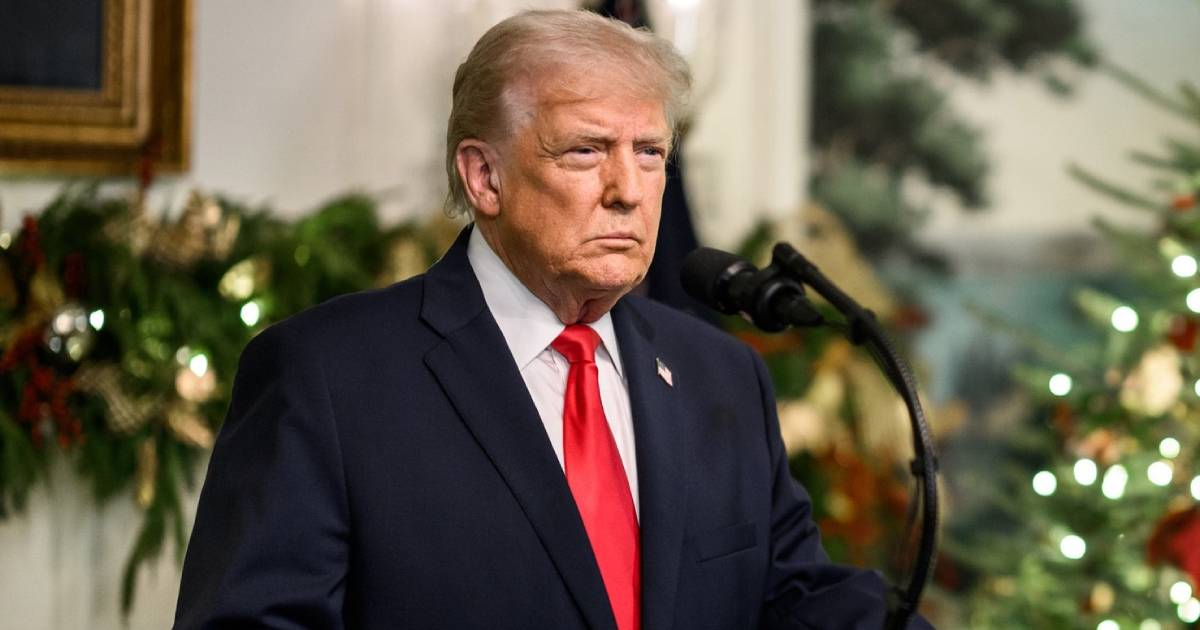
President Donald Trump has once again thrust immigration into the political spotlight in the United States, issuing a stark warning to Democratic governors and mayors: cooperate fully with ICE or be held accountable for the "chaos" and "violence" he attributes to illegal immigration.
In a post on his platform Truth Social, Trump criticized the previous Democratic administration for allowing "tens of millions" of undocumented immigrants into the country, describing them in alarmist terms as dangerous criminals.
He claimed that during those years, the nation saw an influx of murderers, rapists, kidnappers, drug traffickers, and even terrorists. This narrative reignites fear among countless immigrant families living under the threat of deportation.
Trump asserted that his electoral success and the Republican control of Congress were largely due to his promise to secure the border and carry out "the largest mass deportation of illegal criminals in American history."
He stated that this plan is already in motion and progressing without protests or disturbances in Republican-controlled states, where local police actively cooperate with federal immigration authorities.
Trump cited states such as Texas, Florida, and Georgia as examples, claiming that ICE has arrested over 150,000 immigrants with criminal records in the past year. For Trump, the key is the collaboration between local and federal governments, something he alleged "sanctuary cities" under Democratic control refuse to do.
In his statement, Trump directly targeted Democratic leaders like Governor Tim Walz and Mayor Jacob Frey, demanding they hand over undocumented immigrants detained in state and local jails to federal authorities. He also called for local police to assist in identifying, arresting, and detaining individuals with irregular immigration status who are wanted for crimes.
Trump went even further, urging Congress to swiftly pass legislation to abolish sanctuary cities, which he described as the "root of the problem." He argued that American cities should be "safe havens only for law-abiding citizens," a sentiment that resonates deeply among immigrant communities fearful of increased exposure.
These statements come at a time of heightened tension following the death of Alex Pretti, a 37-year-old American nurse who was killed by federal agents during an ICE operation in Minneapolis. The incident has sparked national outrage and harsh criticism of immigration enforcement actions.
Pretti died on Saturday during a protest against ICE operations after stepping in when he saw an agent pushing a woman. Videos shared on social media show him recording with his phone when he was pepper-sprayed, knocked to the ground, and restrained by several agents. Seconds later, gunshots were heard against his already motionless body.
The Trump administration quickly defended the actions of the agents, even accusing Pretti of "terrorism," a claim strongly refuted by his family. On Sunday, former President Barack Obama and former First Lady Michelle Obama joined the public condemnation, describing the incident as a "heart-wrenching tragedy" and calling for an end to the violence linked to immigration operations.
The Obamas criticized federal tactics as chaotic and dangerous, noting that they have already claimed the lives of at least two American citizens in Minnesota this January. The case of Pretti, alongside Renée Nicole Good, has intensified protests against ICE and placed Minnesota at the center of the national debate on immigration, the use of force, and governmental accountability.
Key Questions on Trump's Immigration Policy and ICE Operations
What did Trump demand from Democratic leaders regarding immigration?
Trump demanded that Democratic governors and mayors fully cooperate with ICE in immigration enforcement or face responsibility for chaos and violence linked to illegal immigration.
Why is Alex Pretti's death significant in the immigration debate?
Alex Pretti's death during an ICE operation has sparked national outrage and criticism of immigration enforcement tactics, highlighting the human cost of these operations and increasing calls for change.