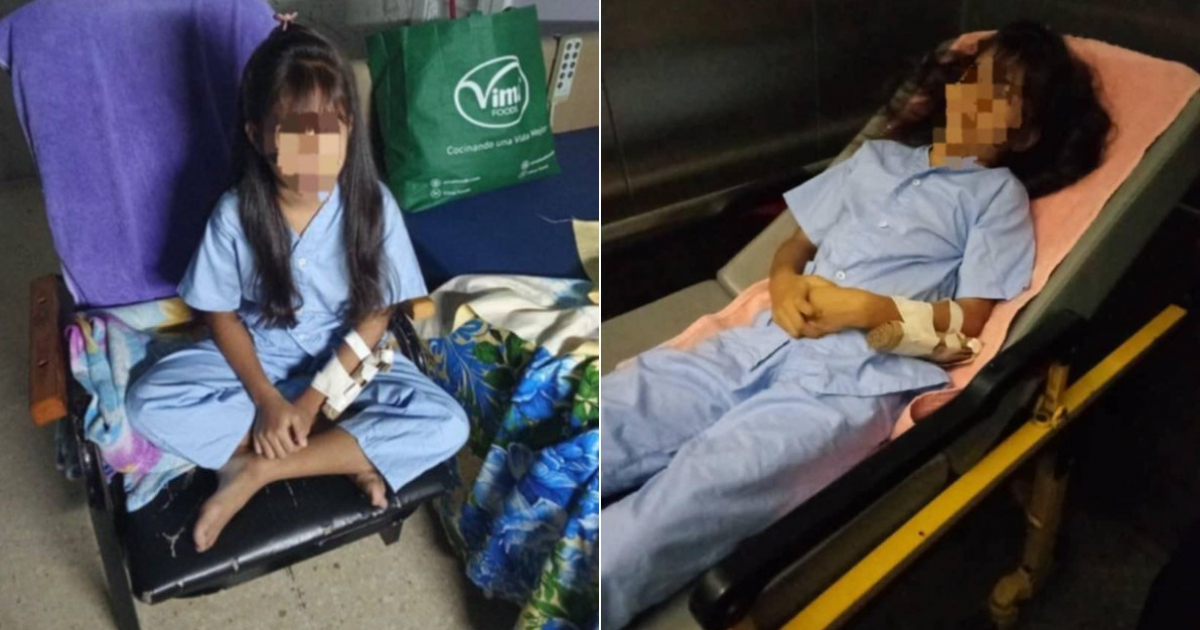
A Cuban mother has publicly criticized the severe shortage of essential medications needed to ease her daughter's suffering, a young girl battling an irreversible illness. This situation underscores the ongoing collapse of Cuba's healthcare system and the neglect faced by its most vulnerable patients.
Neldis Maceo Cabrera, who resides in Granma province, took to Facebook to voice her grievances against the health authorities and local government over the dire circumstances surrounding her daughter, Érika Sabrina. For months, she has been utilizing social media to expose the failures of Cuba's healthcare system.
"Today, I call all the government and Party leaders in Granma liars. They're gambling with my daughter's health," Maceo Cabrera expressed in a message filled with frustration and desperation. Her daughter endures severe headaches that basic painkillers like paracetamol or dipyrone no longer alleviate.
Maceo Cabrera claims that the specific medication her daughter requires is unavailable through the healthcare system, and procuring it on the black market would cost around 36,000 Cuban pesos annually—an unaffordable amount for most families in the country. "I worked for this government and don't even deserve a pension," she lamented.
In addition to the medicine shortage, she criticizes other broken promises, such as the distribution of milk that authorities announced in December. "They wiped off what was said that day," she stated, noting the lack of concrete responses or real solutions.
The case of Érika Sabrina has already sparked solidarity both inside and outside Cuba. In November 2025, she managed to return home after spending nearly four years in hospitals, following her family's public complaint about the regime's failure to provide an ambulance to transport her from the medical center to her home.
According to her family, the young girl simply wants to spend her remaining time at home with her sisters. However, even this fundamental right has been overshadowed by negligence, bureaucratic hurdles, and resource scarcity.
"If you can't handle this, just hand it over already," Maceo Cabrera wrote, stating she is unafraid of any repercussions for her words. "I'm waiting here, but with real answers."
Maceo Cabrera's testimony once again highlights the gap between the official rhetoric of being a "medical power" and the everyday reality of thousands of Cuban families who must confront illness, pain, and scarcity almost entirely on their own.
Insights into Cuba's Healthcare Crisis
What challenges do Cuban families face in accessing healthcare?
Cuban families often face significant challenges in accessing healthcare, including medication shortages, high costs on the black market, and lack of government support, forcing them to manage health crises largely on their own.
How has the Cuban government responded to healthcare criticism?
The Cuban government often denies shortages and maintains a narrative of being a "medical power," yet many families report a disconnect between official statements and the actual healthcare realities they experience.
What impact has Érika Sabrina's case had on public perception?
Érika Sabrina's case has drawn attention to the healthcare crisis in Cuba, fostering a wave of solidarity and highlighting systemic issues within the healthcare system that affect many Cuban families.