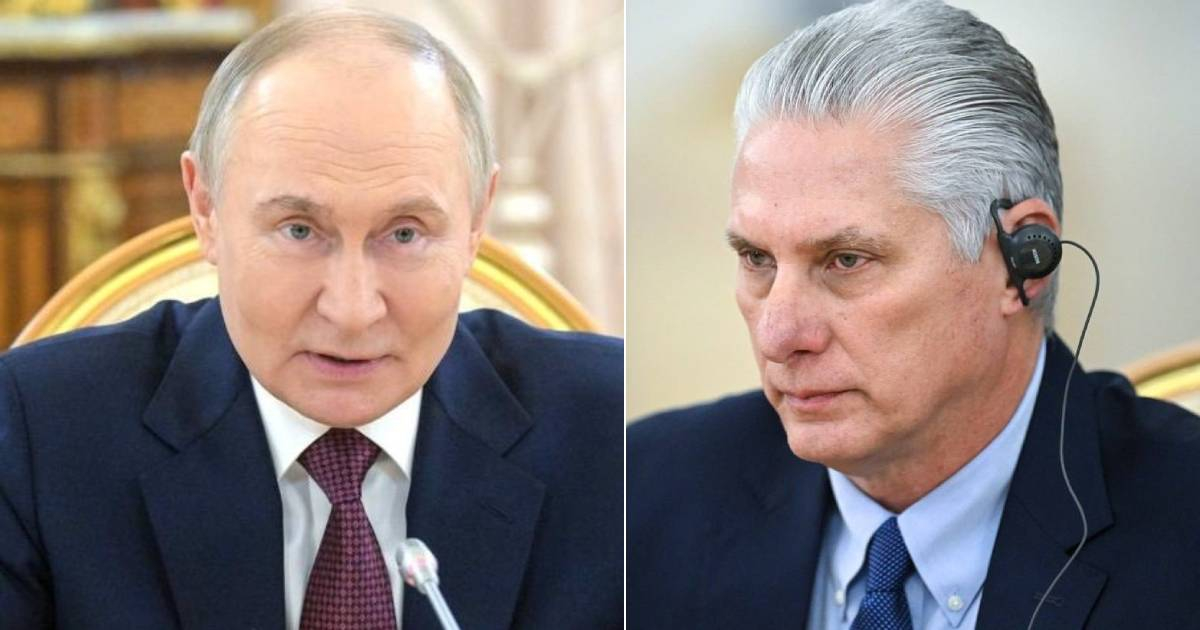
The stark reality was laid bare by Russian state television: if the United States truly tightens its grip, Moscow is not equipped to "rescue" Cuba as it once did during the Soviet era. This is a truth that resonates more with the Cuban people at a visceral level than an intellectual one.
During the January 9, 2026, broadcast of Rossiya 24's show International Review, Viktor Kheifets, a historian and the head of the Ibero-American Studies Center at Saint Petersburg State University, openly admitted that Russia's support for Cuba would be limited to the political realm if tensions with the U.S. were to escalate.
While acknowledging the existence of economic assistance, Kheifets emphasized that it pales in comparison to the robust aid once extended by the USSR. He painted a grim picture that mirrors the everyday struggles of Cubans: an "exhausted" economy and worsening conditions, marked by power outages, shortages, and a crisis felt both at the dinner table and in the streets.
The most striking revelation came when Kheifets cited a hypothetical "energy blockade" by Trump. He argued that Russia would be unlikely to counter such a move with oil shipments, which would require military escorts for tankers. Given that resources are diverted to other priorities, he expressed "serious doubts" about Moscow's readiness to take such actions.
"Politically, of course, we will continue to support... in the UN and other organizations," he added, yet he conceded that this backing might fall short without economic and military strength.
Potential Strategies Against Cuba
On the same program, Dmitry Rozental, a political scientist and director of the Latin America Institute at the Russian Academy of Sciences, took the discussion further, suggesting that Cuba could become a target of increased pressure.
He pointed out that U.S. attempts to alter power dynamics in Cuba date back to the Eisenhower administration and proposed that, in the wake of Venezuela's situation, Cuba might be a "softer target" due to its geographical proximity and potential internal divisions.
Rozental argued that direct intervention might not be necessary, advocating instead for tightening economic constraints, particularly through energy channels.
He highlighted a crucial factor: approximately one-third of Cuba's oil supply comes from Venezuela. Interrupting or reducing this supply could, in his view, trigger an economic downturn severe enough to destabilize the Cuban regime without military intervention.
This approach, he noted, aligns with Secretary of State Marco Rubio's political agenda, given its potential impact in Florida.
However, this idea isn't entirely new. Analyst Sergei Sukhankin, in a report for Eurasia Daily Monitor (The Jamestown Foundation), argued that Cuba serves more as a political symbol for the Kremlin than a practical ally that can be defended.
The warning was clear: if the U.S. escalates its pressure, Moscow's response would be limited mostly to rhetoric, constrained by its commitments in Ukraine and economic and military limitations.
Understanding Russia's Limitations in Supporting Cuba
Why can't Russia provide more substantial support to Cuba?
Russia's current economic and military constraints, exacerbated by its involvement in Ukraine, limit its ability to offer anything beyond political support to Cuba.
How might the U.S. increase pressure on Cuba?
The U.S. could intensify economic pressure, particularly through energy sanctions, potentially cutting off oil supplies that are crucial to Cuba's economy.
What role does Venezuela play in Cuba's energy supply?
Venezuela supplies roughly one-third of Cuba's oil, making it a critical source of energy. Disrupting this supply could lead to significant economic challenges for Cuba.