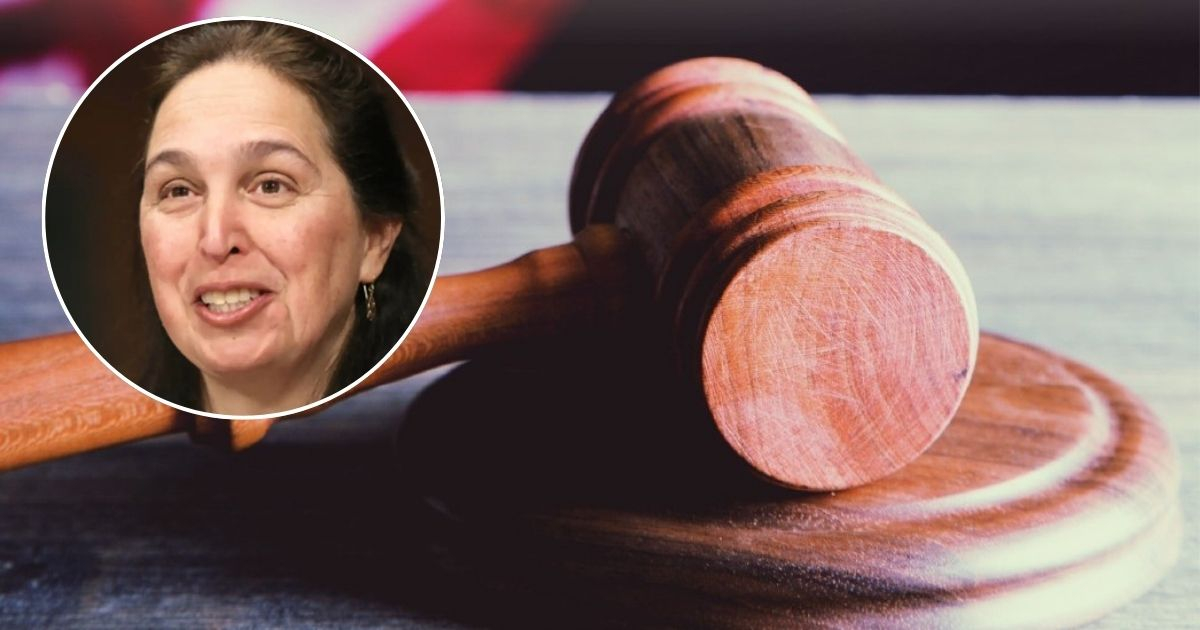
Federal Judge Indira Talwani has once again challenged Donald Trump's immigration policies, this time with a significant ruling that preliminarily halts the administration's attempt to revoke the legal status of over 8,400 migrants part of family reunification programs, including thousands of Cubans, as reported by Reuters.
Issued from a Boston federal court, the decision marks another setback for Trump's stringent immigration strategy following his return to the White House.
Unlike the temporary suspension ordered in early January, this judicial ruling currently prevents the Department of Homeland Security (DHS) from terminating the humanitarian parole granted to relatives of U.S. citizens and legal permanent residents from Cuba, Haiti, Colombia, Ecuador, El Salvador, Guatemala, and Honduras.
This decision coincides with a period where the Trump administration has aggressively enforced immigration laws, supported by a historic budget of $170 billion for immigration agencies through 2029.
Within this context, the DHS, led by Secretary Kristi Noem, announced in December the termination of these programs, citing alleged security gaps and an "abusive" use of parole to admit "insufficiently vetted" foreigners.
However, Judge Talwani was unequivocal. In her order, as cited by Reuters, she stated that the government failed to provide a reasonable explanation for dismantling a policy that for years allowed these families to legally settle in the U.S. while awaiting visa availability.
She further emphasized that many affected individuals had already sold their homes, left their jobs, and rearranged their lives based on the explicit promise of the U.S. government.
"The Secretary failed to offer a reasoned explanation for the policy change without acknowledging these interests," wrote Talwani, who was appointed by President Barack Obama, describing the DHS's actions as "arbitrary and capricious."
For years, the family reunification parole has been one of the few legal avenues allowing parents, children, and spouses to reunite in the U.S. without resorting to perilous migration routes. Its abrupt termination would have left thousands of Cubans in legal limbo, vulnerable to deportation and the risk of permanently losing the opportunity to adjust their status under the Cuban Adjustment Act.
Earlier in January, Talwani had already temporarily halted the parole cancellation, citing the lack of individual notification to migrants and warning of the "irreparable harm" that could result from a mass and automatic revocation.
The case is part of a class-action lawsuit driven by immigrant rights organizations that challenge the widespread revocation of various parole programs implemented or expanded during the Biden administration.
In previous proceedings, Talwani had also blocked the elimination of parole for hundreds of thousands of Cubans, Haitians, Nicaraguans, and Venezuelans, although the Supreme Court eventually lifted her order in that instance.
As of now, the Trump administration has not publicly commented on the new ruling, according to Reuters. As the legal battle unfolds, thousands of families, including many Cuban ones, breathe a sigh of relief, aware that their stability in the United States remains dependent on judicial decisions that have once again become the main counterbalance to the president's immigration policy.
Impact of Judge Talwani's Ruling on U.S. Immigration Policy
What was the main reason for Judge Talwani's decision to block the Trump administration's policy?
Judge Talwani ruled that the government did not provide a reasonable explanation for dismantling a policy that allowed families to legally settle in the U.S. while awaiting visa availability. She highlighted the arbitrary and capricious nature of the DHS's actions.
How does the family reunification parole program benefit migrants from Cuba and other countries?
The family reunification parole program provides a legal avenue for parents, children, and spouses to reunite in the U.S. without resorting to dangerous migration routes. It has historically allowed families to settle legally while waiting for visa processing.
What are the potential consequences of terminating the parole program for Cuban migrants?
Ending the parole program could leave thousands of Cubans in legal limbo, making them vulnerable to deportation and risking their chance to adjust their status under the Cuban Adjustment Act.