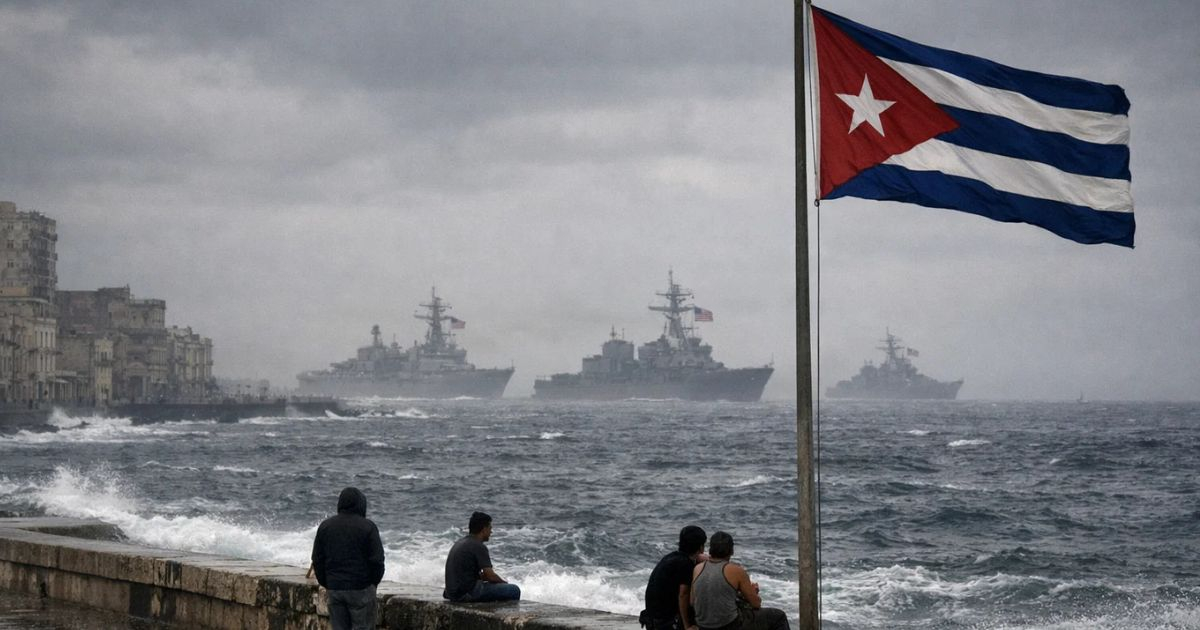
In a time marked by profound fatigue and despair, with numerous instances of the Cuban regime's human rights violations and constitutional breaches, activist Johanna Jolá has sparked a debate among Cubans. She argues that the solution for the nation lies not in foreign intervention or governmental slogans, but in internal change through free elections and freedom of expression.
Jolá shared her thoughts in a detailed Facebook post, stating, “Disagreeing with the current government should not mean viewing U.S. military intervention as our only lifeline.”
In her view, “The homeland transcends temporary leaders whom we, as citizens, did not even elect.”
Her stance comes at a time when many Cubans, weary of economic hardship, censorship, and repression, see foreign intervention as the sole escape from the regime's stasis.
Nonetheless, Jolá champions the idea that Cubans themselves must lead their own political and moral transformation.
“Our nation requires substantial changes to overcome the enormous crisis brought about by the American blockade and poor internal economic policies. We continue to self-block, enduring all the repercussions while our homeland and people suffer,” she expressed.
Jolá proposed that citizens, both within and outside the country, should have the power to elect their leaders directly at municipal, provincial, and national levels, despite the regime’s frequent disregard for the diaspora that does not align with its repressive policies.
“There is no better watchdog than the people,” she asserted, demanding transparency in the use of public funds and genuine accountability.
She also called for “fewer slogans and a lot more genuine willingness to act,” criticizing “the double standards caused by fear (whether founded or not) to speak truths, and excessive opportunism masked as nonexistent unanimity, which has only resulted in the loss of individual freedoms, in a populace feeling increasingly voiceless and powerless.”
Her words are a direct critique of the current administration under Miguel Díaz-Canel, which, during its tenure, has failed to alleviate the poverty afflicting the nation.
Jolá described it as “incomprehensible” that someone could be imprisoned for their beliefs, although numerous examples exist, and she condemned “harassment, oppression, and abuse of power.”
In her message, she was unequivocal: “I neither conduct nor support acts of repudiation that vividly reflect intolerance. I will not use my hands to suppress a fellow Cuban expressing their opinion, even if it starkly contrasts with mine.”
Regarding the threat of intervention, Jolá was even more resolute: “A military intervention would result in a river of blood in our country. In that scenario, and only that scenario, I am ready to sacrifice my life without hesitation.”
In her text, she defended the principle of national independence as non-negotiable but advocated for negotiating anything that benefits the populace.
“I long for a better, more democratic, just, and dignified Cuba, but I cannot find joy in the few benefiting while millions of Cubans endure hell. We must be capable, as Cubans, of enacting the changes our nation needs; no one from outside should come to do what is our right as citizens,” she emphasized.
Johanna Jolá’s message has elicited mixed reactions: some commend her for upholding national sovereignty without relinquishing democracy, while others argue that without external pressure, real change on the island is unlikely.
Her reflection raises the question: Is internal will enough to transform Cuba?
Exploring Solutions for Cuba's Future
What is Johanna Jolá's stance on foreign intervention in Cuba?
Johanna Jolá opposes foreign military intervention in Cuba, advocating instead for internal change through free elections and freedom of expression.
How does Johanna Jolá propose to achieve change in Cuba?
Jolá suggests that Cubans should directly elect their leaders at various levels and calls for transparency, accountability, and genuine action from the government.
What criticisms does Johanna Jolá have about the current Cuban government?
She criticizes the government for failing to alleviate poverty, suppressing dissent, and engaging in double standards. She denounces the intolerance and opportunism within the regime.