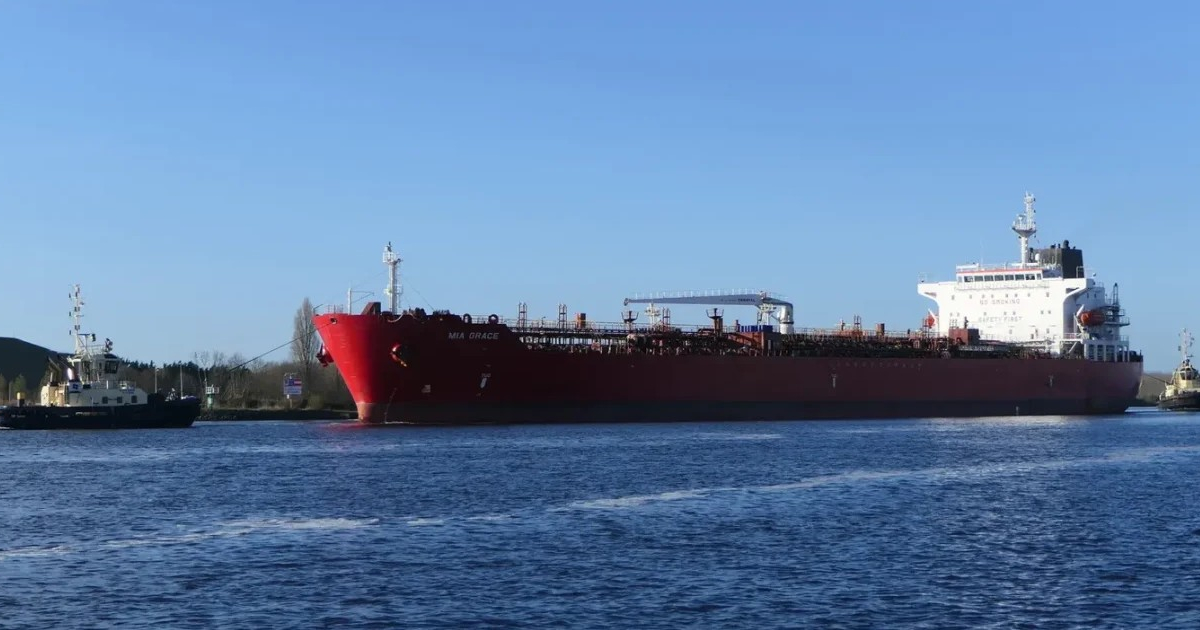
A tanker initially set sail from Africa carrying fuel destined for Cuba has unexpectedly changed course mid-journey, now heading toward a port in the Dominican Republic. This shift underscores the severe challenges the Cuban regime faces in securing the energy supplies the nation desperately needs.
The Mia Grace, a petrochemical tanker that departed on January 19 from Lomé, Togo, with a scheduled delivery to Havana, has altered its manifest and is now en route to Río Haina, a port near Santo Domingo. The vessel is anticipated to arrive there on February 2.
Satellite tracking platforms indicate that the ship, flying the Marshall Islands flag, adjusted its destination while crossing the Atlantic. This development has sparked uncertainty regarding whether its cargo—believed to be diesel or fuel oil—will ultimately reach Cuba or find a new point of transit.
Río Haina serves as a key commercial hub in the Dominican Republic, specializing in general cargo, liquids, and chemical products. It is located in close proximity to the Dominican Petroleum Refinery (REFIDOMSA), responsible for refining and importing petroleum derivatives.
The Mia Grace, a tanker designed for oil and chemical products, measures 183 meters in length and 32 meters in width, with a deadweight tonnage of 50,000 tons.
According to Jorge Piñón, a non-resident fellow at the University of Texas's Institute of Energy, the ship could be carrying a spot purchase by Cubametales, a company owned by the GAESA Business Group, with a European trader acting as a middleman.
"The quality of the cargo is unclear, but we speculate it is diesel or fuel oil. Togo lacks petroleum refining facilities but exports refined oil and boasts a substantial maritime transit and logistics infrastructure," Piñón explained.
The expert estimates that the vessel might be transporting approximately 314,500 barrels of diesel or 280,500 barrels of fuel oil. "It seems to be not fully loaded based on its draft," he noted.
The Mia Grace originally departed from Antwerp, Belgium, where GAESA has previously conducted occasional purchases, before heading to Togo to load its cargo.
The diversion of its route coincides with a worsening energy crisis in Cuba, which has further strained the already fragile daily life of thousands of families, prompting sections of the population to protest through pot-banging over power outages.
As the situation remains unresolved regarding whether the tanker will deliver its cargo in the Dominican Republic or alter its course once more, the Cuban populace anxiously watches as logistical complications translate into heightened uncertainty for a nation urgently in need of fuel.
The cessation of Venezuelan oil supplies to Cuba has forced Havana to turn to non-traditional markets for fuel purchases and to buy spot cargoes, a departure from its usual supply strategy.
In recent years, Cuban vessels have purchased liquefied petroleum gas in the Dominican Republic and Jamaica, although Cuban authorities typically do not disclose details of these transactions.
Cuba's Energy Crisis and the Mia Grace Tanker
Why did the Mia Grace tanker change its destination?
The Mia Grace tanker altered its course from Cuba to the Dominican Republic due to logistical challenges and the worsening energy crisis in Cuba.
What is the significance of Río Haina port for the Mia Grace?
Río Haina is a major commercial port in the Dominican Republic, specializing in various cargo types, and is located near the Dominican Petroleum Refinery, making it a strategic point for oil-related shipments.