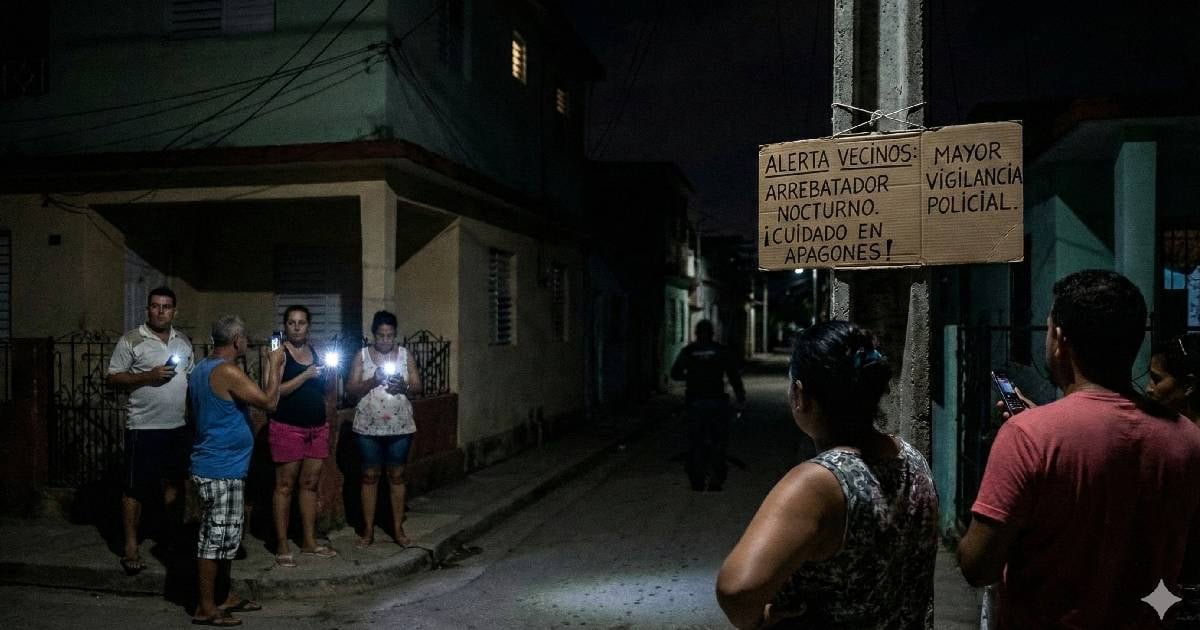
The electrical grid in Cuba suffered another collapse on Friday, January 23, with blackouts occurring throughout the day and a staggering deficit reaching critical levels.
The official report from the Electric Union (UNE) indicated that the peak shortage due to insufficient generation capacity hit 1,905 megawatts (MW) by 6:30 p.m. This figure underscores the ongoing severity of the energy crisis that has plagued the nation for months.
As of 6:00 a.m. Saturday, the National Electric System (SEN) had a mere 1,170 MW available, while the demand soared to 2,280 MW, resulting in 1,120 MW being unavailable from the early hours.
By midday, the UNE forecasted the deficit would climb to 1,280 MW, highlighting that this issue is not a one-time occurrence but a persistent and systemic problem.
The challenges in power generation are numerous and concurrent. Six units are offline due to malfunctions at the Mariel, Carlos Manuel de Céspedes, Nuevitas, Felton, and Antonio Maceo plants.
Additionally, two units are undergoing maintenance at the Santa Cruz and Carlos Manuel de Céspedes plants.
There are also 513 MW out of service due to limitations in thermal generation, further diminishing the system's effective capacity.
For the evening peak, UNE plans to bring online seven engines at Fuel Moa providing 105 MW, along with the integration of Unit 1 at Energás Jaruco with 30 MW and the completion of Unit 6 at Energás Jaruco with 30 MW.
However, the estimated availability will barely reach 1,335 MW against a projected peak demand of 3,150 MW, creating a shortfall of 1,815 MW.
As a result, an impact of up to 1,845 MW is expected during the peak demand period.
Despite the report noting that the 49 new solar photovoltaic parks produced 3,366 MWh with a peak output of 559 MW at midday, this is woefully inadequate against a deficit of thousands of MW.
Havana's Power Struggles: A Recurring Nightmare
The Electric Company of Havana reported that on Friday, the service was disrupted for 22 hours and 12 minutes, with the peak shortage reaching 303 MW at 6:30 p.m. The deficit could not be rectified.
Due to the low availability of base generation, it was impossible to meet the scheduled programming. An emergency caused an additional 80 MW shortfall.
As of the current update, six units are affected along with an 80 MW emergency deficit (totaling 280 MW).
"Without an improvement in the availability conditions of the SEN, it is expected that the scheduled programming cannot be fulfilled, and blocks and circuits will be affected by emergency," the note stated.
A Perpetual Crisis with Familiar Culprits
These figures translate into blackouts exceeding 20 hours daily in many parts of the country. The root cause is a system that has collapsed due to years of mismanagement, lack of investment, and technical neglect.
The government has failed to ensure adequate maintenance of the thermal power plants, which are now operating with units out of service due to breakdowns or prolonged maintenance work.
In this scenario, the population bears the brunt of a failed energy model that cannot sustain even the bare essentials for daily life.
This is not just about inconvenience: the lack of electricity halts domestic life, spoils food due to lack of refrigeration, prevents cooking, affects the sick, children, and the elderly, turning each day into a survival struggle.
People live by candlelight, with improvised generators, and in constant anxiety that official rhetoric cannot conceal.
The crisis is not the result of a single incident but the prolonged neglect of the electrical system. The responsibility squarely lies with a government that for years prioritized political control and propaganda over genuine investment in basic infrastructure.
The outcome is a nation where electricity is no longer a stable service but an intermittent luxury.
Meanwhile, millions of Cubans remain trapped in darkness, paying with their quality of life for a system that fails to provide even the most fundamental necessity: light for living.
Understanding Cuba's Ongoing Electrical Crisis
What is the current electrical deficit in Cuba?
The current electrical deficit in Cuba has reached approximately 1,850 MW, contributing to widespread blackouts across the country.
Why is the electrical system in Cuba failing?
The electrical system in Cuba is failing due to years of mismanagement, lack of investment, and technical neglect, resulting in a collapsed infrastructure.
How are the power shortages affecting daily life in Cuba?
Power shortages are disrupting daily life by halting domestic activities, spoiling food, preventing cooking, and impacting vulnerable populations such as the sick, children, and the elderly.