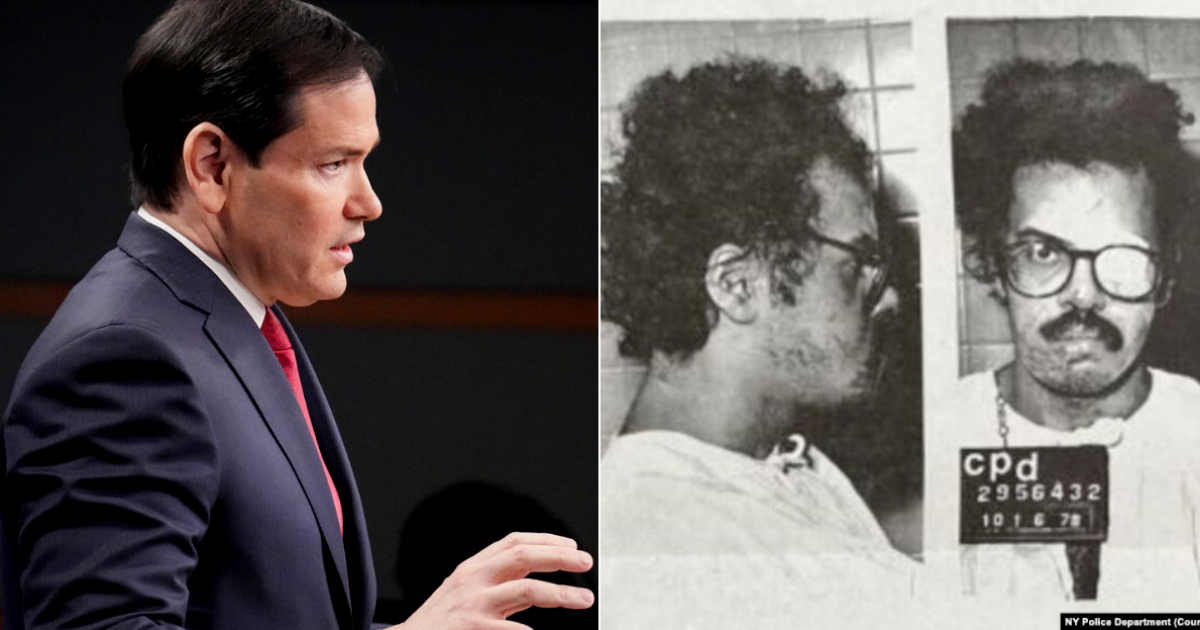
United States Secretary of State Marco Rubio marked the anniversary of the 1975 terrorist bombing at Fraunces Tavern in New York City, highlighting the Cuban regime's ongoing protection of the attack's mastermind, Puerto Rican extremist William "Guillermo" Morales. This attack resulted in the deaths of four individuals and injured approximately fifty others.
"The illegitimate Cuban regime continues to harbor William Morales, the architect of this heinous crime," Rubio expressed on X (formerly known as Twitter). "We honor the memory of the deceased and acknowledge the enduring pain of the victims. The United States remains unwavering in its pursuit of justice," added the U.S. diplomatic chief.
Morales, a key figure in the separatist group Fuerzas Armadas de Liberación Nacional (FALN), was the primary bomb maker responsible for over 130 attacks on U.S. soil during the 1970s and 1980s. After being convicted of terrorism and escaping from prison, he fled to Mexico in 1979. Though initially apprehended, he ultimately reached Cuba, where he has lived under official protection for more than four decades. Despite repeated extradition demands from Washington, Havana has not complied.
Harboring Fugitives: A Persistent Issue
Morales is just one of over 70 American fugitives currently residing in Cuba, many of whom face charges of murder, kidnapping, drug trafficking, or terrorism. Among them was Joanne Chesimard, also known as Assata Shakur, a former Black Panther who killed New Jersey police officer Werner Foerster in 1973. She passed away in Havana in 2025 without facing justice.
In 2018, Rubio, then a senator, collaborated with Democrat Bob Menéndez to introduce a bipartisan resolution demanding the "immediate extradition" of these fugitives. "The Castro regime's refusal to hand over cop killers and terrorists demonstrates its hostility towards the United States," Rubio asserted at the time.
Cuba's Terrorism Sponsor Status
Washington officials argue that this impunity effectively categorizes Cuba as a state sponsor of terrorism, a designation reinstated by the Trump administration and supported by Rubio as long as the regime "continues to protect criminals and terror accomplices."
Rubio's latest denunciation coincides with the United States' escalating pressure on the regime of Miguel Díaz-Canel and Raúl Castro. Recently, the secretary of state warned that Cuban leaders must "choose between change or collapse," amid the end of Venezuelan oil subsidies and the deterioration of the Cuban economy.
The Path Forward
"Havana no longer has anyone to sustain it. It lost Maduro's oil, Russian credits, and is left without allies willing to finance its repression. The only thing it retains is the fear of its people," Rubio remarked during a conference with President Trump, who reaffirmed there would be no relief or negotiation with Cuba while it remains a "safe haven for terrorists and enemies of freedom."
The message is clear: The United States is committed to a policy of maximum pressure on the communist regime, accusing it of shielding terrorists, oppressing its citizens, and maintaining an outdated dictatorship. For Rubio, the impunity of Morales and other fugitives symbolizes the moral and political decay of Havana.
"Cuba continues to harbor and provide sanctuary to American fugitives and terrorists. We demand that American fugitives under the protection of the Cuban regime be brought to justice," Rubio declared a year ago, vowing that the United States would not rest until every criminal protected by Castroism is held accountable.
Frequently Asked Questions about U.S.-Cuba Relations and Fugitive Extradition
Who is William "Guillermo" Morales?
William "Guillermo" Morales is a Puerto Rican extremist and a former bomb maker for the separatist group Fuerzas Armadas de Liberación Nacional (FALN). He is linked to numerous attacks on U.S. soil and is currently residing in Cuba under protection.
What is the significance of the Fraunces Tavern bombing?
The Fraunces Tavern bombing on January 24, 1975, was a terrorist attack in New York City that resulted in four deaths and injured about fifty people. It remains a significant event in the history of domestic terrorism in the United States.
Why is Cuba considered a state sponsor of terrorism?
Cuba is considered a state sponsor of terrorism by the United States because it provides sanctuary to American fugitives and has been accused of supporting terrorist activities. This designation was reinstated by the Trump administration.