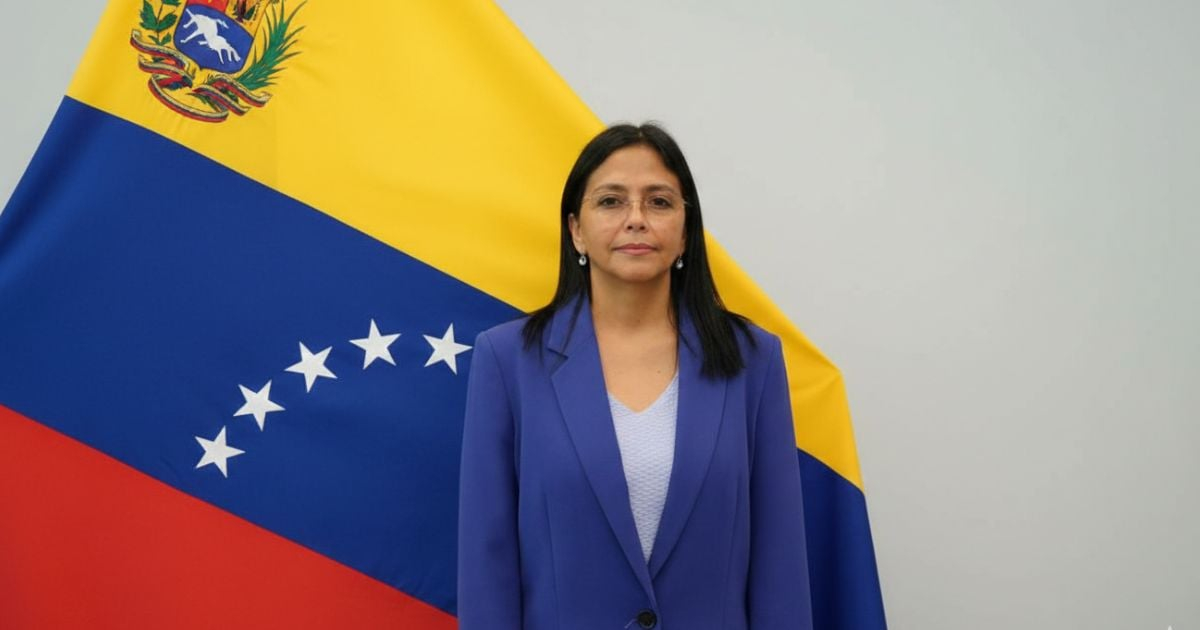
Interim President of Venezuela, Delcy Rodríguez, has introduced a sweeping legal reform aimed at allowing both foreign and local companies to operate oil fields independently of state control, marking the first instance of opening the sector to private capital since the era of Hugo Chávez.
According to a report by Reuters, the proposed amendment to the Hydrocarbons Law, which was presented to the National Assembly last week, seeks to fundamentally alter the core of Venezuela's energy model. This would involve revising the law that has kept PDVSA as the dominant player and sole operator for two decades.
The reform would permit companies—both domestic and international—to independently produce and sell oil, enter into direct contracts with PDVSA, and receive revenues from oil sales, even if they participate as minor stakeholders.
On Thursday, legislators gave an initial nod to the proposal following a 50 million barrel supply agreement reached between Caracas and Washington earlier this month, subsequent to the capture of former President Nicolás Maduro by U.S. forces.
President Donald Trump emphasized that the deal grants the United States "control over the country's main source of income."
Parliament Speaker Jorge Rodríguez defended the initiative, stating, "Oil beneath the ground is useless. We need to attract foreign investment," during a session where no votes against the proposal were recorded.
The reform, which requires a second parliamentary approval, paves the way for an unprecedented liberalization of the Venezuelan oil industry, historically dominated by the state and its main company, Petróleos de Venezuela (PDVSA).
The proposal also aims to reduce royalties and taxes to as low as 15% for high-risk or major investment projects, compared to the current 33%, to encourage private sector participation.
"These fields demand substantial investments, but achieving that requires flexibility in royalties," noted lawmaker Orlando Camacho when summarizing the project before the Assembly.
Moreover, the changes include the possibility of resorting to international arbitration to resolve disputes, a long-standing demand from foreign firms following asset expropriations and conflicts under Chávez and Maduro’s administrations.
Analysts consulted by Reuters caution that the reform could clash with the Venezuelan Constitution, which reserves key oil industry activities for the state. Implementing the changes would necessitate repealing numerous complementary laws passed under previous governments.
For Washington and interested energy companies, this initiative represents a pivotal opportunity within the $100 billion reconstruction plan accompanying the transitional process following Maduro's fall.
Investors, however, are seeking full autonomy to produce and export in a nation that has become less attractive due to nationalizations, legal disputes, and international sanctions.
Despite legal uncertainties, the reform marks a significant departure: Delcy Rodríguez distances herself from the state-centric Chavismo doctrine, embracing a pragmatic approach aimed at stabilizing the Venezuelan economy through openness, foreign investment, and cooperation with the United States.
Recently, PDVSA confirmed ongoing negotiations with the U.S. government for crude volumes sales, describing these as part of "commercial relations between the two countries."
In this context, Trump stated that the South American country "will earn more money in the next six months than in the last twenty years," thanks to an oil agreement with the U.S. following Maduro's capture.
Rodríguez also announced on Monday that $300 million from oil sales had entered the country, which, she stated, would be directed to the foreign exchange market and national banking to "protect workers' purchasing power."
Additionally, the United States confirmed allowing China to continue purchasing Venezuelan oil, but no longer under conditions that have historically benefited Chavismo.
Implications of Venezuela's Oil Industry Reforms
What is the significance of Delcy Rodríguez's proposal for Venezuela's oil sector?
The proposal signifies a major shift from Venezuela's traditional state-controlled oil industry, opening it to private investment and foreign participation for the first time since Hugo Chávez's era.
How does the reform affect Venezuela's relationship with the United States?
The reform is part of a broader strategy to cooperate with the United States, which includes a significant oil supply agreement, and aims to attract foreign investment to stabilize the Venezuelan economy.
What legal challenges does the reform face?
The reform may conflict with the Venezuelan Constitution, which reserves key oil activities for the state, and its implementation would require repealing several existing laws.