Amnesty International has urged the Cuban government to immediately and unconditionally free all individuals imprisoned for political reasons and to halt ongoing repression. This appeal marks the anniversary of a year marked by a lack of transparency in selective releases, which, according to the regime, benefited 553 individuals.
"Cuba must unconditionally release those who never should have been imprisoned," declared Ana Piquer, Amnesty International's regional director for the Americas, in a statement issued by the NGO on Monday.
Piquer criticized Cuban leader Miguel Díaz-Canel, urging him to decisively stop using the penal system to stifle dissent and punish activism. She stressed the importance of ending the crackdown on those peacefully exercising their rights to freedom of expression, association, and peaceful assembly.
Based in London, Amnesty International highlighted that the release process, announced by Cuban authorities on January 14, 2025, was characterized by a lack of transparency, insufficient public information, unclear criteria, arbitrary conditions, and a severe psychological toll on families.
The releases were part of an agreement brokered in negotiations between the Cuban and U.S. governments, with the Vatican mediating during the final days of President Joe Biden's administration.
Amnesty International noted that the process did not involve official acknowledgment of abuses during arrests and convictions, nor were there assurances against future occurrences.
The organization emphasized that despite the release of at least 211 political prisoners, selective or conditional releases do not absolve authorities from ending the criminalization of free expression or ensuring fair trials.
Amnesty further highlighted cases where some released individuals were forced into exile or re-imprisoned, such as José Daniel Ferrer, who was again incarcerated and eventually exiled to the United States, and Félix Navarro, who remains imprisoned after a court annulled his release. These instances underscore the continued presence of entrenched authoritarian practices and the lack of guarantees for exercising human rights without fear of reprisal.
The NGO firmly stated that Cuban authorities must fully and unconditionally free all prisoners of conscience.
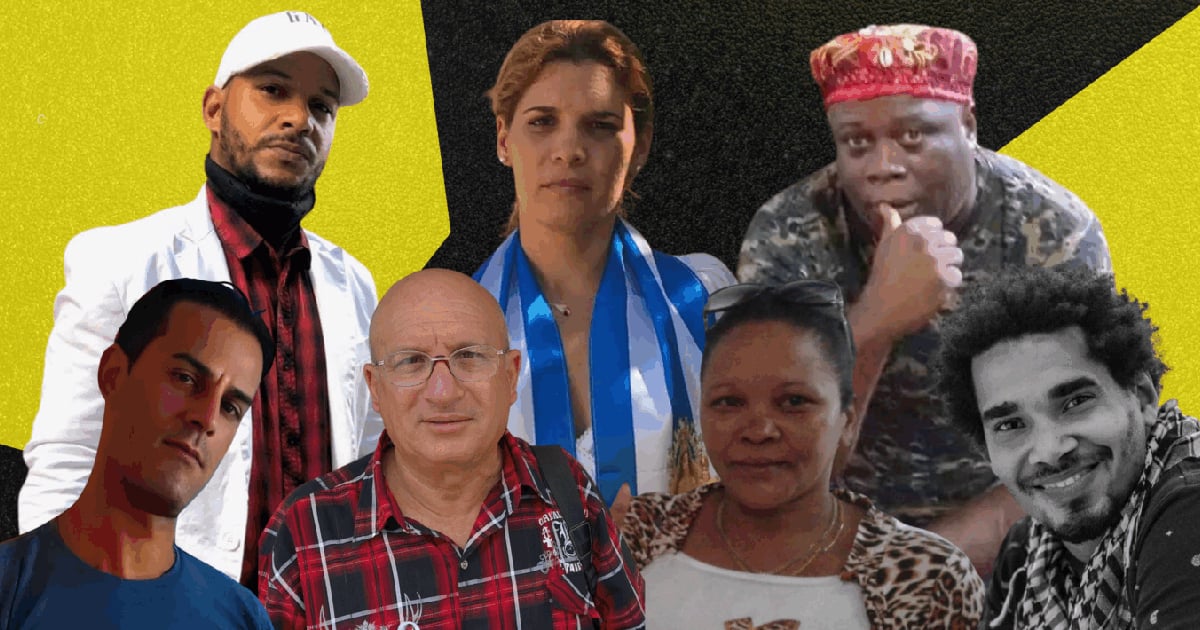
The regional director reiterated that individuals like Sayli Navarro Álvarez, Félix Navarro, Loreto Hernández García, Donaida Pérez Paseiro, Roberto Pérez Fonseca, Maykel Castillo Pérez (Maykel “Osorbo”), and Luis Manuel Otero Alcántara should not spend another day behind bars. She emphasized the need for the regime to end political detentions once and for all.
Excarcerations of 2025: Supervised Freedom, Not True Liberty
Marking a year since the start of penitentiary benefits in January 2025, independent platform Justicia 11J released its report titled "Neither Free Nor All: The Situational Nature and Repressive Conditions of Releases in Cuba."
The report revealed that between January 15 and March 10, 2025, at least 212 individuals sanctioned for political reasons benefited from releases, with 90% occurring within the first six days. Following a month-long silence, 21 additional releases were made, suggesting, according to Justicia 11J, a discretionary and non-linear process driven by political rather than legal criteria.
The organization asserted that these were not true freedoms, as released individuals remained subject to revocable penitentiary benefits, restricted movement, police surveillance, frequent summons, and explicit threats of return to prison.
Justicia 11J argued that the legal framework for releases failed to provide stability or prevent arbitrary detention, maintaining released individuals under state political and judicial control.
The group concluded that the 2025 releases shifted the repressive cycle from formal imprisonment to supervised release, from incarceration to constant oversight.
One year ago, Cuban and international human rights organizations criticized the releases, denouncing them as opaque, incomplete, unjust, and fraudulent. They also warned that over half of those released were common prisoners, not political detainees.
Key Questions on Political Detentions in Cuba
What is Amnesty International's stance on political prisoners in Cuba?
Amnesty International demands the immediate and unconditional release of all political prisoners in Cuba and an end to the repression of those exercising their rights to freedom of expression, association, and assembly.
How did the 2025 release process impact political prisoners?
The 2025 release process was marked by a lack of transparency and did not guarantee full freedom, as released individuals were subjected to revocable benefits, surveillance, and threats of re-imprisonment.