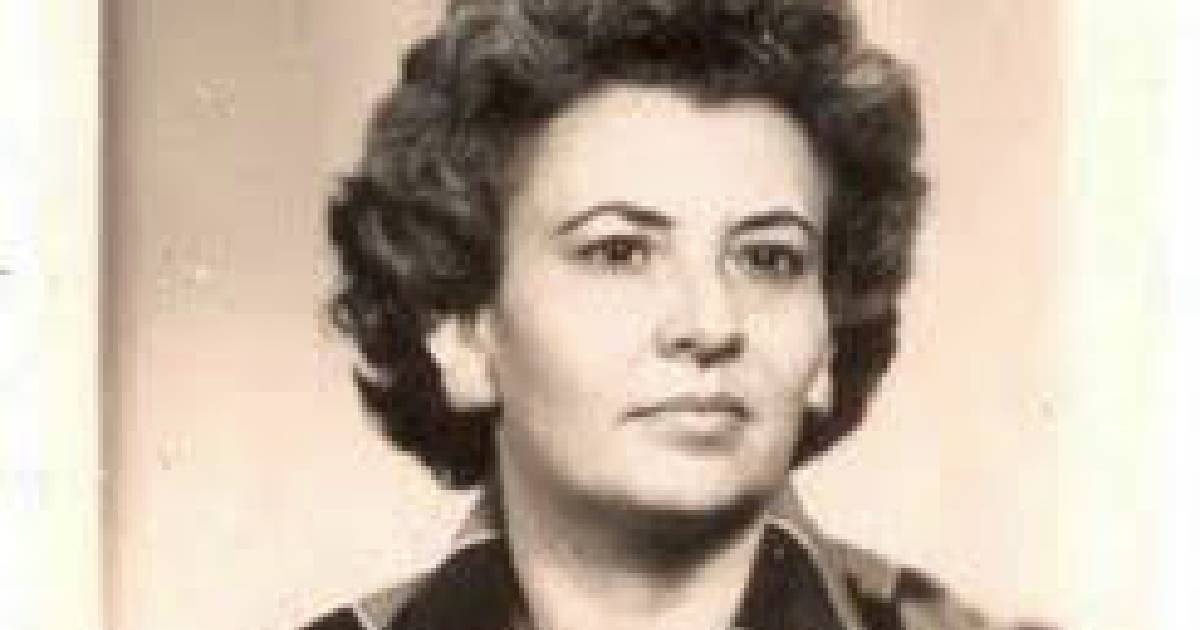
"On a day like today, January 17, 1970, G2 agents came pounding on our door. They pointed a gun at my grandmother, handcuffed my grandfather, and dragged my mother away. I was just nine years old."
This is how Engie Álvarez begins her account, as the daughter of former political prisoner Ena Álvarez, one of the many Cuban women who endured imprisonment and torture for political reasons during the early years of the communist regime.
Engie recalls that in the early hours of that day, agents from the G2, Cuba's political police, stormed into their home. This followed a report from the president of the Committee for the Defense of the Revolution (CDR), who claimed to have heard "transmission sounds" she attributed to messages sent to the CIA.
"In reality, it was interference from the radio station Voice of the Americas," the exile recounted from Miami in a Facebook post.
During the raid, her mother Ena, who had been released from prison just six years earlier, was beaten and dragged by the agents. "A towering soldier in olive green pushed her and punched her. She fell onto the street, hitting her head on the curb," her daughter recounts.
"She was unconscious for a few minutes. They put her in a patrol car with her head wrapped in a bloodied towel and took her to Villa Marista," she narrated.
According to the International Committee of Cuban Political Prisoners, Ena Álvarez had been sentenced to death in 1960 for a political cause, though the sentence was commuted to six years in prison because she was pregnant.
While in the women's prison in Guanabacoa, she gave birth to her daughter Enita while handcuffed, following a beating by the jailers. Ena would serve another sentence in the 1970s. She passed away in exile in Miami on July 12, 2010.
"This is just one of the many stories of abuse we endured since my mother was released from prison. I keep sharing it because it's a truth they want to silence, to the shame of those who have allowed the violation of human rights in Cuba," Engie concluded.
Throughout the 1960s and 1970s, hundreds of women were imprisoned on political grounds in Cuba, many accused of "counterrevolution" or "subversive activities." Organizations such as the International Committee of Cuban Political Prisoners document torture, childbirth in captivity, and inhumane conditions that remain as open wounds in the memory of the exiled community.
Understanding the Impact of Political Repression in Cuba
What triggered the arrest of Ena Álvarez in 1970?
Ena Álvarez was arrested after the president of the Committee for the Defense of the Revolution reported hearing "transmission sounds," mistakenly attributed to messages sent to the CIA.
How did Ena Álvarez's imprisonment affect her family?
Her arrest and imprisonment left a profound impact on her family, with her daughter Engie witnessing her mother's brutal treatment, which left lasting scars and a compelling need to share their story.
What does Engie Álvarez hope to achieve by sharing her story?
Engie Álvarez hopes to shed light on the human rights abuses in Cuba and preserve the memory of those who suffered, countering efforts to silence these narratives.