The General Customs of the Republic of Cuba disclosed on Tuesday that starting April 2026, a new legal framework will be in effect, reshaping its structure, operations, and responsibilities.
Published in the Official Gazette No. 7 of 2026, the newly introduced Decree-Law 108 "On Customs," its Regulation (Decree 134), along with nine supplementary resolutions, is touted by authorities as a step towards "modernizing" customs procedures and ensuring "a more agile, transparent, and professional foreign trade."
According to their official statement, these changes are part of a "continuous process of institutional improvement," aligning the new legal compilation with the constitutional principles and international standards advocated by the World Customs Organization.
Customs officials claim that these reforms will lead to "greater facilitation of international trade and new border security demands," in the backdrop of an economic crisis, falling production, and the nation's reliance on personal imports and family remittances.
Concentration of Customs Control
The new Decree-Law repeals previous regulations (Decree-Law 162 of 1996 and its 2019 reforms) and centralizes all powers at the pinnacle of state administration.
The head of the General Customs will have the authority to establish or dismantle customs units, authorize special regimes, retain or confiscate goods, and decide on the legal or voluntary abandonment of property to the State.
Article 14 grants vast powers, including the ability to "exercise customs control over premises, offices, warehouses, vehicles and other means of transportation, packaging materials, individuals, and other goods and locations, including searches."
The official can also authorize the "preventive measure of retention or seizure of goods, property, securities, documents on any type of media, and means of transportation" until the investigation concludes or the corresponding sanction is applied.
This provision bestows near-police powers on Customs, in an area previously dominated by economic oversight rather than direct intervention.
Balancing "Modernization" with Surveillance
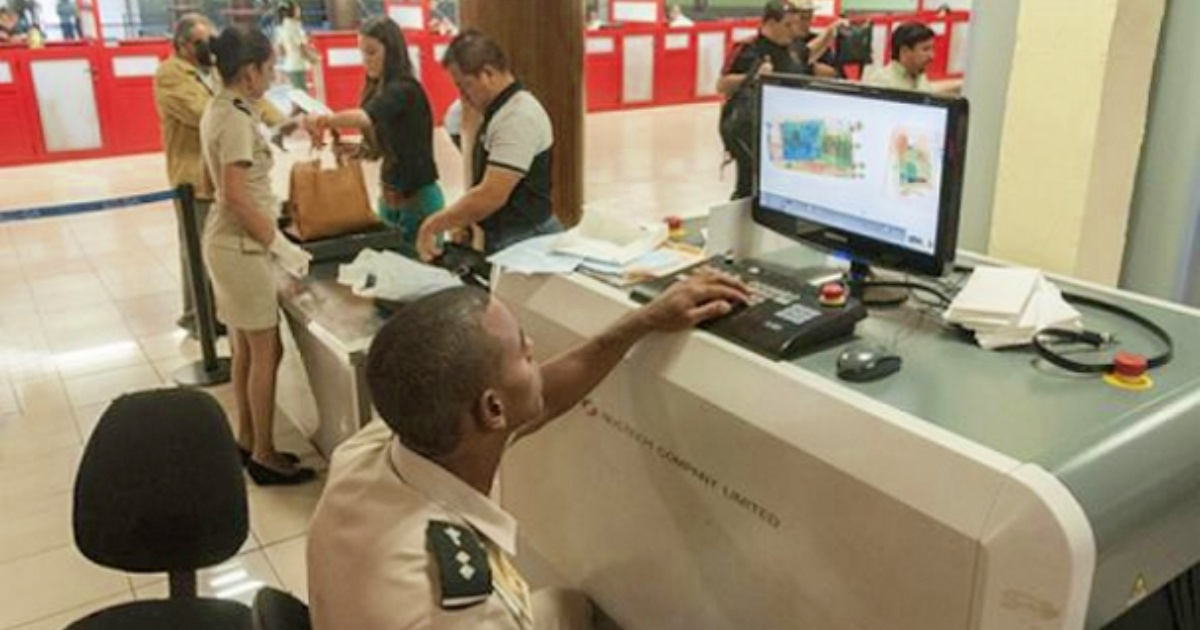
The legal text establishes a permanent technological control system, incorporating "radiological inspections on individuals, their luggage, cargo, and transportation," "canine inspections on goods, transportation, and people," and "a closed-circuit television system in customs facilities."
These measures are justified in the name of security but effectively institutionalize the mass inspection of people and goods at borders.
Additionally, the Decree-Law explicitly authorizes Customs to prevent a passenger from boarding if they refuse to undergo security checks:
"Customs is authorized to prevent a person from accessing a sterile area or boarding an international transportation means if they refuse to undergo security control."
This measure enhances customs authority discretion and paves the way for arbitrary practices, especially against travelers carrying non-commercial goods or humanitarian aid.
The legal package is part of a broader strategy to recentralize economic control amidst the deterioration of the state system.
In a country where the population relies on familial shipments, international packages, and personal imports, the new legislation may exacerbate bureaucracy and costs for those attempting to bring in essential items or supplies for small businesses.
The Government assures that during the 90 days before the Decree-Law takes effect, training and outreach activities will be conducted to "clarify doubts, opinions, or suggestions that may arise through established communication channels."
Empowering Control in the Name of "Socialism"
Despite the official narrative of modernization and efficiency, Decree-Law 108, encompassing over 250 pages, strengthens the political and fiscal control of the State over foreign trade, travelers, and international parcels. Article 12 explicitly states:
"The General Customs of the Republic is responsible for directing, controlling, and applying state policy in customs matters, ensuring, within its jurisdiction and competence, the facilitation of trade and the security of socialist society."
The concept of "security of the socialist society" is repeatedly mentioned throughout the document, subordinating commercial and logistical functions to a logic of surveillance and ideology.
Article 13 also defines the institution's duty to:
"Direct, control, and confront, within its jurisdiction and competence, actions that endanger the security of socialist society, the economy, and international departure."
In practice, this approach turns Customs into a political tool of state control rather than a public service aimed at facilitating trade or supporting economic actors.
Nine Resolutions to Strengthen Control
Accompanying Decree-Law 108 is a set of nine resolutions, all published in the same Official Gazette issue, reinforcing its operational structure:
- Resolution 529/2025: Establishes rules for customs control over goods.
- Resolution 530/2025: Regulates the provisioning of vessels, boats, and aircraft.
- Resolution 531/2025: Defines the temporary storage regime for goods.
- Resolution 532/2025: Governs the application of various customs regimes.
- Resolution 533/2025: Regulates the clearance of goods.
- Resolution 534/2025: Outlines procedures for declaring or accepting the abandonment of property to the State.
- Resolution 535/2025: Creates the Authorized Economic Operator (OEA) system, through which Customs will certify companies deemed "secure and reliable."
- Resolutions 536 and 537/2025: Expand control over naval and aircraft operations, and cargo and supply activities.
Regarding the Authorized Economic Operator, this initiative is presented as a step towards professionalism, but the decree stipulates that it will only be granted to entities demonstrating a "satisfactory record of tax and customs obligations," a requirement excluding most entrepreneurs and private cooperatives.
A "Modern Customs" with a 1970s Mindset
Despite its rhetoric of updating, Decree-Law 108 replicates the classic mechanisms of total state control in Cuba: surveillance, punishment, and the subordination of economic activity to political power.
The announced "modernization" appears more like an administrative reform of control rather than a genuine move towards efficiency or transparency.
As the country remains mired in a deep economic crisis, the creation of a more powerful and bureaucratic customs apparatus could further impede the flow of resources sustaining thousands of Cuban families.
FAQs on Cuba's New Customs Legislation
What is the purpose of the new customs framework in Cuba?
The new customs framework aims to modernize procedures, ensuring more agile, transparent, and professional foreign trade, according to Cuban authorities.
How does the new Decree-Law affect individual travelers?
The Decree-Law enhances customs control, allowing for extensive inspections of people and goods at borders, potentially leading to increased discretion and arbitrariness against travelers.
What are the implications for private businesses in Cuba?
The legislation may increase bureaucracy and costs for entrepreneurs, as the Authorized Economic Operator status requires a satisfactory tax and customs record, which many private businesses may not meet.