The Cuban government has belatedly and indirectly acknowledged that a portion of those infected with the chikungunya virus will experience chronic joint inflammation, a debilitating aftermath that can severely impact the quality of life for those affected.
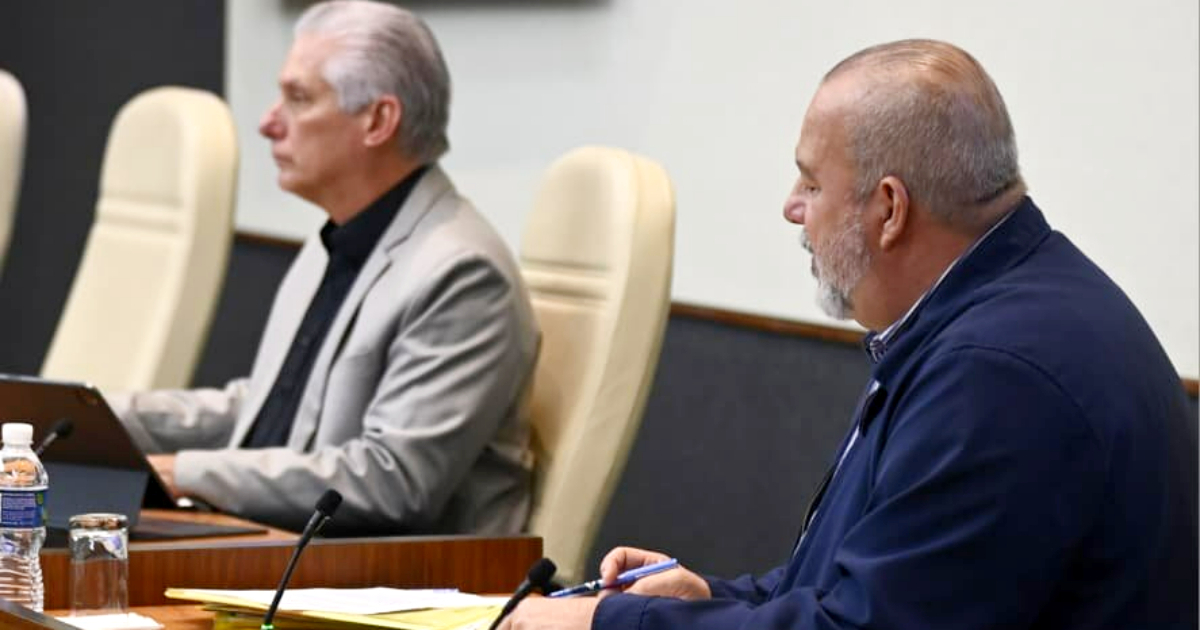
This admission emerged during a gathering of experts and scientists led by Miguel Díaz-Canel and Prime Minister Manuel Marrero Cruz, where preliminary results from studies using the biotechnological drug Jusvinza in patients at post-acute and chronic stages of the disease were presented.
Despite official media framing the meeting as a session with "encouraging results," statements from specialists painted a troubling picture: not all patients will recover after the acute phase, and an unspecified "percentage" will develop chronic inflammatory arthropathy, akin in some ways to rheumatoid arthritis.
The use of the vague term "a percentage," without concrete figures, highlights the lack of transparency with which authorities are handling the real impact of the outbreak and its consequences.
Dr. Miguel Hernán Estévez del Toro, director of the Hermanos Ameijeiras Clinical-Surgical Hospital and a rheumatologist, acknowledged that after three months of progression, some patients will continue to experience persistent inflammation with the same inflammatory mediators present in chronic rheumatic diseases.
Practically, this translates to constant pain, joint stiffness, functional limitations, and sustained deterioration in daily life for thousands of Cubans.
Delayed Acknowledgment
However, the issue is not solely medical. The government now admits the chronic aftermath of chikungunya when the epidemic has already resulted in thousands of infections, following months of underreporting, lack of medications, analgesic shortages, and the collapse of primary care.
Until recently, the official narrative insisted the virus had a "benign" evolution and that the majority of patients recovered without complications.
This strategy of downplaying the outbreak's severity—a common approach in the regime's health communication—has helped obscure the crisis's magnitude and dilute political accountability.
Today, the acknowledgment that some patients will suffer lifelong aftereffects contradicts the optimistic narrative maintained for months by the Ministry of Public Health (MINSAP) and state media.
Science as Propaganda
The meeting, held in the palace halls and presented as an example of "scientific rigor," left essential questions unanswered: How many Cubans have been truly infected? How many exhibit prolonged symptoms? What plan does the healthcare system have to care for them long-term?
None of those data were disclosed. Instead, the discourse focused on highlighting the "safety" and supposed advancements of Jusvinza, a drug originally developed to treat rheumatoid arthritis and COVID-19, now being "repositioned" for chikungunya.
Jusvinza, produced by the Center for Genetic Engineering and Biotechnology (CIGB), has been presented by the authorities as a possible solution for the inflammatory phase of chikungunya.
Researchers claim the medication has a good safety profile and can modulate the immune response. However, even scientists admit the results are preliminary, and no firm conclusions will be available until March 2026.
Nevertheless, the official propaganda showcases it as a "national achievement," attempting to project an image of biotechnological efficiency amid a healthcare system experiencing one of its worst crises in decades.
This instrumentalization of science for political ends is not new. During the COVID-19 pandemic, the regime used announcements of national vaccines and experimental products as internal propaganda tools while hospitals collapsed and basic medications were lacking.
Lack of Prevention, Resources, and Transparency
Now, the same pattern repeats: a medication in the testing phase is praised while the extent of the real damage is concealed, and any self-criticism regarding the structural causes that enabled the virus's spread is avoided.
The official acknowledgment arrives when it's impossible to hide the outbreak's effects. The causes are well-known: failure of vector control, deterioration of basic sanitation, garbage accumulation, insecticide shortages, and scarcity of medical supplies.
For months, communities have reported mosquito proliferation, lack of fumigation, and the absence of effective preventive measures. The institutional response was delayed and reactive, limited to propagandistic campaigns without visible results.
Moreover, Cuba's healthcare system currently lacks the capacity to rehabilitate patients with chronic sequelae. Access to anti-inflammatories, analgesics, or physiotherapy is limited, and hospitals do not have the staff or equipment necessary to sustain prolonged treatments.
Under these conditions, an illness that can be managed on an outpatient basis in other countries becomes a debilitating burden with no real medical response.
A Calculated Opacity
The use of the term "a percentage" encapsulates the institutional ambiguity and secrecy that characterize the regime's healthcare management.
This is not due to a lack of scientific knowledge—the relationship between chikungunya and post-viral arthritis is well documented—but a political decision not to disclose figures.
In a system without public statistics or accountability, this vagueness serves a purpose: to acknowledge without admitting, and inform without committing.
The international medical community estimates that between 20% and 40% of chikungunya-infected patients exhibit persistent joint symptoms.
If these proportions applied to the Cuban context, thousands might suffer long-term pain, stiffness, or functional disability.
But the government avoids any official estimate, perhaps to avoid admitting that preventive inefficacy and lack of resources worsened a situation that could have been contained.
Beyond the numbers, the human impact is evident.
Patients with chronic joint inflammation face continuous pain, loss of mobility, and work difficulties in a country where most rely on physical labor and incomes are insufficient to cover private treatments.
The "chronic phase" of chikungunya is not just a medical challenge but a social and economic problem the State has chosen to ignore.
The official message, mixing medical warnings with political triumphalism, attempts to close the topic by asserting that "virus manifestations tend to decrease."
However, the reduction in infections does not erase the accumulated cost: thousands of Cubans could be left with sequelae for which the healthcare system offers no effective solutions.
The government acknowledges the consequences when it's already too late, following months of concealment and propaganda.
Once again, science is used as a tool for legitimacy, while the population suffers the effects of a healthcare management system marked by opacity, improvisation, and neglect.
Understanding Chikungunya's Impact in Cuba
What are the long-term effects of chikungunya in Cuba?
A portion of individuals infected with the chikungunya virus in Cuba may develop chronic joint inflammation, leading to persistent pain, stiffness, and functional limitations.
How is the Cuban government addressing chikungunya?
The government has acknowledged the chronic effects of chikungunya, but there is criticism over the lack of transparency and effective measures to manage the outbreak and its long-term consequences.