The Mexican National Institute of Migration (INM) has disclosed that fewer than 3% of foreign nationals applying for refugee or humanitarian permits actually receive effective protection.
According to El Universal, out of nearly 150,000 requests documented from October 2024 to June 2025, only 5,191 humanitarian cards were approved.
Within this group, Cubans are at the forefront. Of the more than 4,000 cards issued to migrants from the Americas, 3,284 were granted to individuals from the island, accounting for over 79% of the nation's total.
Most of these individuals fled due to political repression, economic turmoil, and the lack of freedoms in Cuba, emphasized the report.
The official report highlights that even though Mexico promotes a "humanitarian policy," in reality, the processes are drawn out over months, leaving applicants in a legal limbo without the ability to work, study, or access basic services.
Human rights organizations and activists warn that the Mexican Commission for Refugee Assistance (Comar) is overwhelmed by a lack of resources and staff, worsening the situation as thousands await responses in shelters or on the streets in the country's southern regions.
The report "Migration and Human Rights in Ciudad Juárez" by Derechos Humanos Integrales en Acción (DHIA) highlights major violations faced by those in forced mobility, including irregular deportations, harassment by authorities, due process failures, loss of belongings, extortion, and a lack of information on their rights.
"Individuals fleeing from Cuba and other Caribbean nations face not only the persecution that forced them to leave but also institutional indifference in Mexico," stated a university coordinator specializing in migration, who highlighted the increasing vulnerability of asylum seekers.
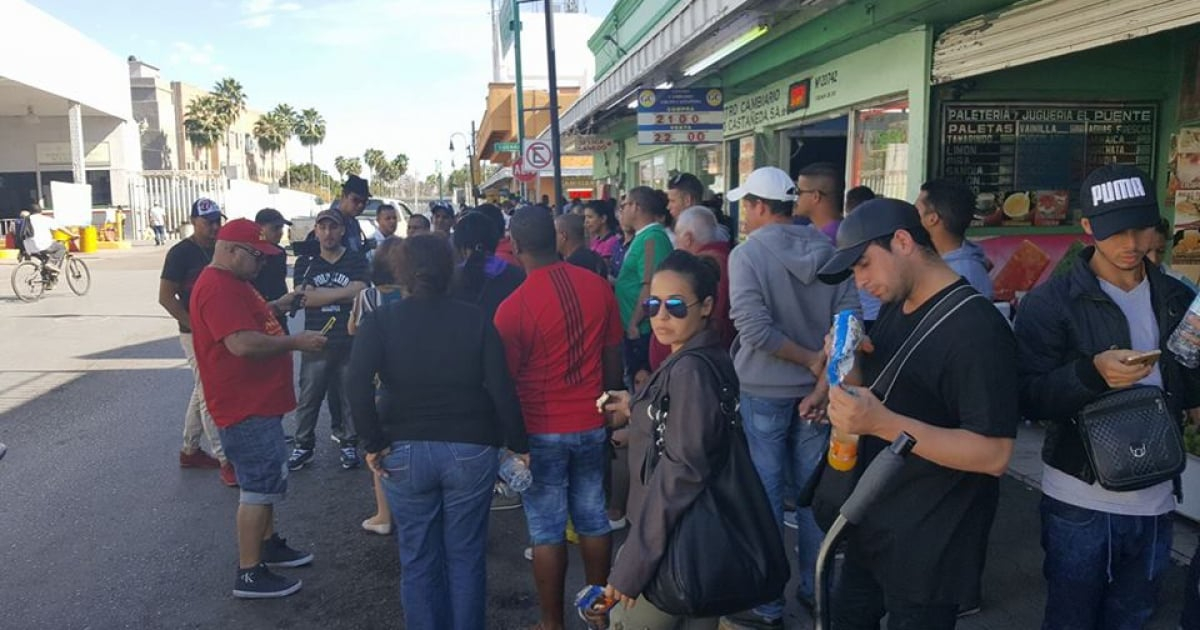
In border cities like Tapachula or Tijuana, hundreds of Cubans remain stranded while awaiting interviews or notifications, a process that can extend beyond a year.
Frequently, delays compel migrants to continue their journey toward the northern border under dangerous conditions.
Despite these challenges, Mexico remains a key transit and temporary refuge destination for Cubans seeking to escape the Havana regime and forge a path toward the United States.
Humanitarian Immigration Challenges for Cubans in Mexico
What percentage of Cubans receive humanitarian protection in Mexico?
Only about 79% of humanitarian cards granted to migrants from the Americas are given to Cuban nationals.
What are the main challenges faced by Cuban migrants in Mexico?
Cuban migrants often face extended legal processes, a lack of access to work or basic services, and institutional indifference, along with possible harassment and deportation.
Why do Cubans flee their country?
Many Cubans escape due to political repression, economic crises, and the absence of freedoms in Cuba.