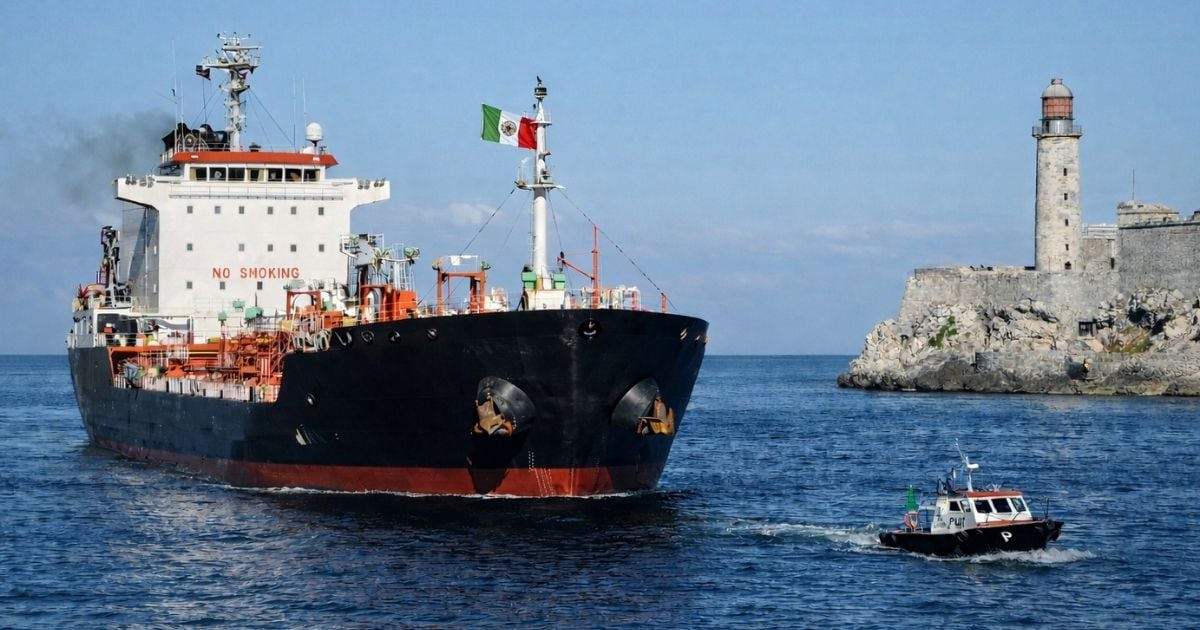
In 2025, Mexico exported petroleum products to Cuba valued at a staggering 10 billion pesos (approximately $560 million), marking the highest recorded amount in the past 25 years, as reported by the Bank of Mexico and cited by Animal Político.
The volume of oil exported quadrupled what was sent during Enrique Peña Nieto's administration, when cumulative sales to the island hovered around 2.5 billion pesos.
The annual increase is unprecedented: between 2013 and 2018, Mexico exported an average of $23 million annually, but in 2025 alone, the figure soared beyond $550 million.
President Claudia Sheinbaum refuted claims of increased crude shipments by her government, although she acknowledged a “particular shipment” that she described as part of contracts and “humanitarian aid.”
"For many years, barrels have been sent to Cuba for various reasons. Some are contracts, others are humanitarian aid," she stated during a press conference on January 7.
Yet, Animal Político indicates that official data contradicts the presidential narrative: the Bank of Mexico's historical series on petroleum exports shows a sharp rise in 2025, coinciding with a significant cutback in Venezuelan crude shipments to Cuba at the end of that year, alongside the presence of U.S. ships in the Caribbean.
The Financial Times was also cited, reporting on January 6 that Mexico had overtaken Venezuela as Cuba's leading oil supplier, while the White House closely monitors this new energy dynamic.
U.S. Energy Secretary Chris Wright told CBS News (as quoted by Animal Político) that Donald Trump's administration "has not asked Mexico to stop oil supplies to Cuba," although the matter "remains under review."
The exported products comprise crude oil, natural gas, and various derivatives such as gasoline, diesel, jet fuel, liquefied petroleum gas (LPG), and fuel oil, as well as industrial oils, according to the Bank of Mexico records.
Since late 2023, Mexico began addressing Cuba’s energy deficit through Gasolinas Bienestar, a subsidiary of Pemex, sending approximately 17,000 barrels of crude daily and another 2,000 of derivatives, as reported by AFP.
Following the collapse of Nicolás Maduro's regime, Venezuelan ships ceased their voyages to the island.
Maritime tracking analyzed by the agency reveals that the tanker Ocean Mariner, loaded with Mexican oil, became one of the few vessels to continue sporadically docking at the ports of Havana and Matanzas.
Experts caution that Sheinbaum's decision places Mexico in a precarious position with Washington.
Former Foreign Minister Jorge Castañeda told AFP that the president "is jeopardizing the relationship with the United States over an issue with minor economic impact but significant strategic importance like the USMCA."
While Sheinbaum maintains that "Mexico is a sovereign country and makes its own decisions," Animal Político notes that the Bank of Mexico series does not specify whether shipments to Cuba were sales or donations.
Analysts such as Gerardo Arreola, cited by AFP, warn that Cuba’s energy crisis could lead to a serious humanitarian situation and spark a new wave of migration directly affecting Mexico. "We must not forget that Cuba shares maritime borders with Mexico," he emphasized.
President Claudia Sheinbaum has pledged that her government will release detailed information about oil shipments to Cuba, with an announcement expected this week, according to Animal Político.
Implications of Mexico's Oil Exports to Cuba
Why did Mexico increase its oil exports to Cuba in 2025?
In 2025, Mexico significantly increased its oil exports to Cuba, partly in response to a drastic reduction in Venezuelan oil shipments to the island and as part of both contractual obligations and humanitarian aid efforts.
What are the potential consequences of Mexico's oil supply to Cuba for U.S.-Mexico relations?
Mexico's oil supply to Cuba could strain its relations with the United States, as it involves strategic implications under the USMCA agreement and might be viewed cautiously by the U.S. government.
What types of petroleum products did Mexico send to Cuba?
Mexico's shipments to Cuba included crude oil, natural gas, and various derivatives such as gasoline, diesel, jet fuel, LPG, and fuel oil, along with industrial oils.