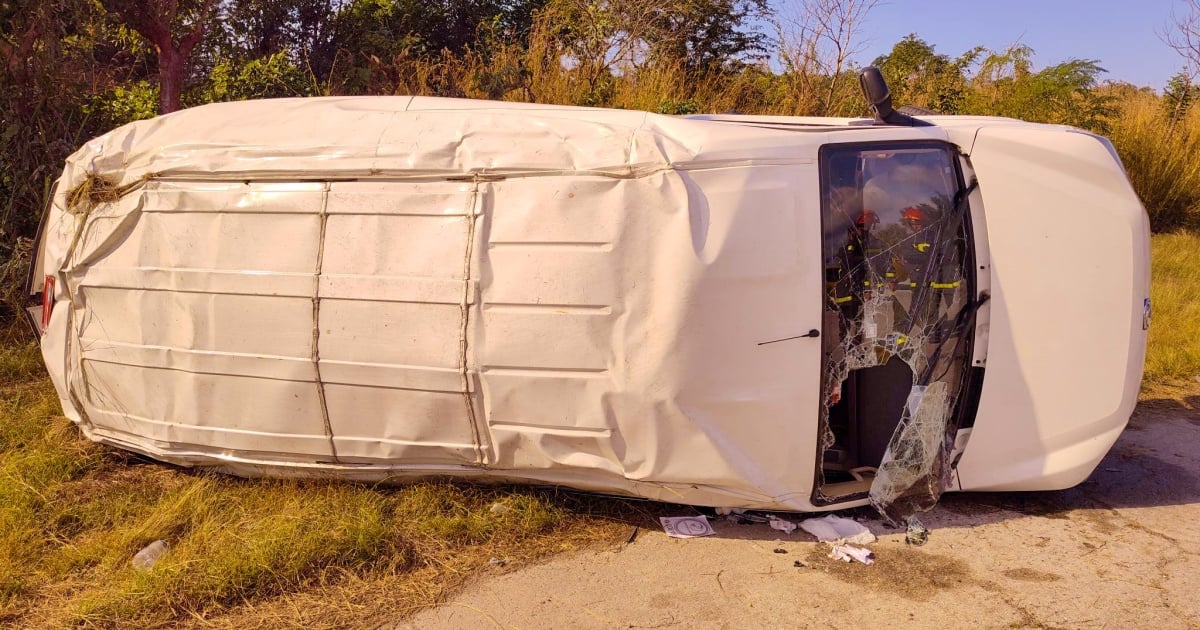
A devastating traffic accident shook Villa Clara province on Saturday when a minibus overturned, resulting in one fatality and fourteen individuals injured.
Details about the deceased have yet to be revealed.
The vehicle was carrying the musical group "Velito, el Bufón", and all members sustained injuries.
The incident unfolded on the morning of January 17 at kilometer 249 of the National Highway.
Initial reports indicate the accident occurred around 9:00 a.m. when a minibus, license plate W008980, traveling from Havana to Camagüey, veered off the road and flipped multiple times on the asphalt.
The driver admitted to falling asleep at the wheel, leading to the vehicle losing control. This statement immediately pointed to driver fatigue as a probable cause, a common factor in regional accidents, according to recent traffic authority reports.
Emergency Response and Medical Care
In response to the crash, the Integrated Medical Emergencies System was activated, dispatching first aid and evacuation teams in collaboration with the Ministry of the Interior and the provincial health system.
Initially, the injured were taken to the Juan Bautista Contreras Foule Polyclinic in Ranchuelo for primary care. They were later transferred to the Arnaldo Milián Castro Clinical-Surgical Hospital in Santa Clara for further medical treatment.
While all injuries were classified as minor, the severity of the incident and the number of people involved led authorities to categorize it as a mass accident. Lieutenant Colonel Heriberto López Pérez de Prado, head of the Provincial Traffic Unit, confirmed this in a statement to the Cuban News Agency (ACN).
"The incident was classified as a mass accident due to the number of victims involved and the need for a coordinated response from multiple agencies," the official explained.
Authorities on the Scene
High-ranking officials arrived at the accident site to oversee rescue operations and care for the injured. Among them were Brigadier General Israel Cubertier Valdés, head of the Villa Clara Military Region; Colonel Orelvis Fernández Puig, provincial head of the Ministry of the Interior (Minint); as well as Susely Morfa González, first secretary of the Provincial Party Committee, and Governor Milaxy Yanet Sánchez Armas.
The presence of municipal leaders, specialized firefighting units, Minint personnel, and healthcare workers highlighted the scale of the emergency and the multi-sector response activated for this event.
Increasing Concerns Over Road Safety
This accident happens amid growing concerns about road safety in Villa Clara. Official figures show the province ended 2025 with over 500 traffic incidents, marking a significant increase from 2024, with nearly a hundred additional incidents.
The worsening situation has alarmed authorities and experts, placing Villa Clara among the worst in national traffic accident rates.
Accident rates increased by more than a third during 2025, intensifying calls for heightened caution.
The National Revolutionary Police (PNR) and the Provincial Traffic Directorate identify several primary causes:
- Driver fatigue and other distractions.
- Failure to yield right of way.
- Pedestrian violations.
- Lack of maintenance for both private and state vehicles.
Notably, accidents due to drivers falling asleep have risen, often linked to long driving hours, insufficient regulation of rest periods, and, in many cases, pressure to meet itineraries under poor conditions.
As of the article's publication, no further information about the tragic event is available.
Key Questions About Villa Clara's Traffic Safety
What caused the minibus accident in Villa Clara?
The accident was caused by the driver falling asleep at the wheel, which led to the loss of vehicle control and the subsequent overturning.
How are injuries classified in this type of accident?
In this incident, all injuries were classified as minor, but due to the number of people involved, it was categorized as a mass accident.
Who responded to the emergency in Villa Clara?
The response involved the Integrated Medical Emergencies System, the Ministry of the Interior, and provincial health services, along with high-ranking local officials and specialized emergency personnel.