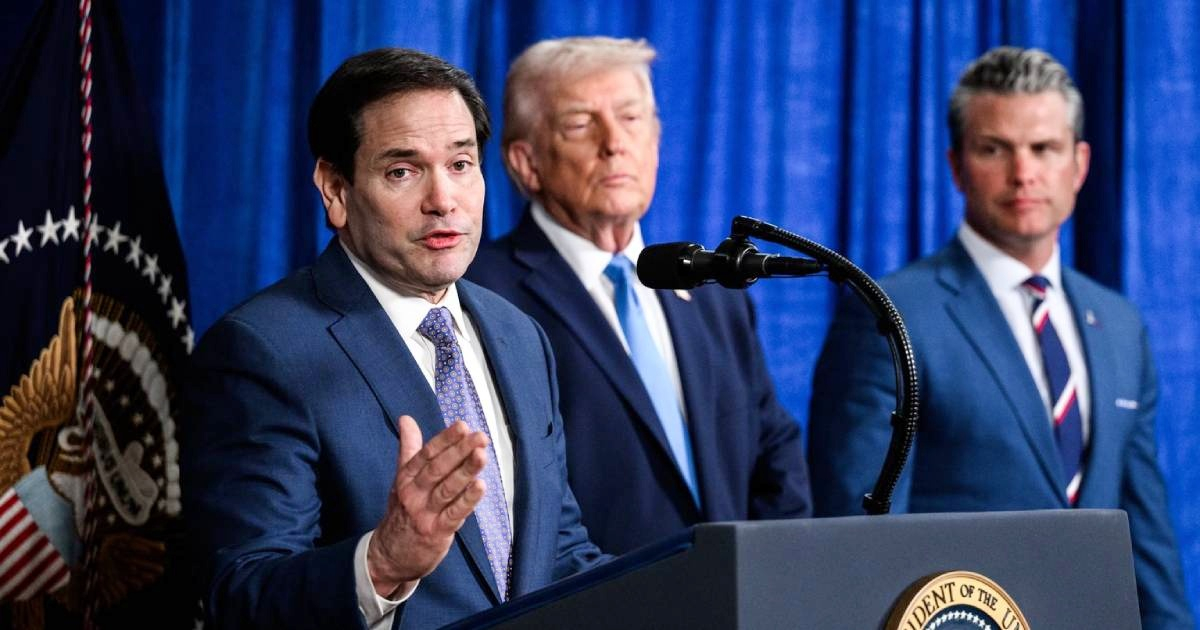
In a move that reshapes the international approach to the Gaza Strip, President Donald Trump of the United States has unveiled a pivotal body to oversee the reconstruction and governance of the Palestinian enclave: the Peace Council for Gaza.
This newly formed entity, officially named the Executive Board for Gaza, will include prominent figures from the diplomatic, economic, and strategic spheres worldwide, with a notable presence of individuals closely aligned with the White House.
Key Figures in the Board
Among the surprising appointments is Senator Marco Rubio, currently serving as Secretary of State, who has been entrusted by Trump with a strategic role within the Board. Joining him are former British Prime Minister Tony Blair, presidential envoy Steve Witkoff, and Jared Kushner, Trump's son-in-law and a frequent participant in the administration's international negotiations.
Other announced members include World Bank President Ajay Banga; financier Marc Rowan, CEO of Apollo Global Management; and Roberto Gabriel, a national security advisor. The White House clarified that each member will take on specific portfolios, including governance enhancement, regional relations, reconstruction, investment attraction, large-scale financing, and capital mobilization.
Global Ambitions of the Peace Council
Trump's vision for this body is ambitious. In his words, it is "the largest and most prestigious council ever assembled at any time and place." The U.S. president has assumed direct leadership of the Board, underscoring the political significance of this entity in his administration's global strategy.
Besides the aforementioned figures, the Executive Board will include regional and international representatives: Turkey's Foreign Minister Hakan Fidan; Qatari diplomat Ali al Zawadi; Egyptian intelligence chief Hasan Rashad; UAE Minister Rim al Hashimi; Cypriot-Israeli businessman Yakir Gabay; and Dutch diplomat Sigrid Kaag, who has coordinated various peace initiatives in the Middle East.
Plan's Second Phase: Technocratic Governance and Hamas Disarmament
The establishment of this Peace Council signals the formal beginning of the second phase of Trump's peace plan for Gaza, which envisions a transition to a technocratic governance model with an emphasis on the disarmament of the Islamist group Hamas.
The White House reiterated that one of the central goals is establishing a local government independent of armed structures, for which the National Committee for the Administration of Gaza (NCAG) has been created. This committee will be led by Ali Shaath, a Palestinian economist with administrative experience.
According to the official statement, the NCAG "will oversee the restoration of essential public services, the reconstruction of civil institutions, and the stabilization of daily life in Gaza, while laying the groundwork for a long-term self-sustaining governance."
International Military Initiative Led by the U.S.
To ensure the enclave's security during this transition, Washington has promoted the creation of an International Stabilization Force (ISF). This force will be led by U.S. Major General Jasper Jeffers, a special operations commander, acting as a UN contingent responsible for ensuring security, disarmament, and the safe delivery of humanitarian aid.
Complementing this military structure, Bulgarian diplomat Nickolay Mladenov, former Bulgarian Foreign Minister and ex-UN Special Coordinator for the Middle East Peace Process, has been appointed as High Representative for Gaza. His role will be to serve as a political liaison between the Peace Council and the Palestinian technical government.
Strategic Oversight of an Ongoing Plan
The Executive Board is tasked with implementing the 20 points of the U.S. presidential plan aimed at achieving "lasting peace, stability, reconstruction, and prosperity in the region." Key measures include the complete disarmament of Hamas, the reconstruction of civilian infrastructure, the development of nonpartisan governmental institutions, and the international mobilization of economic resources.
"The committee will govern Gaza until a reformed Palestinian Authority can assume power," explained the White House, hinting at a broader transition that could, in future phases, pave the way for Palestinian self-determination.
Criticism and Unanswered Questions
Despite the announcement's boldness, doubts remain. The official statement and remarks by Witkoff—Trump's personal friend from his real estate days in New York—omit references to Israeli obligations, such as the complete military withdrawal from Gaza, a primary Palestinian demand.
No timeline has been mentioned for the creation of a Palestinian state, as originally outlined in Trump's 2020 peace plan. Meanwhile, since the ceasefire began in October, hundreds of Palestinians have been killed in Israeli attacks, casting shadows on the feasibility of a peaceful transition.
With this Executive Board, Trump not only strengthens U.S. control over the transition process in Gaza but also defines an unprecedented structure heavily influenced by figures close to his political and business orbit. The inclusion of Marco Rubio as a Latino face and former British Prime Minister Tony Blair as an international figure aims to lend legitimacy and breadth to the body, though critics warn of its lack of genuine Palestinian representation and the geostrategic interests at play.
The execution of this second phase of the plan will depend not only on the Council's coordination capability but also on regional political will, Hamas's response—so far, it has shown no intention of disarming—and international commitment to a reconstruction that does not repeat past mistakes. Meanwhile, Gaza's future remains uncertain, marked by diplomacy, tensions, and a power dynamic that currently bears a U.S. imprint.
Key Questions about the Gaza Peace Initiative
What is the purpose of the Peace Council for Gaza?
The Peace Council for Gaza is intended to oversee the reconstruction and governance of the Gaza Strip, with the aim of achieving lasting peace, stability, and prosperity in the region.
Who are some of the key figures on the Executive Board for Gaza?
Key figures include Marco Rubio, Tony Blair, Jared Kushner, Steve Witkoff, Ajay Banga, Marc Rowan, and Roberto Gabriel.
What are the main objectives of the U.S. plan for Gaza?
The main objectives include disarming Hamas, reconstructing civil infrastructure, developing nonpartisan governmental institutions, and mobilizing international economic resources.