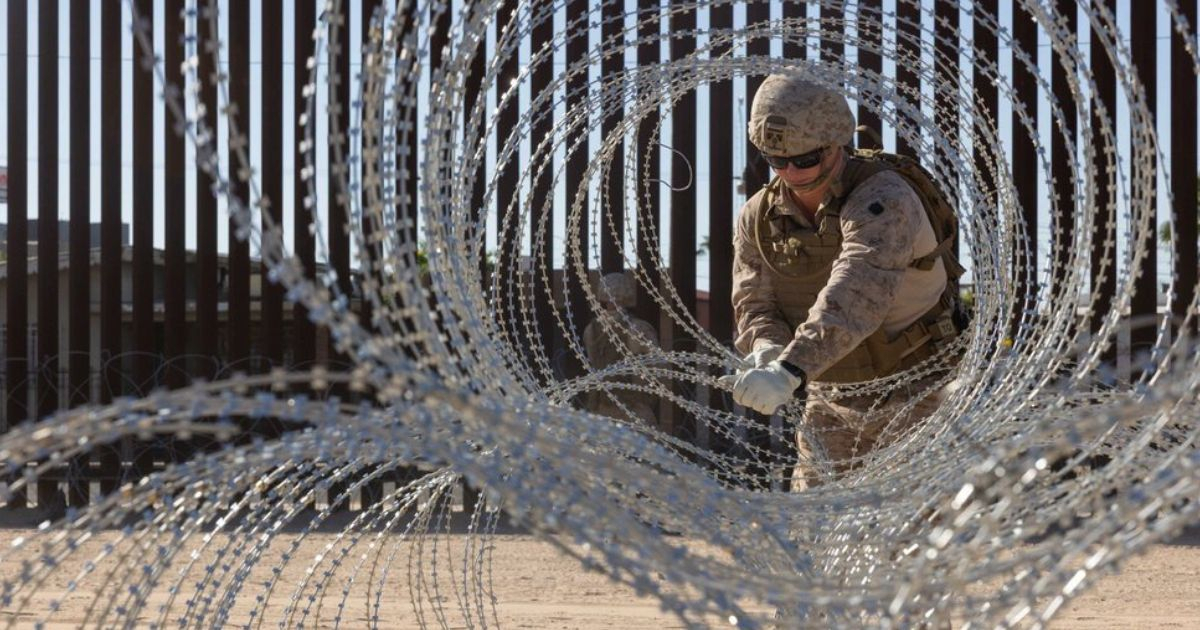
The United States concluded December 2025 with historical lows in migrant encounters at its borders and has gone eight consecutive months without releasing migrants, thanks to security measures instituted by Donald Trump, according to official data from the Border Patrol.
The Customs and Border Protection (CBP) announced this Friday that December 2025 saw an unprecedented drop in irregular crossings, both monthly and at the beginning of fiscal year 2026 (October 1, 2025, to September 30, 2026), under the Republican administration's immigration policies.
According to the official statement, there were 91,603 migrant encounters nationwide in October, November, and December, marking the lowest number ever recorded for the start of a fiscal year and 25% lower than the previous record set in 2012.
In the country's southwest, the Border Patrol reported 21,815 apprehensions during the first fiscal quarter, a staggering 95% decrease compared to the average during Joe Biden's administration (2021-2025).
In December alone, there were 30,698 encounters across the nation, representing a 92% drop from the peak reached under the previous government.
At the southwest border, 6,478 apprehensions were recorded, averaging 209 people per day, figures that CBP notes are less than what was detained in just four days in December 2024.
The Department of Homeland Security also highlighted that, for the eighth consecutive month, no migrants were released under parole programs, contrasting with the 7,041 released in December 2024.
Homeland Security Secretary Kristi Noem described the results as "extraordinary" and declared that the U.S. border is now "the safest in history."
Authorities also noted an increase in drug seizures. In December, CBP confiscated 39,030 pounds of narcotics, including 865 pounds of fentanyl, over 12,800 pounds of methamphetamine, and nearly 3,800 pounds of cocaine, which the Government presented as a central part of its national security strategy.
In parallel, the agency emphasized its role in implementing the White House's tariff policy. In December alone, it processed imports worth $314 billion and identified $28.4 billion in owed tariffs.
From January to December, total revenue from fees, taxes, and tariffs exceeded $297 billion.
The report emerges amid a general tightening of immigration policy, which includes economic incentives for the voluntary departure of undocumented immigrants and an official stance of "zero tolerance."
While the Trump administration showcases the figures as proof of effectiveness, human rights organizations have raised concerns about the coercive nature of these measures and their impact on vulnerable communities.
Key Insights on U.S. Border Security and Immigration Policy
What factors contributed to the decline in irregular migrant crossings at the U.S. border?
The decline is attributed to stringent security measures and immigration policies implemented by the Trump administration, resulting in reduced crossings and no migrant releases under parole.
How has the U.S. administration addressed drug trafficking at the border?
The government has intensified efforts to seize narcotics, with CBP confiscating significant quantities of drugs such as fentanyl, methamphetamine, and cocaine as part of its national security strategy.