The energy crisis in Cuba shows no signs of easing. On January 16, the National Electric System (SEN) was confirmed by the Union Electrica (UNE) to have been compromised 24 hours the previous day, and the situation persisted into the morning.
Rather than an isolated incident, blackouts have become a persistent issue across the island, highlighting the government's inability to provide a basic service to its citizens.
According to the official report, the peak outage on Thursday was 2010 MW at 6:30 pm, surpassing the forecast due to the shutdown of unit 6 at the Renté thermoelectric plant and unit 8 at the Mariel CTE.
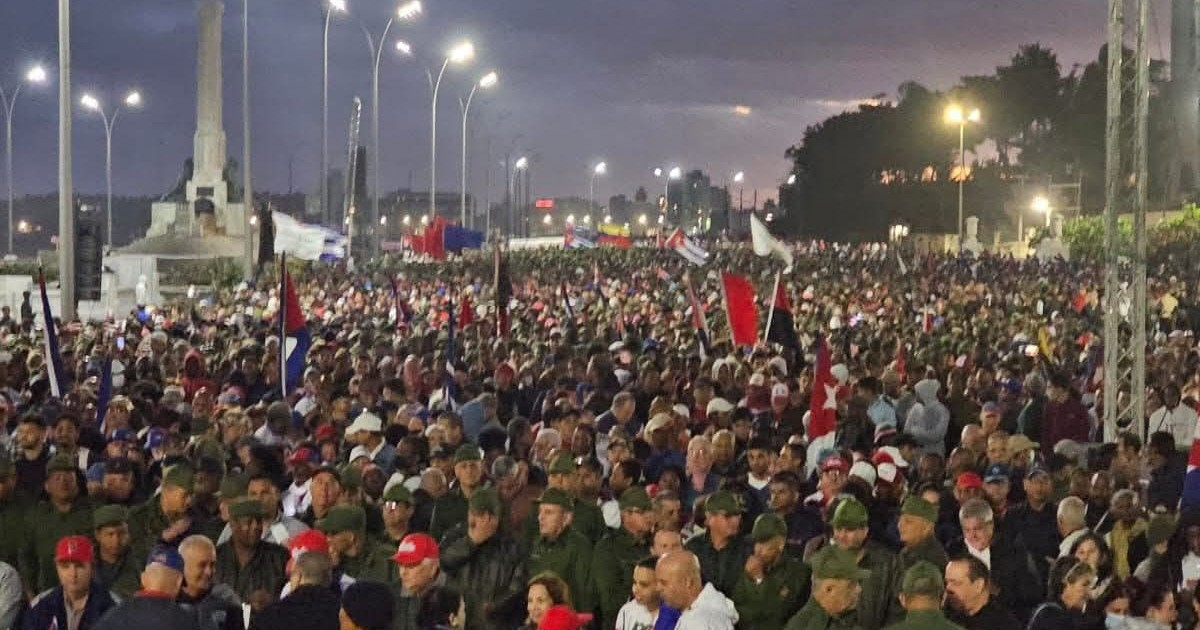
By 6:00 am on Friday, as preparations for the March of the Combatant People organized by Díaz-Canel were underway, SEN's availability was a mere 1220 MW against a demand of 1970 MW, resulting in a 760 MW shortfall.
By midday, an impact of 1100 MW was already anticipated.
Chronic Failures and Maintenance Issues
The causes of the energy collapse are recurring: breakdowns, prolonged maintenance, and a chronic shortage of fuel.
The units 5 and 8 of the Mariel CTE, 1 and 2 of Felton, and 6 of Antonio Maceo in Santiago de Cuba remain out of service due to failures. Additionally, maintenance work continues on block 2 of the Santa Cruz CTE and block 4 of the Carlos Manuel de Céspedes in Cienfuegos.
In thermal generation alone, 699 MW remain unavailable, illustrating the severe deterioration of the energy infrastructure.
Distributed Generation in Crisis
The biggest blow comes from distributed generation: 96 plants are shut down due to fuel shortages, accounting for a loss of 927 MW. Furthermore, 24 MW from the Melones barge, 39 MW from the Regla barge, and 171 MW are offline due to lubricant shortages, totaling 1161 MW affected by these supply issues.
For the evening peak, UNE expects to bring 120 MW from unit 1 of Felton and 30 MW from Energás Jaruco online. Nonetheless, availability would only reach 1400 MW against an estimated demand of 3150 MW, resulting in a 1750 MW deficit and a real impact of up to 1780 MW.
Not even the 37 new solar parks can offset the collapse, producing 2583 MWh and reaching a maximum power of 430 MW at noon, a figure insufficient given the national deficit's magnitude.
Widespread Impact in Havana
In Havana, the Electric Company reported that the service was disrupted for 14 hours and 28 minutes on Thursday, with a peak of 353 MW at 6:30 pm. The emergency affected 95 MW.
The situation normalized only after midnight, yet 185 MW remained affected by emergency measures across six blocks and nine circuits.
The company warned that without improved SEN availability, it would be impossible to adhere to the schedule, leading to ongoing unexpected outages.
Political Contradictions Amid Crisis
While millions of Cubans endure nights without power, fans, refrigeration, and sleep amid the heat and mosquitos, the government proves incapable of ensuring even a single day without blackouts.
Yet, it manages to organize political events and official marches—such as the recent tribute to 32 soldiers killed in Venezuela—consuming fuel, transportation, and resources amid a suffocating crisis.
The contradiction is stark: a state demanding sacrifice from its "combatant people" yet failing to maintain the basic conditions for a dignified life.
The energy crisis is not a mere accident; it is the outcome of decades of neglect, poor management, external dependency, and propaganda over real solutions. Once again, it is the everyday citizens who bear the brunt of the costs.
Understanding Cuba's Energy Crisis
What are the main causes of the energy crisis in Cuba?
The main causes are equipment failures, prolonged maintenance, and a chronic shortage of fuel.
How is Havana affected by the blackouts?
In Havana, the electric service was disrupted for over 14 hours, with peak outages reaching 353 MW. Emergency measures have affected significant portions of the city.
What is the government's response to the energy crisis?
Despite the ongoing crisis, the government continues to organize political events and marches, using resources that could alleviate the energy shortage.