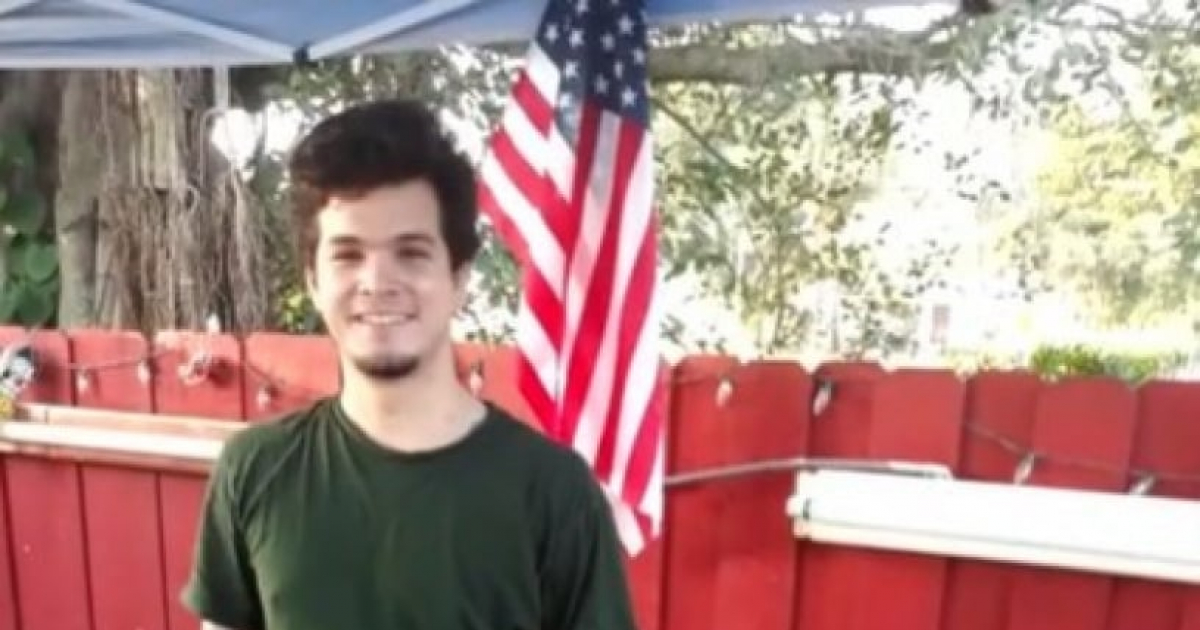
A Cuban content creator, recognized by his audience as "El Oski," has transitioned from a fervent supporter of Donald Trump to living in fear and legal uncertainty that he never anticipated.
In a conversation with Local 10 News, the young man shared that his admiration for the former president was so profound that he even got a tattoo of Trump's face on his chest. This commitment, he explained, took three sessions, each lasting about four hours.
"At that time, I was really enthusiastic about Trump," he recalled.
However, that enthusiasm waned as immigration laws became more stringent nationwide. "I'm scared," he admitted, acknowledging that he and many fellow Cuban nationals remain at risk of deportation.
El Oski is among the hundreds of thousands who entered the United States through the southern border and were released with an I-220A document, which does not guarantee legal status in the country.
That was back in 2019. He believed that by now, Trump would have assisted Cubans like him in regularizing their status. But "it turned out to be quite the opposite," he stated.
"This isn't what you expected. It's not what I expected," lamented the young man, who feels stuck "in limbo."
Despite his fears, he expressed no regrets about the tattoo and remains hopeful that everything will eventually work out for the best.
The Dilemma of Hope and Fear
His story encapsulates the predicament of a community that bet on leadership and now faces the repercussions of a system that, for now, offers no clear path to stability.
Immigration attorney Mark Prada explained that the federal government does not recognize the I-220A as a legal entry for the purpose of adjusting status. Consequently, Cubans with this document are ineligible to apply for permanent residence under the Cuban Adjustment Act.
Prada estimates that at least 400,000 Cubans find themselves in the same situation. Therefore, he is challenging the policies of the Trump administration in court, arguing that Cubans released in the country should be considered paroled regardless of the documentation they received.
"We've been arguing that all of them have been paroled and that the paperwork is just paper," he said.
Growing Disillusionment
El Oski's story is part of a broader trend: More voices are emerging that, after strongly backing Trump, now express disappointment with the human impact of immigration measures.
This isn't an outright ideological rejection but rather a clash between expectations and reality, visible in communities like the Cuban population in South Florida.
Last December, one of the president's most visible Hispanic allies, Florida Republican Senator Ileana García, distanced herself by labeling the current immigration policy as inhumane.
Daughter of Cuban immigrants and founder of the "Latinas for Trump" movement, García emphasized that her stance wasn't about breaking with the Republican Party but rather expressing a deep concern over the human cost of these decisions.
García argues that immigration measures are "unacceptable and inhumane," causing unnecessary suffering and disproportionately affecting vulnerable groups.
"This isn't what we voted for," she declared in June.
And while acknowledging the need to deport criminals, she warned of a "witch hunt" against law-abiding individuals who fear returning to their countries.
Understanding the I-220A and its Implications
What is the I-220A document?
The I-220A is a document given to some individuals released into the U.S. after entering through the southern border. It does not guarantee legal status or path to residency.
Why are Cubans with I-220A facing deportation?
Cubans with an I-220A are at risk of deportation because the document does not grant them legal entry status, making them ineligible for residency under the Cuban Adjustment Act.
What actions are being taken to help Cubans with I-220A?
Immigration lawyers like Mark Prada are challenging the policies in court, advocating for Cubans released in the U.S. to be considered paroled, regardless of their initial documentation.