The downfall of Nicolás Maduro has sent shockwaves far beyond the streets of Caracas. In Havana, the political ripples from his capture have reawakened old fears: the Cuban regime's anxiety about losing its grip on information and, consequently, control over its citizens.
In the aftermath of the U.S.-led operation that resulted in the capture of the Venezuelan leader, alarms were set off at the Palace of the Revolution. Beyond political shifts in Venezuela, the regime in Cuba is particularly worried about changes to the data flow that underpins much of the island's internet access.
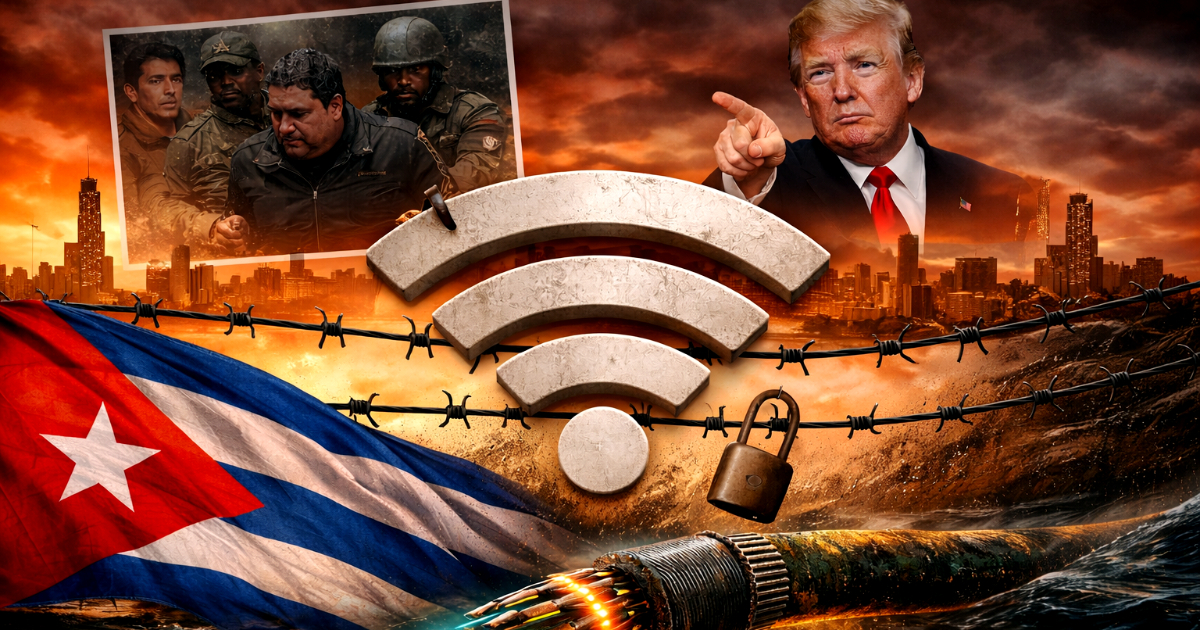
For over a decade, Cuba's international connectivity has heavily relied on the ALBA-1 submarine cable, a fiber optic infrastructure linking Santiago de Cuba with La Guaira, Venezuela. Funded by the Chávez administration and launched in 2013, the cable was touted as a symbol of "technological sovereignty" against the United States. However, in practice, it became a tool of power: enabling the regime to earn millions from data traffic, enhancing access to the global network, and fortifying state control over digital traffic and censorship.
Now, with the Chávez regime on shaky ground and Washington overseeing the Venezuelan transition, the ALBA-1 cable might become a vulnerability for the Cuban government.
Potential Changes in Connectivity
One of Havana's primary concerns is the possibility that Cantv, the state-run Venezuelan operator managing ALBA-1, could be privatized. Analysts suggest that if Venezuela's new government decides to sell parts of the company or open it to foreign investment, the preferential connectivity conditions Cuba has enjoyed since 2013 might vanish.
Until now, the agreement between Caracas and Havana has been politically motivated: Cuba pays symbolic fees or compensates through medical cooperation and technical assistance. However, a privatized Cantv would operate based on profitability rather than ideological affinity.
In such a scenario, Cuba might have to bear market costs for data traffic or renegotiate the contract from a position of weakness, potentially leading to bandwidth reductions, new delays, or even temporary service interruptions.
Impact on Cuban Internet Control
International analysts, including those from Kentik and 14ymedio, agree that the cable’s future hinges on decisions made by the new powers in Caracas. Although data traffic between Cuba and Venezuela remains stable, Havana is aware that U.S. control over Venezuelan infrastructures could extend to this link if necessary.
Adding to the disruption of oil supplies, U.S. control over telecommunications infrastructure could exacerbate the crisis already affecting Havana. This isn't the first time the Cuban regime has linked regional instability with digital restrictions. During the largest protests in decades in July 2021, the regime shut down internet access nationwide for several days.
This tactic was repeated during subsequent demonstrations and times of political or economic tension. For the Cuban regime, cutting internet access is a defensive reflex: a way to stifle public conversation and isolate people from independent information.
Hence, following Maduro's fall, the fear isn't just about losing a political ally but also losing control. Should Washington decide to review Venezuelan communication systems or demand transparency in managing the ALBA-1, the Cuban regime could face unprecedented external scrutiny.
Future Connectivity Options
Havana recognizes that it can no longer blindly rely on Caracas and that its most crucial connection might soon be under U.S. observation. Meanwhile, internet access on the island remains costly, limited, and heavily monitored. Digital blackouts, independent site blocks, and network traffic tracking are common practices.
Cuba has invested in expanding coverage but not in ensuring digital freedom. Every technological advancement—from wifi parks to mobile access—has been accompanied by new control mechanisms. In this context, any threat to ALBA-1 is perceived as a political risk, not just a technical one.
The irony is that the cable once symbolizing "sovereignty" against Washington might become the Achilles' heel of Cuban censorship. If the data flow between both countries is affected by the new Venezuelan situation, the regime would have two options: seek an alternative—like the new Arimao cable to Martinique—or resort to what it knows best: shutting it down.
Some observers don't rule out a bolder move by Washington. If a significant cut or degradation in ALBA-1 operations occurs, the Trump administration might turn to Elon Musk and activate free, open access to Starlink for Cubans, as seen in Ukraine and Iran.
For Havana, this would be a nightmare: millions of citizens connected without passing through ETECSA servers, free from censorship and surveillance. More than a technical challenge, it would be a direct political blow to the information monopoly the regime has built over decades.
For now, there are no signs of immediate danger to ALBA-1. However, Maduro's capture has highlighted the fragility of a model dependent on allies in crisis. In a country where connectivity equals power, any threat to the network translates to panic in Havana's offices.
And although no one openly admits it, the lingering question isn't just what will happen to Cuba's internet, but whether the regime will turn it off before losing control of the narrative.
Key Concerns About Cuba's Internet Future
How does the ALBA-1 cable affect Cuba's internet access?
The ALBA-1 cable is a crucial fiber optic link that connects Cuba to Venezuela, providing significant internet access to the island. Its management and operational conditions impact the availability and control of internet services in Cuba.
What are the potential risks if Cantv is privatized?
If Cantv is privatized, Cuba could lose preferential connectivity terms, leading to increased costs and potential disruptions, as market-driven principles may replace the current politically-motivated arrangements.
What is the Cuban regime's typical response to digital threats?
The Cuban regime often responds to digital threats by shutting down internet access, a defensive measure aimed at stifling public discourse and maintaining control over information dissemination.