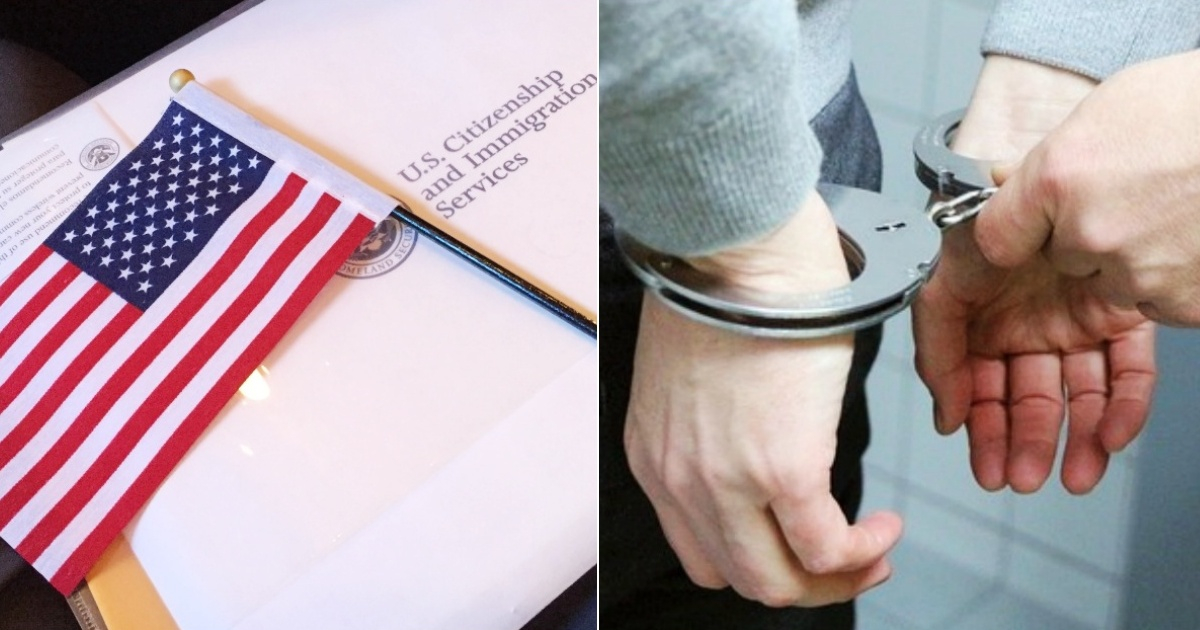
A Cuban man's visit to the U.S. Citizenship and Immigration Services (USCIS) office in Hialeah, located in Miami-Dade County, took an unexpected turn when he was arrested due to unresolved drug-related charges in Colorado.
What was supposed to be a simple step towards American citizenship quickly became a legal ordeal. According to a Facebook post from USCIS on January 12, the individual was taken into custody during a routine public service day.
The Hialeah office, a bustling spot for citizenship applicants in South Florida, witnessed this arrest along with another, following standard background checks that are part of the immigration process. "It was a busy day at our Hialeah, Florida office. We handed over to local police a Haitian national wanted for driving with a suspended license and a Cuban citizen wanted in Colorado on drug charges," USCIS stated in their official announcement. Both individuals were there to advance or complete their naturalization processes.
The data cross-reference with judicial records quickly activated cooperation protocols between the immigration agency and local authorities, resulting in their arrest by law enforcement.
"These foreign nationals were attempting to finalize their naturalization documents to become U.S. citizens," USCIS clarified, highlighting that even during the final stages of the immigration process, applicants might face legal repercussions for unresolved issues.
The Danger of Unresolved Legal Issues at USCIS Appointments
The Cuban citizen's case sheds light on a seldom-discussed reality within the migrant community: USCIS offices are not exempt from criminal law enforcement. While many migrants believe their legal status, such as permanent residency, shields them, the truth is that any active arrest warrant can be executed during an immigration appointment.
Such incidents are not uncommon. Final interviews for citizenship often involve thorough checks of criminal and civil backgrounds at both local and national levels. USCIS has access to interconnected databases that can identify active judicial alerts, pending appearances, and past convictions across the country.
Roots of the Cuban Man's Arrest in Colorado
Although the Cuban citizen's identity remains undisclosed, USCIS revealed that he had an outstanding arrest warrant issued by Colorado authorities for drug-related charges. This led to his immediate detention after appearing before immigration officials in Hialeah.
These warrants may have originated years before and in a different state than where the applicant currently resides. However, naturalization demands that no active judicial or criminal obstacles exist, making this stage particularly sensitive for those with unresolved backgrounds.
A common misunderstanding among migrants, especially within the Cuban community, is the belief that having permanent residency or another regular immigration status equates to immunity from the law. This misconception can have severe consequences, such as the Cuban man's arrest during his naturalization appointment.
USCIS has consistently emphasized that immigration status and legal standing are separate, yet closely linked when it comes to citizenship applications. An arrest not only disrupts the immigration process but can also result in a permanent denial of naturalization and potentially trigger deportation proceedings in severe cases.
A Clear Message to the Migrant Community
The incident in Hialeah serves as a stark reminder of the scrutiny faced by citizenship applicants in the United States. Immigration authorities stress that any dealings with USCIS should be conducted with complete transparency and assurance of having no pending legal issues.
Cooperation between agencies, such as USCIS and law enforcement, is standard protocol, especially when active alerts are detected. In this context, attending an immigration appointment without first resolving any criminal matters can lead to unforeseen outcomes, including incarceration, as demonstrated in this case.
Understanding the Risks of Citizenship Applications with Legal Issues
Why was the Cuban man arrested at the USCIS office in Hialeah?
The Cuban man was arrested due to an active arrest warrant for drug-related charges in Colorado, which was discovered during routine background checks at the USCIS office.
Can unresolved legal issues affect my citizenship application?
Yes, unresolved legal issues can significantly impact your citizenship application. Any active arrest warrants or pending charges can lead to arrest during immigration appointments and potentially deny naturalization.
What should I do if I have pending legal matters and a USCIS appointment?
It is crucial to resolve any legal issues before attending a USCIS appointment. Consult with a legal professional to address and clear any pending charges or warrants to avoid complications during the immigration process.