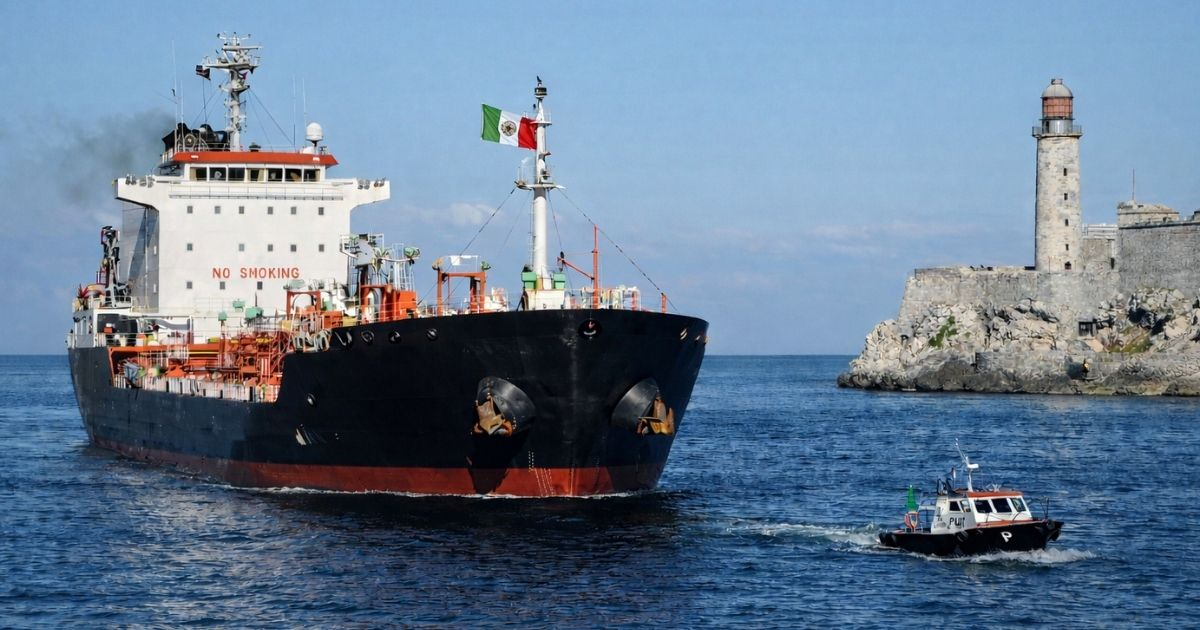
Mexican oil has emerged as the newest significant concession from Washington to the Cuban regime. The White House is allowing Mexico to maintain its energy lifeline to Cuba, while Trump warns that he expects gestures and negotiations from Havana in the near future.
The Calculated "Permission" from Washington
While the United States could pressure Claudia Sheinbaum to halt crude shipments to Cuba, it has chosen not to do so, allowing Mexico to continue supplying the island. U.S. officials, cited by American media, acknowledge that the current policy permits this flow despite Trump's public assertions of "zero oil, zero money" for Cuba.
This apparent contradiction is rooted in a pragmatic logic: Washington aims to avoid an immediate collapse of Cuba's electrical and social systems, which could trigger another wave of migration to the U.S. and create chaos on the island. Thus, it tolerates, and even requires, Mexico to maintain the status quo while the White House controls the timeline and sanctions.
Oil as a Political Ultimatum
Trump's message has been crystal clear: "No more oil or money for Cuba, zero," and "I recommend making a deal before it's too late." This is not mere bravado; it signals that the current concession—allowing Mexican oil—is temporary and contingent on the regime's short-term decisions.
Therefore, this oil is not about solidarity or neutral pragmatism but a final concession: a grace period for Havana to decide whether to negotiate a gradual, controlled transition with the U.S. or remain entrenched, risking that Mexico's lifeline might be cut off later. Trump is leveraging the fuel as both a sanction and a ticking clock: each barrel from Mexico extends electricity by weeks but shortens the decision-making window.
Mexico's Role: Humanitarian Rescuer or Regime Supporter?
The Sheinbaum government insists it has not increased shipments to Cuba and claims to act for commercial and "humanitarian" reasons, in line with López Obrador's tradition. However, the geopolitical reality is different: with Venezuela out of the picture, Mexico has become the key supplier and the main energy lifeline for a dictatorship facing its worst crisis since the Special Period.
The paradox is stark: an emerging democratic power in the region, which prides itself on principled foreign policy, now appears as a survival guarantor for a regime that denies basic freedoms and suppresses protests violently. If Mexico doesn't reassess the political implications of these shipments—such as conditions, transparency, and the real destination of the oil—it risks becoming a useful accomplice in prolonging the Cuban system, even if it is dressed as humanitarian aid.
Havana: Between Defiance and Dependence
Officially, Díaz-Canel's stance is one of defiance: denying negotiations with Washington, insisting on sovereignty to purchase fuel from any source, and limiting U.S. contacts to technical migration matters. However, behind this rhetoric, the regime is more dependent than ever: without Venezuelan oil, external credit, or substantial reforms, each Mexican oil shipment reveals a vulnerability.
This is the core of the dilemma: the Cuban leadership wants Mexican oil to become an acquired right, a new structural subsidy, while Trump views it as a temporary concession to force changes that are not publicly outlined. If Havana misreads the situation and assumes it can indefinitely buy time, it might suddenly face a double squeeze: without Venezuela and, eventually, without Mexico.
A Final Chance or a Futile Extension?
Allowing Mexican oil might initially seem like a surrender—providing oxygen to the regime at its weakest. However, Washington's calculation is more pragmatic: it is preferable to grant a few months of fuel in exchange for sustaining influence over the outcome, rather than inciting a sudden collapse that no one can control.
Everything will depend on whether this concession leads to tangible results or a futile last extension granted to an exhausted regime. The message is clear and can no longer be misunderstood. Mexican oil is not an indefinite lifeline but a countdown. Cuba's government must understand this now or consciously accept that its inaction will push the country toward complete collapse: energy, economic, and social. There will be no possible excuses or third parties to blame when the last light goes out.
The decision no longer resides in Washington or Mexico City. It is in Havana. Either the regime correctly interprets the ultimatum, acknowledges that time is running out, and opens a real path to restore a future and dignity for Cubans, or it chooses to extend the agony until there is nothing left to sustain. What follows—overwhelming migration, social breakdown, total state failure—will be a direct consequence of that choice. It is up to them.
Understanding the Mexican Oil Concession to Cuba
Why is the United States allowing Mexican oil to reach Cuba?
The United States is allowing Mexican oil shipments to Cuba to prevent an immediate collapse of the island's systems, which could lead to chaos and a new wave of migration to the U.S.
What is the significance of Trump's stance on Cuban oil?
Trump's stance is that the allowance of Mexican oil is temporary and conditional on Cuba's decisions. It's a strategic move to encourage Havana to engage in negotiations or face further isolation.
How does Mexico's role impact the Cuban regime's stability?
As a key supplier, Mexico's oil shipments are crucial for sustaining Cuba's regime, especially with Venezuela unable to provide support. This positions Mexico as a vital player in the region's geopolitical landscape.