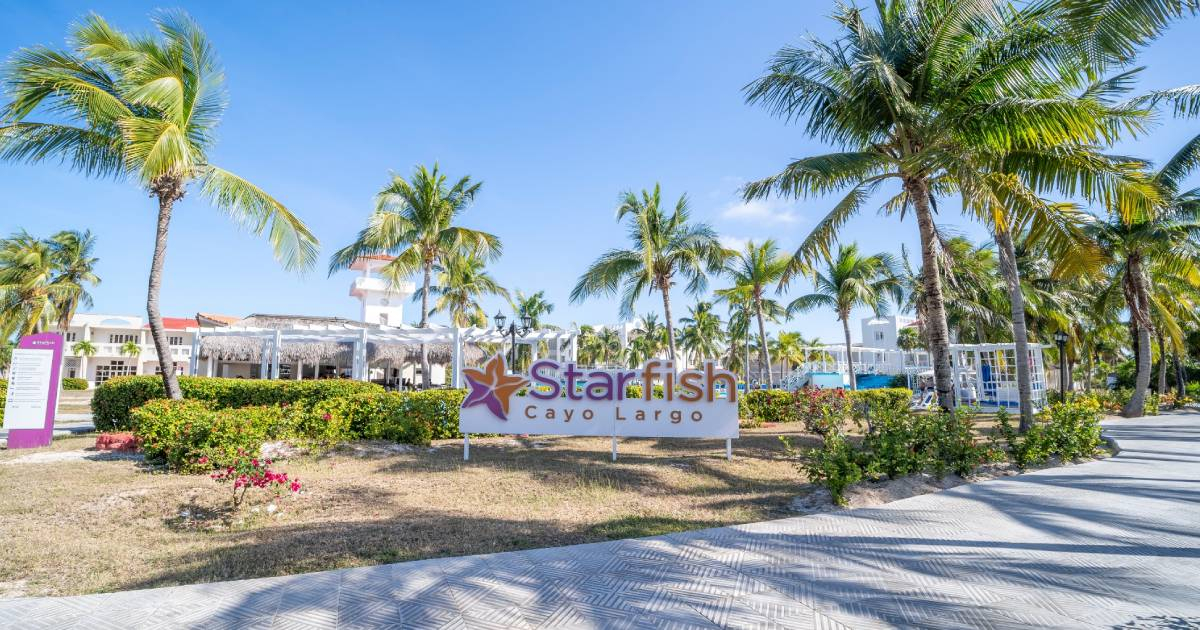
While Argentinian media paint Cayo Largo as a "worry-free paradise" with "perfect" dining, family-friendly hotels, and pristine beaches, official statistics from Cuba reveal that the nation's tourism sector is facing its most severe crisis in decades. These two narratives coexist but remain worlds apart.
Recently, Cadena 3 Argentina released a series of reports from Cayo Largo del Sur that almost feel like advertisements. Tourists from Córdoba praise the Cuban hospitality, the all-inclusive amenities of the Hotel Starfish, and claim there is "nothing lacking." They talk about overindulging in food, constant attention, and a "spectacular" experience on an island inhabited only by hotel staff who rotate shifts.
The stark contrast is undeniable.
While Argentina promotes an idyllic Cuba, the National Office of Statistics and Information (ONEI) discloses that the country lost over 350,000 tourists in the first nine months of 2025. International tourism dropped by 20.5% compared to the previous year, with the most optimistic projections for 2025 falling far short of pre-pandemic levels.
In those reports, Cayo Largo is depicted as a perfect bubble: no power outages, no seaweed, electric vehicles, internal flights, and excursions to Havana for $250. It's an isolated enclave from the real country, where dollars and euros circulate freely, and scarcity seems non-existent.
Outside this protected circuit, however, Cuba is sinking as a tourist destination. Hotels have occupancy rates near 25%, power and water cuts are frequent, food shortages are rampant, flights are reduced, and streets are littered with garbage, as even international media describe. This crisis is neither temporary nor climate-induced; it is structural.
Not even the Russian market, long touted as a savior, could sustain the sector. In 2025, Russian visitors declined by over 37%, despite new air routes and official campaigns promising a tourism "renaissance." Canada, historically the main source of tourists, saw nearly a 20% drop, along with the Cuban diaspora.
The promotional narrative also clashes with another uncomfortable reality: the tourism that thrives in Cuba operates disconnected from the local population. In places like Cayo Largo, there are no civilian communities, only workers living in shifts, without families or daily life. The "paradise" exists, but it's not Cuba; it's an encapsulated resort.
Meanwhile, the regime continues to prioritize constructing luxury hotels controlled by GAESA, the military conglomerate dominating the sector, even as the country faces prolonged blackouts, public service collapse, and a deepening economic crisis worsened by the loss of Venezuelan oil following Nicolás Maduro's capture.
Thus, while Argentina invites travelers to discover the "jewel of the Caribbean" for $1,500 all-inclusive, Cuba emerges as a destination split in two: one for foreign tourists, carefully polished, and another for millions of Cubans lacking stable electricity, sufficient food, and hopeful prospects.
The issue isn't that Cayo Largo is beautiful. The problem is pretending that this postcard represents a nation that, according to its own statistics, is becoming increasingly empty.
Understanding the Tourism Crisis in Cuba
Why is Cuba facing a tourism crisis?
Cuba's tourism crisis is due to a significant drop in international visitors, with a 20.5% decrease in the first nine months of 2025 compared to the previous year. Contributing factors include structural issues, reduced flights, and economic challenges.
What makes Cayo Largo different from the rest of Cuba?
Cayo Largo operates as a self-contained resort area, unaffected by the power outages and shortages experienced elsewhere in Cuba. It offers electric vehicles, flights, and a seemingly abundant supply of goods, creating a stark contrast with the rest of the country.
How has the decline in Russian and Canadian tourists affected Cuba?
The decline of over 37% in Russian tourists and nearly 20% in Canadian visitors has further exacerbated Cuba's tourism crisis, as these groups have historically been major contributors to the industry.