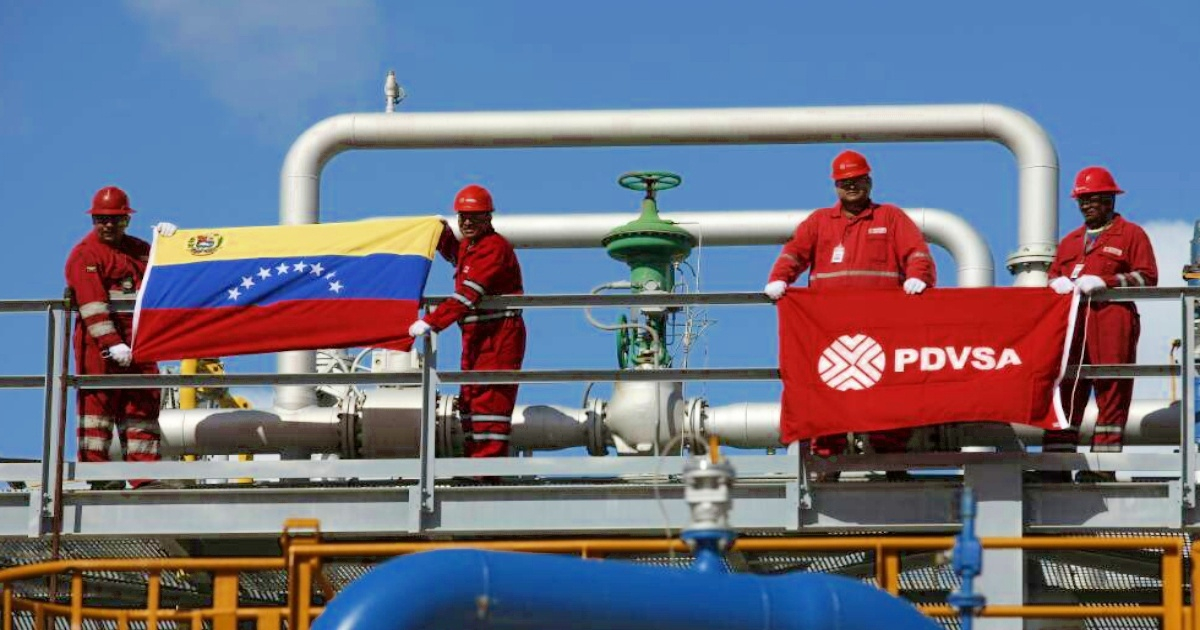
After a prolonged period of decline, Venezuela is reversing its cuts in oil output by reopening wells previously shut down by state-owned PDVSA and its partners due to a U.S. embargo.
This resurgence aligns with the resumption of crude exports, which had been nearly halted since December 2025, leaving millions of barrels stalled in storage tanks and ships.
Revealed in an exclusive Reuters report, this move suggests a strategic shift in Venezuela's energy management following a period marked by significant operational contraction.
The Recent Collapse in Production
As of late November last year, Venezuela's oil production was around 1.16 million barrels per day (bpd). However, this figure plummeted to approximately 880,000 bpd within weeks.
The situation was especially dire in the Orinoco Belt, the heart of the nation's oil industry, where production dropped from 675,000 to roughly 410,000 bpd. This dramatic reduction was a direct result of the tightened U.S. embargo, forcing PDVSA and its partners to shut numerous wells and halt shipments due to the inability to move accumulated crude.
During this time, exports were mostly limited to Chevron, the sole oil company allowed to operate under a special Washington license. Even these shipments were restricted and insufficient to ease storage saturation or alleviate the operational collapse of many facilities.
Signs of Revival
Last Monday, two supertankers departed from Venezuelan waters, each loaded with about 1.8 million barrels, potentially marking the first shipments under a supply agreement of up to 50 million barrels between Venezuela and the United States.
According to Reuters sources, this departure signifies the restart of large-scale exports, allowing the decongestion of crude stored over recent weeks. The ships headed north, bound for the Caribbean, a pivotal region for oil storage and redistribution by traders, refiners, and energy companies.
Political Context Behind the Shift
The change in Venezuela's energy strategy cannot be understood without considering the political backdrop. The capture of Nicolás Maduro by U.S. forces on January 3rd drastically altered the country's political and economic landscape.
Since then, Washington has promoted a new collaboration framework aiming to secure energy resources while establishing mechanisms to oversee the allocation of revenues generated from oil. Within this framework, high-ranking U.S. officials have stated that the income from the new agreement "must benefit the peoples of Venezuela and the United States."
The agreement seeks to ease access to Venezuelan oil and condition its monetization on humanitarian aid and internal stabilization programs.
Chevron's Role and the Path Forward
During the period of strictest restrictions, Chevron was the only company formally authorized to export oil from its joint ventures with PDVSA, making it a pivotal player in sustaining minimal export activity.
With operations reactivating and new shipments underway, it is anticipated that other companies might resume activities if new licenses or sanctions relief mechanisms are granted. This new landscape has also allowed the reopening of fields operated by joint ventures that had completely halted activities due to the inability to store or sell their production.
Ongoing Structural Challenges
Despite these signs of recovery, Venezuela's oil industry still faces deep-rooted structural issues. Years of neglected investments, corruption, international sanctions, and an exodus of skilled personnel have left much of the country's operational infrastructure in disrepair.
Industry experts estimate that to return to the historical production levels of over 3 million bpd seen in the 2000s, tens of billions of dollars in investments would be required, along with profound institutional reforms and a more transparent regulatory environment.
This is compounded by the deterioration of national refineries, many of which operate well below their installed capacity, and a logistical network that urgently needs modernization.
Global Implications of Venezuela's Oil Revival
The revitalization of Venezuelan oil has impacts extending beyond the domestic market. For years, Venezuela has been a strategic supplier for economies like China and India.
This shift toward greater cooperation with the United States could redefine geopolitical alliances and alter traditional supply routes. For the transitional government, access to international markets represents an economic recovery opportunity. For the United States, Venezuelan oil serves as a significant alternative source amid global energy volatility and tensions with other suppliers.
The Beginning of a New Era
The reopening of closed wells, the resurgence of exports, and the commencement of new bilateral agreements mark the onset of what could be a new phase for Venezuelan oil policy.
However, the success of this process will hinge on multiple factors: from internal political stability to the country's external credibility, alongside the capacity to rebuild an industry critical to its economic survival.
As Reuters has cautioned in its coverage, this is merely an initial step breaking the stagnation, yet still far from representing a sustained recovery.
While oil is once again in motion in Venezuela, the path to normalization remains long and complex.
Frequently Asked Questions on Venezuela's Oil Industry Revival
What triggered the recent increase in Venezuela's oil production?
The recent increase in Venezuela's oil production was triggered by the reopening of wells by PDVSA and its partners and the resumption of crude exports, following strategic shifts in response to U.S. embargo relief and political changes.
How has Chevron played a role in Venezuela's oil export activities?
Chevron has been pivotal in Venezuela's oil export activities, as it was the only company allowed to export oil from its joint ventures with PDVSA under a special U.S. license during the period of strictest restrictions.
What are the main structural challenges facing Venezuela's oil industry?
Venezuela's oil industry faces structural challenges such as lack of investment, corruption, international sanctions, skilled workforce exodus, deteriorating infrastructure, and outdated logistical networks.