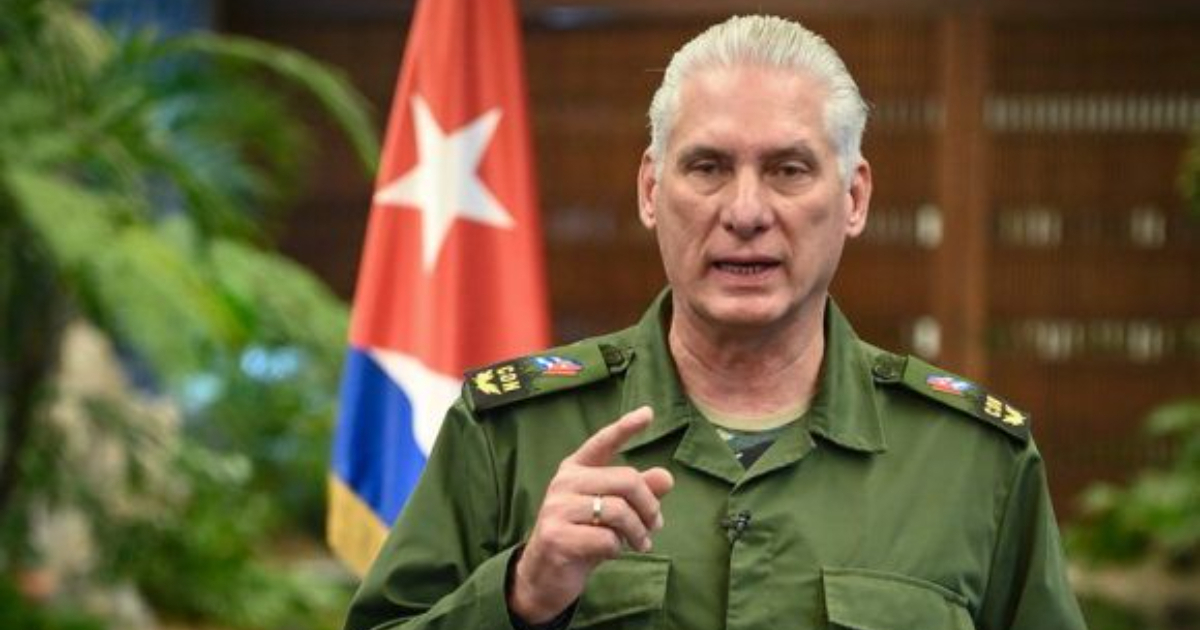
Amid rising tensions with the United States and recent official warnings, Cuba's leader Miguel Díaz-Canel has once again turned to historical events to convey a political message, stirring concern both domestically and internationally.
In a post on the social media platform X, Díaz-Canel invoked the 1869 burning of Bayamo, where Cuban independence forces chose to set the city ablaze rather than surrender it to Spanish control. "We come from that lineage. We owe ourselves to that history," wrote the Cuban leader, using an episode many see today as a symbolic endorsement of total sacrifice over capitulation.
His remarks come at a particularly fragile moment for Cuba, which is grappling with severe economic, social, and energy crises. This follows statements from the Ministry of the Revolutionary Armed Forces (MINFAR) warning that "the price will be very high" for any aggressor attempting to invade the nation.
For analysts and critical observers, Díaz-Canel's message is more than a mere historical reference. It’s a clear indication of the narrative the regime has perpetuated for decades: rather than relinquish power, it is prepared to push the nation to its brink, even if it means exacerbating the suffering of its people.
Ideological Resistance Over National Welfare
In this context, the reference to the Bayamo fire underscores the view that the Castro regime prioritizes ideological resistance above the country's welfare, leveraging collective sacrifice as a political tool instead of providing real solutions to a crisis that severely impacts millions of Cubans.
While official rhetoric continues to emphasize confrontation and revolutionary heroics, the everyday reality on the island—characterized by prolonged blackouts, food shortages, and mass emigration—grows increasingly at odds with the calls for heroism emanating from those in power.
Understanding Cuba's Current Political Climate
Why did Díaz-Canel reference the Bayamo fire?
Díaz-Canel referenced the Bayamo fire as a symbolic gesture of total sacrifice over surrender, reflecting the Cuban regime's stance on maintaining power at all costs.
What challenges is Cuba currently facing?
Cuba is currently dealing with severe economic, social, and energy crises, alongside prolonged blackouts, food shortages, and a significant emigration wave.
How does the Cuban regime view ideological resistance?
The Cuban regime places a high value on ideological resistance, often prioritizing it over the nation's welfare and using it as a political tool to maintain control.