The United States Southern Command has issued a stern warning to vessels linked to the notorious "dark fleet," which are used to transport Venezuelan oil and support illegal financial networks. This comes amid heightened military and diplomatic pressure on countries allied with Caracas, especially following Nicolás Maduro's capture.
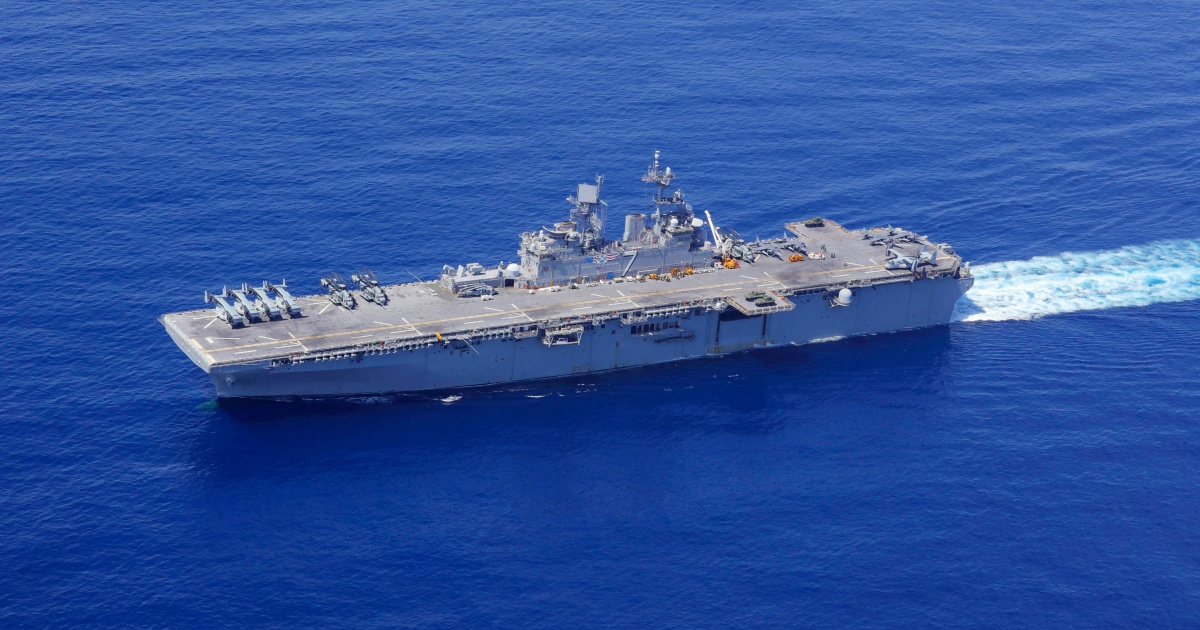
The Southern Command emphasized its readiness in an official statement: "The world's largest aircraft carrier, the USS Gerald R. Ford, along with the amphibious warships USS Iwo Jima, USS Fort Lauderdale, and USS San Antonio, are actively deployed in the Western Hemisphere. Marines and sailors on these formidable platforms are prepared to provide support."
Strategic Deployment: Operation Southern Spear
These naval forces are part of Operation Southern Spear, a strategic initiative launched under former President Donald Trump. The mission is supported by the Department of Homeland Security, the Department of State, and the Department of Justice, aiming to dismantle illicit vessels operating in the region, with a focus on those involved in the Venezuelan oil trade.
The Southern Command declared that "Marines and soldiers aboard these lethal ships are ready to support operations against vessels and illicit shipments benefiting malign actors and cartels." As part of their efforts, U.S. military forces have been specifically deployed in the Southern Command's area of responsibility, with expectations of increased interdictions at sea to disrupt the logistics chain of the "dark fleet."
The Elusive "Dark Fleet"
The term "dark fleet" refers to a group of oil tankers that operate outside traditional maritime tracking systems, often disabling their transponders, sailing under flags of convenience, or changing names and ownership to evade sanctions. An investigation by the Washington Post revealed that at least 11 sanctioned vessels departed Venezuela with a combined load of 9.4 million barrels of crude oil, blatantly defying the U.S. embargo.
Of these vessels, six were located over 70 nautical miles off the Venezuelan coast, while three ventured more than 450 miles towards the Atlantic. Some were found near Grenada or off the coast of Colombia, with one recently switching to a Russian flag to avoid detection. Three identified ships—Verónica III, Bertha, and Aquila II—are sanctioned for links with Iran and Russia, according to the Treasury Department's Office of Foreign Assets Control (OFAC).
U.S. Intensifies Seizures and Pursuits
In tandem with the military deployment, U.S. forces have ramped up seizure operations. This week alone, two additional ships, the Sophia, intercepted in the Caribbean, and the Marinera, a Russian-flagged vessel, were detained following an extensive pursuit in the Atlantic. Moscow responded harshly, accusing Washington of "violating international maritime law," potentially escalating to a broader diplomatic conflict.
An additional analysis cited by The Washington Post suggested that a U.S. vessel, possibly the missile cruiser USS Lake Erie, had closely monitored some of these ships, though the Pentagon has not confirmed the specific identity or location.
A Message to Cuba: Strategic Repositioning
In what analysts interpret as a direct warning to the Cuban regime, two U.S. ships were repositioned last week to the north of Cuba. This maneuver, following Maduro's capture, highlighted Washington's suspicions regarding Havana's involvement with Caracas in the sanctioned oil operations.
While the operation aims to demonstrate force, energy analysts have questioned the blockade's real effectiveness. The ability of eleven vessels to bypass the blockade in recent weeks suggests that there are gaps in the restrictions. "The primary goal is deterrence through seizures and a show of presence," noted an expert consulted by the Post. However, he acknowledged that "enforcing a completely airtight blockade in open waters is extremely challenging."
From the Trump administration’s perspective, these actions enhance the "strategic leverage" over Venezuela. Secretary of State Marco Rubio stated that the quarantine represents "the highest level of pressure possible" to isolate the regime of Delcy Rodríguez, the current head of the government in Caracas after Maduro's capture.
The new phase of Operation Southern Spear seeks not only to halt illegal oil shipments but also to send a broader geopolitical message to Venezuela's Caribbean allies. The repositioning of ships near Cuba and the intensification of interdictions reveal a strategy aimed at deterring, isolating, and financially striking those involved in the illicit oil trade.
As tensions rise, the Caribbean becomes a new front of confrontation between Washington and its regional adversaries, with a dark fleet that, far from remaining in the shadows, has become a prime target of the United States' military and diplomatic strategy.
Key Questions About the "Dark Fleet" and U.S. Strategy
What is the "dark fleet"?
The "dark fleet" refers to a group of oil tankers that evade traditional maritime tracking by disabling transponders, changing flags, or altering names and ownership to avoid sanctions.
Why is the U.S. targeting the dark fleet?
The U.S. aims to dismantle the logistics and financial networks associated with the dark fleet, as it supports the illegal trade of Venezuelan oil and aids malicious actors and cartels.
What is Operation Southern Spear?
Operation Southern Spear is a strategic initiative supported by various U.S. departments to disrupt illicit maritime operations in the region, focusing on Venezuelan oil shipments.
How has the international community reacted?
Russia has accused the U.S. of violating international maritime law, potentially escalating tensions into a larger diplomatic conflict.