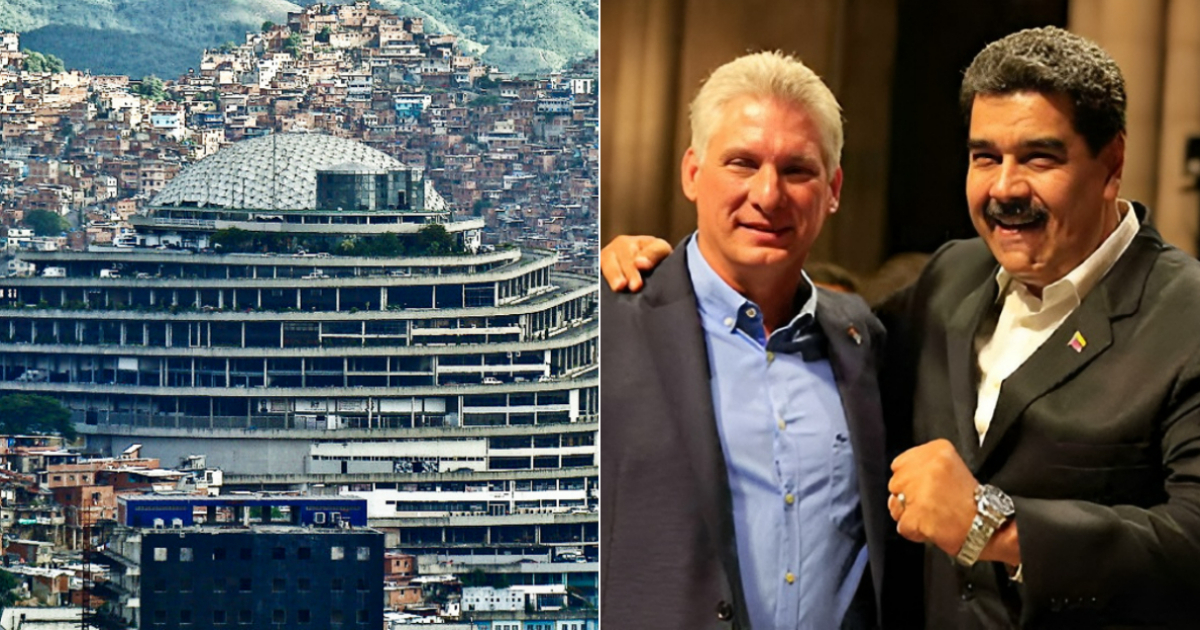
For over twenty years, Cuba's security apparatus has played a crucial role in shaping the repressive model employed by the Venezuelan regime. Since Hugo Chávez assumed power in 1999, and even more so under Nicolás Maduro, numerous reports from international bodies and human rights NGOs have highlighted the presence of Cuban advisors in areas such as intelligence, counterintelligence, military training, and social control.
The Role of International Organizations
The UN Independent International Fact-Finding Mission on Venezuela, in its September 2020 report and subsequent updates, pointed to a "parallel intelligence structure" where Cuban officials and advisors performed technical and operational roles within Venezuela's Directorate General of Military Counterintelligence (DGCIM) and SEBIN. This document, presented to the Human Rights Council, discusses the "transfer of repressive knowledge" and the "presence of foreign instructors," indirectly referencing Cuba. Further analysis by the UN High Commissioner and reports from various media and NGOs have confirmed this involvement.
The Organization of American States (OAS), led by Luis Almagro, has been explicit about Cuban involvement. The OAS's 2018 report on crimes against humanity in Venezuela documented a "Cuban advisory and oversight network" over Venezuelan intelligence agencies, particularly SEBIN and DGCIM. This report uses testimonies from former Venezuelan military personnel and Cuban advisors to reveal a system where no Venezuelan general rises without the Cuban G2's approval, underscoring Havana's structural influence over Caracas's security leadership.
European Union and Human Rights Groups
The European Parliament, through resolutions in 2017, 2018, 2021, and 2023, has explicitly denounced Cuban advisors' involvement, describing Havana's influence on Venezuela's intelligence apparatus as "a form of political colonialism that undermines sovereignty and exacerbates repression." The European External Action Service (EEAS) acknowledged in internal reports the transfer of "social control methods" from the Cuban regime, including the use of Local Supply and Production Committees (CLAP) for surveillance and political punishment.
Human Rights Watch (HRW) has documented since 2017 the torture, espionage, and arbitrary detention methods used by SEBIN and DGCIM, highlighting Cuban influence. In its 2019 report "Punished for Protesting," HRW cited testimonies from former Venezuelan officers about Cuban military personnel participating in interrogation and training sessions. Amnesty International, in its 2020 report "Silence by Force," criticized the political control techniques used by Maduro's regime as reflecting the repressive patterns of foreign intelligence services with experience in totalitarian social control, clearly alluding to Cuba.
Think Tanks and Specialized Agencies
The CASLA Institute, under Tamara Suju's leadership, has been pivotal in gathering testimonies from victims and former officials about Cuban involvement. In its 2021 report to the International Criminal Court, CASLA presented numerous sworn testimonies linking Cuban officials to torture and surveillance operations within DGCIM and SEBIN. The document details Cuban advisors' names, ranks, and locations, many of whom are connected to Havana's military intelligence.
InSight Crime has chronicled the security and intelligence cooperation between Cuba and Venezuela, emphasizing how Havana exported its system of "civil control through hunger and surveillance." Reports from 2019 and 2022 document Cuban officers' presence in Venezuelan Interior Ministry command centers and military counterintelligence units. Washington-based C4ADS has also investigated the financial networks supporting the Caracas-Havana alliance, revealing resource transfers through GAESA and PDVSA that fund security personnel exchange and technical advisory.
Testimonies and Operational Tactics
Numerous former Venezuelan and Cuban officials have confirmed Havana's direct control over Venezuelan intelligence systems. Venezuelan General Clíver Alcalá Cordones, in interviews after leaving the country, stated that "Cubans are the eyes and ears of power within the military." Exiled SEBIN officers in Miami and Bogotá have described Cuban supervision of interrogations and training in psychological torture and digital surveillance methods. Reports agree that Cuban advisors manage communications, vet leadership, and design propaganda and misinformation strategies.
Conclusions
The evidence overwhelmingly indicates that Cuban involvement in Venezuelan repression is well-documented and acknowledged by multiple international organizations. The Caracas-Havana alliance transcends political or economic exchanges, resulting in a transnational system of political and social control, where Cuba exports its authoritarian model as a survival tool for Chavismo.
Documentation from the UN, OAS, EU, and various NGOs demonstrates that crimes against humanity committed in Venezuela were planned and executed with Cuban advice, which could form a future line of international accountability. The Cuban regime, through its intelligence network, has maintained direct influence over the persecution of dissidents, media censorship, and protest repression, solidifying a regional authoritarian bloc now under growing international scrutiny following Nicolás Maduro's fall.
Insights on Cuban Involvement in Venezuela’s Repression
How has Cuba influenced Venezuela's security forces?
Cuba has been instrumental in shaping Venezuela's security forces by providing advisors and transferring repressive techniques, particularly in intelligence and counterintelligence. Cuban influence includes participation in training, supervising interrogations, and managing surveillance operations.
What international bodies have reported on Cuban involvement?
International bodies such as the UN, OAS, European Parliament, and human rights organizations like Human Rights Watch and Amnesty International have documented and reported on Cuban involvement in Venezuelan repression.
What are the key findings about Cuba's role in Venezuela reported by Human Rights Watch?
Human Rights Watch has highlighted the use of torture, espionage, and arbitrary detention by Venezuelan agencies, with Cuban advisors playing a significant part in these operations through training and active participation in repressive activities.