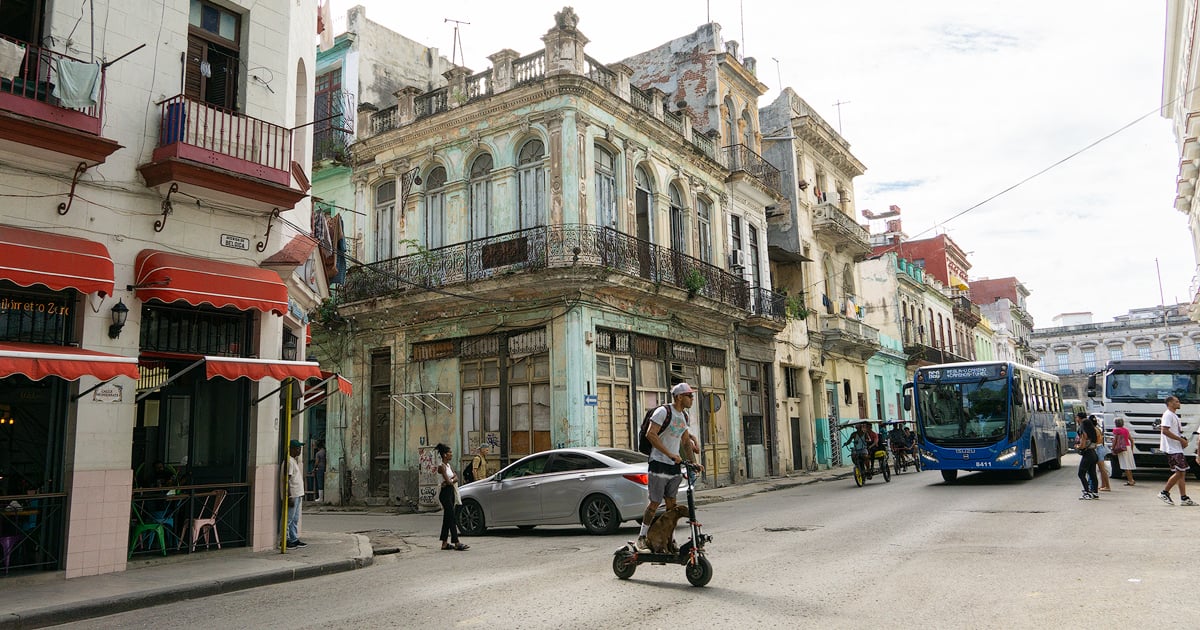
Tourism in Cuba is experiencing one of its most challenging periods ever. Hotels struggle with minimal staffing, endure frequent power and water outages, face food shortages, and are surrounded by accumulating garbage on the streets. A recent report by La Sexta paints a picture of the island as a neglected nation, with testimonies indicating that airlines that once had two daily flights are now operating only three times a week.
Back in November 2025, official statistics revealed a continuous decline in tourism, with just 2.1 million visitors recorded by October, marking an 85.6% drop compared to the same period the previous year. Major tourist sources—Canada, the Cuban diaspora, Russia, and the United States—showed significant declines, particularly the Russian market, which saw nearly a 36% decrease in visitors from 2024.
The latest report from the National Office of Statistics and Information (ONEI) confirmed this downward trend: by November 2025, Cuba had only welcomed 2,343,944 travelers, a 13.8% decrease compared to the previous year. Canada remained the top source of tourists but experienced a sharp decline, while Russia, Spain, and the United States also saw substantial reductions in visitor numbers.
The collapse of the tourism sector, a traditional source of revenue for the regime, coincides with the structural decay of the Cuban economy and the loss of Venezuelan oil supplies following the capture of Nicolás Maduro. Since then, the United States has intensified its pressure on Havana. "There will be no more oil or money for Cuba. Nothing!" declared President Donald Trump on his social media platform, Truth Social, emphasizing Washington's aim to cut off the financial flow that has long supported the Cuban government.
Attorney and analyst Rafael Peñalver explained that Trump's message extends beyond Venezuelan crude, touching on the state's control over remittances sent by emigrants to their families. "This is a very delicate issue from a moral and family perspective," Peñalver noted, warning that a significant portion of this money ends up in state hands, supporting the repressive apparatus.
The loss of income from tourism and remittances exacerbates an internal crisis characterized by shortages, blackouts, and the collapse of basic services. In several provinces, waste accumulation and lack of sanitation have led to the spread of viruses and diseases, according to local media and social media accounts.
As the regime continues to blame the U.S. embargo, economic deterioration accelerates. Miguel Díaz-Canel has once again called for "resilience" and sovereignty rhetoric, but official figures show a steady decline in tourism, one of the country's main sources of foreign currency.
Once a symbol of glamour and modernity in the Caribbean, Havana now faces a reality of half-empty hotels, decaying streets, and a population exhausted by the ongoing crisis. Without Venezuelan oil, foreign currency, and with fewer international visitors, Cuba seems to be drifting further away from the tourist splendor that once made it the most visited destination in the Caribbean.
Key Questions on Cuba's Tourism Decline
What factors have contributed to the decline in tourism in Cuba?
The decline in tourism in Cuba can be attributed to a combination of deteriorating infrastructure, reduced flights, economic challenges, and intensified U.S. sanctions.
How has the loss of Venezuelan oil impacted Cuba?
The loss of Venezuelan oil has severely impacted Cuba by cutting off a critical source of energy and financial support, leading to increased economic instability and hardship.
What measures has the Cuban government taken in response to the tourism crisis?
The Cuban government has primarily focused on rhetoric around resilience and sovereignty, but has struggled to implement effective measures to counteract the tourism crisis.