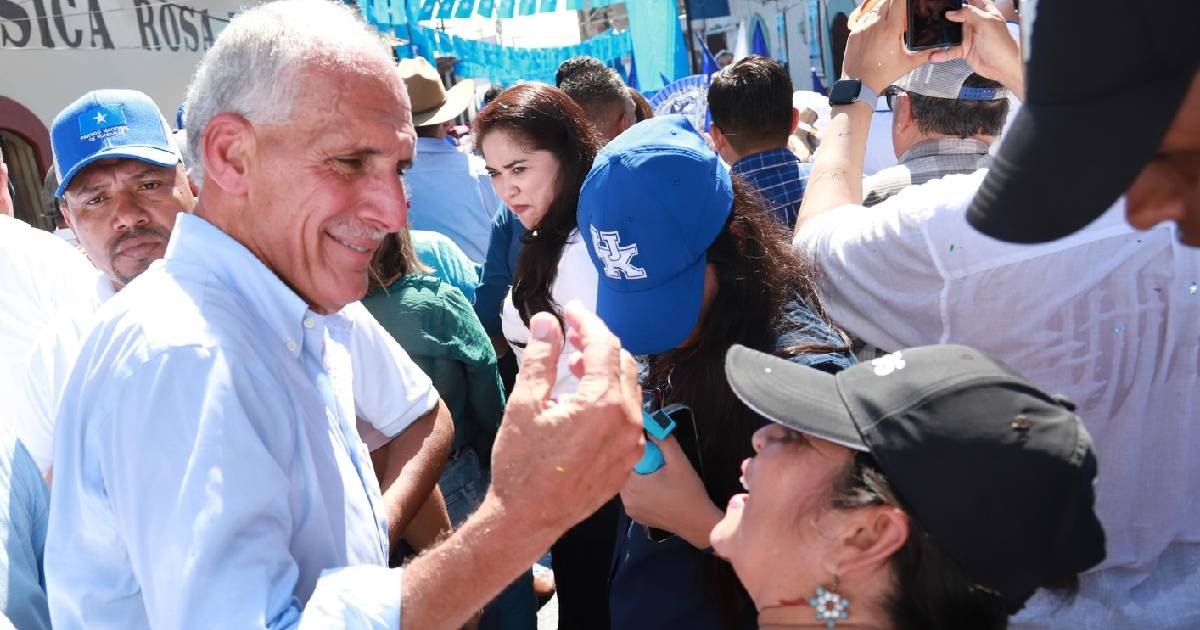
On Saturday, eight nations from Latin America and the Caribbean firmly rejected President Xiomara Castro's decree for a total vote recount in Honduras, reaffirming their support for Nasry Asfura as the elected leader following the November 30 elections.
In a joint statement released on January 10, the governments of Argentina, Bolivia, Costa Rica, Ecuador, Guatemala, Paraguay, Peru, and the Dominican Republic voiced their "strong rejection" of Castro's decree, arguing that it undermines the authority of the National Electoral Council (CNE) and damages the democratic framework of the nation.
The signatory states also condemned the violent acts against opposition members reported last Thursday and denounced any political violence aimed at altering the outcome of the elections.
In this context, they reiterated their recognition of the proclamation issued by the competent electoral body, which declared Asfura as the president-elect of Honduras, following elections validated by international observation missions.
The statement emphasizes that these observers verified the free expression of millions of Hondurans during the November 30 elections.
Furthermore, the governments urged all political forces in Honduras to respect democratic order, ensure a peaceful transition, and prioritize dialogue, expressing confidence that the Honduran people will uphold the values of freedom and democracy.
This regional declaration comes amid escalating political tensions in Honduras after Castro defended Legislative Decree No. 58-2025, passed by 69 deputies, ordering the CNE to conduct a general recount of votes and records.
The president accused the electoral body of refusing to review 4,774 records, representing the votes of more than 1.5 million citizens, and of leaving 292 challenges unresolved due to alleged irregularities.
However, with 97% of the votes counted, the CNE still places Asfura in the lead with 40.5%, followed closely by Salvador Nasralla with 39.1%, a difference of about 40,000 votes.
In contrast, the official candidate Rixi Moncada finished third with 19.3%, after which Castro declared the elections "null" and supported calls for protests and mobilizations.
The crisis has been exacerbated by episodes of violence, including an explosive device attack that injured opposition lawmaker Gladis Aurora López in the National Congress.
While the Organization of American States (OAS) has urged for a faster vote count to reduce uncertainty, governments like that of the United States have called for respect for the results. In contrast, regional allies of Castro, such as Venezuela and Nicaragua, have supported her fraud claims.
Key Questions on Honduras' Political Situation
Why did Latin American countries reject Xiomara Castro's decree?
They believe the decree undermines the authority of the National Electoral Council and threatens the country's democratic institutions.
What actions have been condemned by these countries?
The countries condemned acts of violence against opposition members and political violence intended to alter the electoral results.
What is the current status of the election results in Honduras?
With 97% of votes counted, Nasry Asfura leads with 40.5%, followed by Salvador Nasralla at 39.1%.