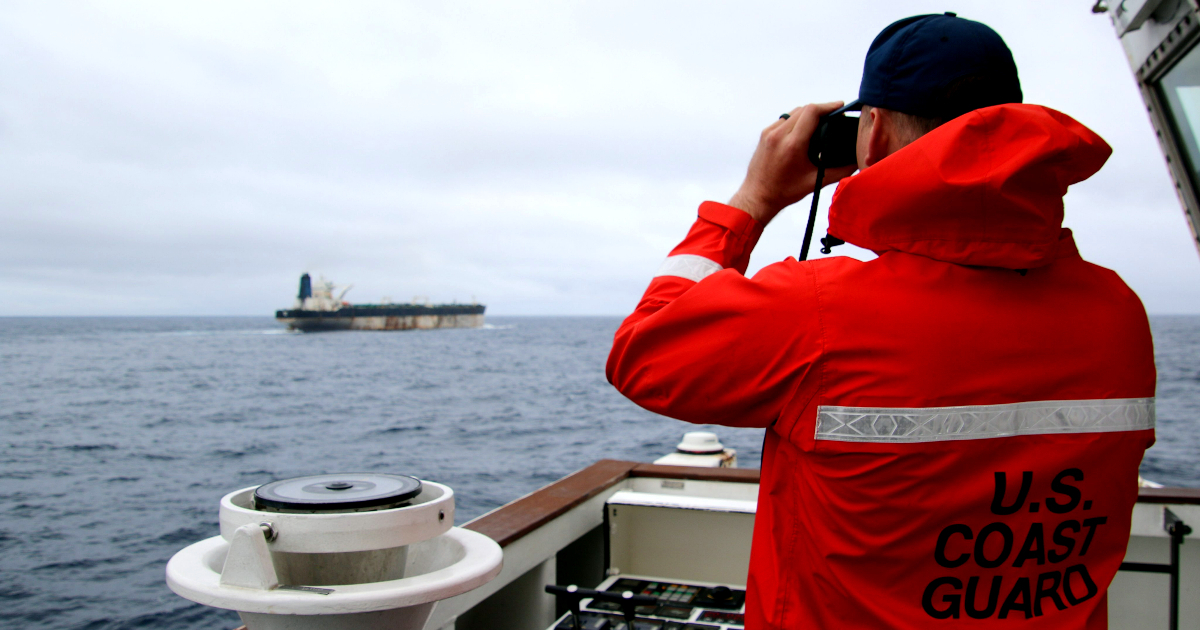
Recent satellite images have uncovered that at least 11 oil tankers, sanctioned by the United States, have successfully departed Venezuelan waters, circumventing the maritime blockade implemented by the Trump administration. These vessels are transporting millions of barrels of crude oil.
An investigation by The Washington Post disclosed that six of these ships were detected in the Caribbean Sea, more than 70 miles (130 kilometers) from the Venezuelan coast. Meanwhile, three others ventured over 450 miles (833 kilometers) into the Atlantic Ocean.
One of the tankers was seized on Friday in the Caribbean, while another was spotted off the coast of Grenada, and an eleventh near Colombia, the latter having recently changed to fly the Russian flag.
This fleet is part of a group of 16 sanctioned oil tankers that were initially seen near Venezuelan ports following the blockade's commencement in December but have since vanished from public tracking systems.
Most of these ships were transporting crude oil, with a combined cargo estimated at 9.4 million barrels, according to the independent firm TankerTrackers.com, which collaborated with academic experts on the satellite analysis.
Three of the tankers that ventured deeper into the Atlantic—Verónica III, Bertha, and Aquila II—are under sanctions related to Iran and Russia, as per the U.S. Treasury's Office of Foreign Assets Control.
An additional analysis indicated that a U.S. Navy vessel, possibly the missile cruiser USS Lake Erie, might have been shadowing some of these tankers from a distance, though officials have not confirmed the ship's identity or location.
Trump administration officials have described the blockade, referred to as a "quarantine," as a pivotal strategy to exert pressure on the Venezuelan government led by Delcy Rodríguez, following the detention of Nicolás Maduro.
Secretary of State Marco Rubio stated that the measure provides the United States with "the greatest possible leverage" over Caracas.
However, energy analysts consulted by the Post noted that the apparent success of multiple tankers in evading the blockade raises questions about the blockade's actual effectiveness.
Experts warned that while the primary goal is to deter through seizures and shows of force, enforcing a completely airtight blockade is exceedingly challenging.
Meanwhile, U.S. forces have ramped up interdictions. This week, two additional tankers were seized, including the Sophia in the Caribbean and the Russian-flagged Marinera, after a lengthy pursuit in the Atlantic.
Moscow condemned the latter action, accusing Washington of violating international maritime law.
Key Questions on the U.S. Blockade and Sanctioned Tankers
What was the main goal of the U.S. blockade on Venezuelan oil tankers?
The primary goal of the U.S. blockade was to exert pressure on the Venezuelan government and restrict its oil exports, which are a crucial source of revenue.
How many oil tankers were initially sanctioned by the U.S.?
The United States initially sanctioned a group of 16 oil tankers associated with Venezuelan oil exports.
What challenges do U.S. forces face in maintaining the blockade?
U.S. forces face significant challenges in maintaining an airtight blockade, as it is extremely difficult to monitor and intercept every sanctioned vessel without gaps.