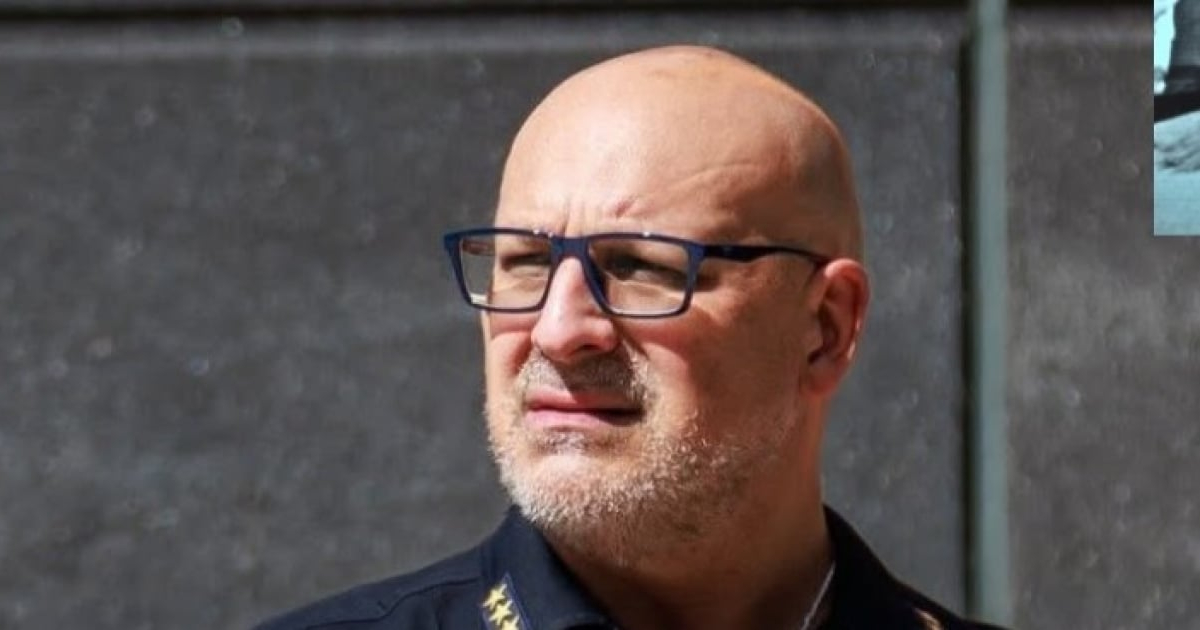
Manuel A. Morales, the Chief of Police in Miami, issued a direct appeal to Cuban law enforcement, urging them to prioritize community welfare and stand with citizens in their quest for freedom.
In an interview with CubaNet, Morales asserted that "change is coming" and emphasized the critical juncture facing officers on the island.
"Here's a brief message to the police forces in Cuba. If you're unaware, know that police officers in Venezuela are laying down their weapons and joining the people in their call for freedom. Similarly, officers in Iran have done the same," Morales stated at the beginning of his address.
"It's your turn now, before it's too late," he urged.
Morales highlighted that many Cuban officers are aware of the moral dilemmas they encounter daily. "In Cuba, there are police officers who know deep down that their actions are wrong, and they struggle every day to balance their moral compass that tells them, 'I'm here to serve the community, but the government and the regime demand otherwise,'" he explained.
As the son of Cuban parents, Morales painted a picture of internal tensions between the duty to serve and the demands of the state apparatus.
He noted that while some abuse their power, others strive to find a middle ground, attempting to reconcile the conflicting pressures. Morales believes identifying those seeking balance is crucial for any transformation.
He reiterated that transformation is inevitable: "Change is coming. Whether the government likes it or not, change is coming."
In this context, he urged agents to do "what is right" and prioritize community welfare over the regime's desires in the event of U.S. intervention.
"I look forward to seeing you soon under a new flag of a free Cuba. God bless you," Morales concluded.
His speech was shared alongside footage depicting repressive actions by Cuban police and Ministry of Interior members, paired with clips of Miguel Díaz-Canel labeling public protests as vandalism, despite videos showing popular grievances, particularly related to power outages.
Morales's comments are part of a series of statements he has made since at least last year. In an April interview with CubaNet, he suggested that the regime's downfall could begin with a courageous act by police officers, whom he sees as potentially pivotal in sparking democratic change on the island.
During that interview, he drew parallels with historical authoritarian regimes, highlighting that while the police are often tools of control, they can also be catalysts for transformation.
The police have a critical role in any society. If a Cuban officer today looks within and acknowledges wrongdoing, deciding to change, it could inspire others," he said then.
He believes that a single act of courage could trigger a broader breakdown within power structures. If the police distance themselves from repression, the military might follow, as no oppressive regime can survive without its coercive forces' support.
Morales also advocates for a community policing model as an alternative to a repressive approach.
In this model, the police serve not only as security enforcers but also as bridges between the government and citizens, fostering trust and community closeness. Morales argues that this model should be integral to future police restructuring in Cuba.
Leading a department of over 1,300 officers in Miami, Morales noted that the Cuban-American composition of his force could play a role in training new generations of Cuban police officers.
"Sixty percent of our officers are Latino, and most are Cuban-American. I believe we would be the perfect department to train a new police force in Cuba," he mentioned in previous remarks.
He also referred to the "Lucifer Effect," a psychological study showing how authoritarian environments can corrupt individual behavior, even among those with a strong ethical foundation.
In Cuba's case, he contends that while many officers have been shaped by a repressive system, a change in consciousness can swiftly alter the dynamic.
"Change doesn't come through force; it comes through reflection and awareness," he has emphasized.
For Morales, an officer prioritizing public protection over repression could spark a new political and human chapter for Cuba.
FAQs on Cuban Police Transformation and Change
What message did Miami Police Chief Manuel A. Morales send to Cuban police?
Manuel A. Morales urged Cuban officers to prioritize community welfare and join citizens in their call for freedom, emphasizing that change is inevitable.
How does Morales view the role of Cuban police in potential regime change?
Morales believes Cuban police could be pivotal in initiating democratic change, drawing parallels with officers in other authoritarian regimes who have sided with the public.
What is the "Lucifer Effect" in the context of Cuban police?
The "Lucifer Effect" refers to how authoritarian environments can corrupt behavior, even among ethical individuals. Morales suggests that a change in consciousness among Cuban officers could shift current dynamics.