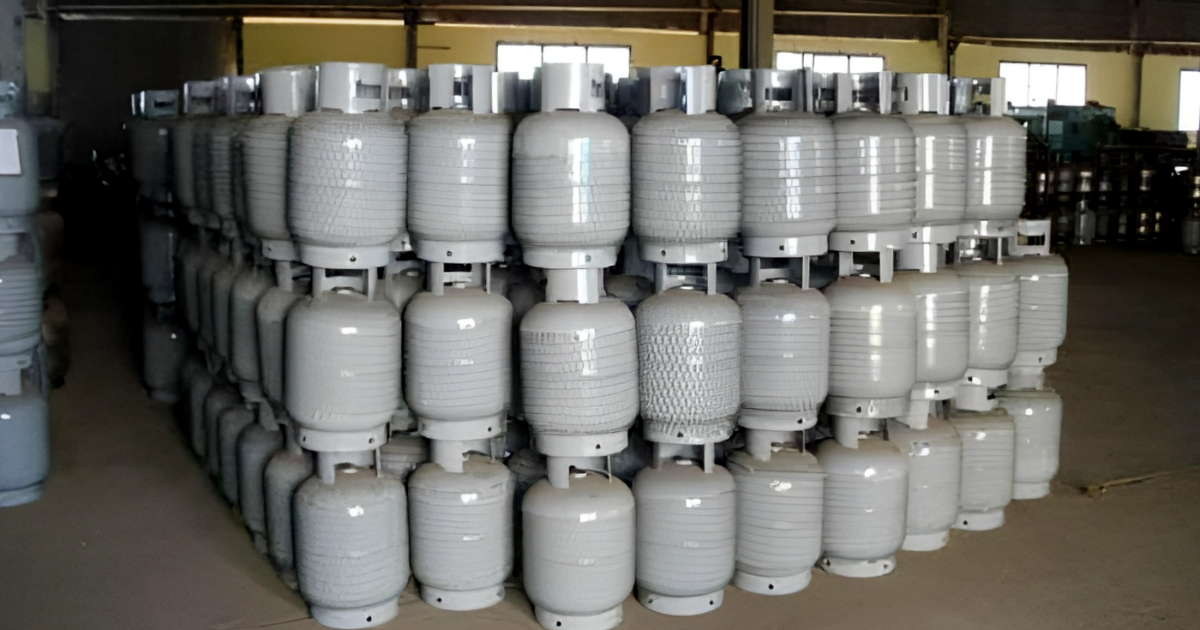
The state-run company Cubapetróleo (CUPET) has indefinitely halted the distribution of liquefied gas in Santiago de Cuba and other eastern provinces due to a supply shortage, further deepening the island's ongoing energy crisis.
As reported by Martí Noticias, local sources indicate that the gas is currently on a vessel from Russia, yet authorities admit that the unloading and distribution process "will take time" without providing a clear timeline for resuming service.
This suspension has led to skyrocketing prices in the informal market, where a domestic gas cylinder costs between 10,000 and 12,000 Cuban pesos in rural areas and up to 50,000 pesos in eastern cities, with bulk gas exceeding 30,000 pesos. For many families, these prices are simply unaffordable.
Due to the scarcity, thousands of households have reverted to cooking with wood or charcoal, even in urban areas. The most affected include the elderly, the sick, and mothers with young children, who lack alternative means to prepare food or boil water.
The issue extends beyond the east. Residents in central provinces such as Camagüey and Ciego de Ávila have gone weeks without receiving liquefied gas, while supplies in some western areas are also dwindling.
Activists and residents describe the situation as a social regression, with families lighting makeshift stoves in yards and porches, reminiscent of the harshest years of the Special Period.
The stoppage of liquefied gas distribution adds to the prolonged blackouts and fuel shortages that already impact production, transportation, and public services.
The crisis worsens amidst a slowdown in energy imports from Venezuela, Russia, and Iran, following the capture of Nicolás Maduro and the launch of Operation Southern Spear, through which the United States has seized several tankers from the so-called "ghost fleets" transporting oil and fuels to Cuba and allied countries.
Without these regular shipments of crude oil and derivatives, the Cuban regime faces an unprecedented energy shortfall, with the population bearing the brunt in their daily lives.
In Santiago de Cuba, where the suspension has been officially confirmed, residents are demanding the government provide a realistic schedule and emergency measures to prevent the energy crisis from spiraling into a large-scale humanitarian disaster.
Key Questions about Cuba's Energy Crisis
What is causing the current energy crisis in Cuba?
The energy crisis in Cuba is primarily due to shortages in liquefied gas and reduced energy imports from countries like Venezuela, Russia, and Iran. The situation is compounded by U.S. operations seizing oil shipments to Cuba.
How are Cuban families coping with the gas shortage?
Many Cuban families have reverted to cooking with wood or charcoal due to the gas shortage, even in urban areas. This situation is particularly challenging for vulnerable groups like the elderly and families with young children.
What impact does the energy crisis have on Cuba's economy?
The energy crisis severely affects Cuba's economy by disrupting production, transportation, and essential public services due to prolonged blackouts and fuel shortages.