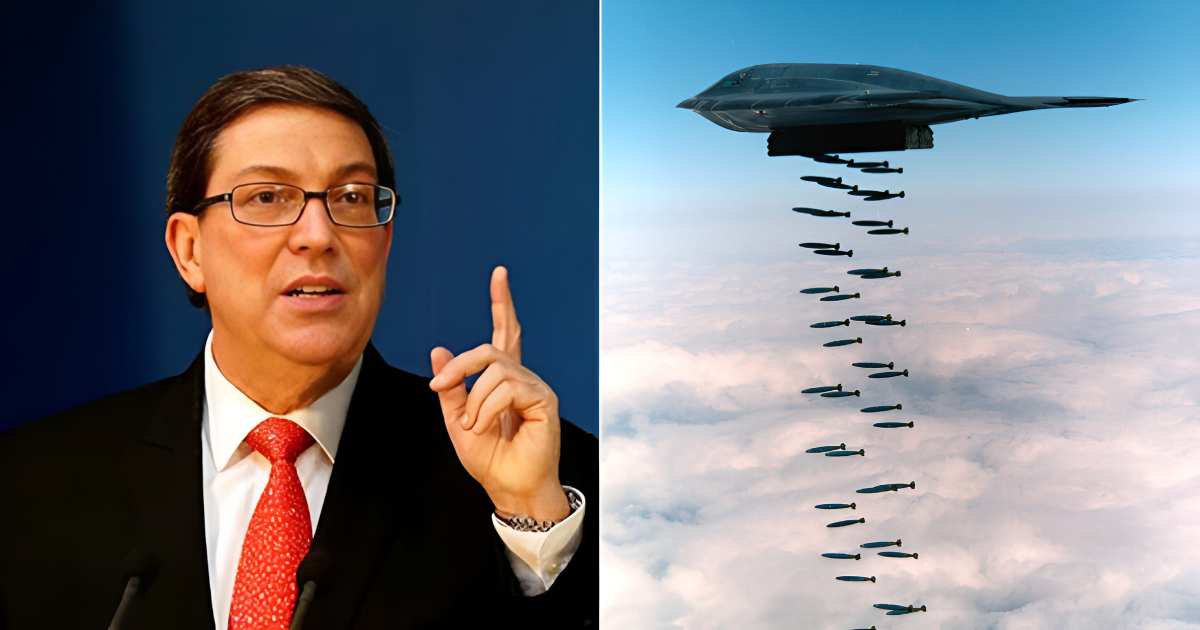
Amidst the geopolitical turmoil resulting from U.S. involvement in Venezuela and the collapse of traditional alliances within the Chavista-Castro axis, Havana's regime has declared its unwavering stance to the United States, stating: "We will not yield, we will defend Cuba."
The Cuban Ministry of Foreign Affairs issued a statement on Bruno Rodríguez Parrilla's official account, demanding respect for Cuba's sovereignty and accusing Washington of decades of aggression towards the island.
"The U.S. seeks to impose its will over the rights of sovereign nations and has been using force and aggression against Cuba for 67 years... We will defend Cuba. Those who know us understand that this is a firm, categorical, and demonstrated commitment," wrote the Cuban foreign minister on X.
He pointed out, "On their side is the overwhelming military power and the vastness of their economy, along with extensive experience in aggression and crimes. On our side are reason, International Law, and the patriotic spirit of our people."
The regime's statement coincides with the unannounced visit of Bruno Rodríguez Parrilla to Venezuela, where he reportedly went to honor and pay tribute to Cubans who died defending Nicolás Maduro's government during the U.S. military intervention on January 3, 2026.
The Cuban diplomat's trip is interpreted as a symbolic gesture of solidarity with Caracas and an attempt to strengthen the ideological ties that bind both regimes, despite the interruption of Venezuela's traditional oil support which has left Cuba's economy increasingly precarious.
The official Cuban rhetoric unfolds amidst heightened tensions with Washington, following the U.S. military operation that captured Venezuelan leader Nicolás Maduro, causing unease in Havana.
The same coup resulted in the deaths of at least 32 Cuban citizens, fueling the Cuban regime's accusations against the U.S. government.
The island's economy—already fragile due to years of crisis, blackouts, and shortages—faces even greater uncertainty with the loss of Venezuela's energy backing.
The Cuban regime has leveraged the situation to bolster its historical narrative of resistance against the United States, recalling the prolonged embargo and various bilateral tensions.
Meanwhile, Washington ramps up its rhetoric, asserting that Cuba is on the brink of collapse, with the regime's downfall imminent once Venezuelan support ceases.
Key Questions about Cuba-U.S. Relations
What are the main accusations from Cuba against the United States?
Cuba accuses the United States of decades-long aggression and attempts to impose its will over the rights of sovereign nations, citing a history of force and intervention.
How has the loss of Venezuelan support affected Cuba?
The interruption of Venezuelan oil support has further strained Cuba's already fragile economy, leading to increased uncertainty and hardship on the island.
What is the significance of Bruno Rodríguez Parrilla's visit to Venezuela?
The visit is seen as a symbolic gesture of solidarity with Venezuela and an effort to reinforce the ideological connections between the two regimes.