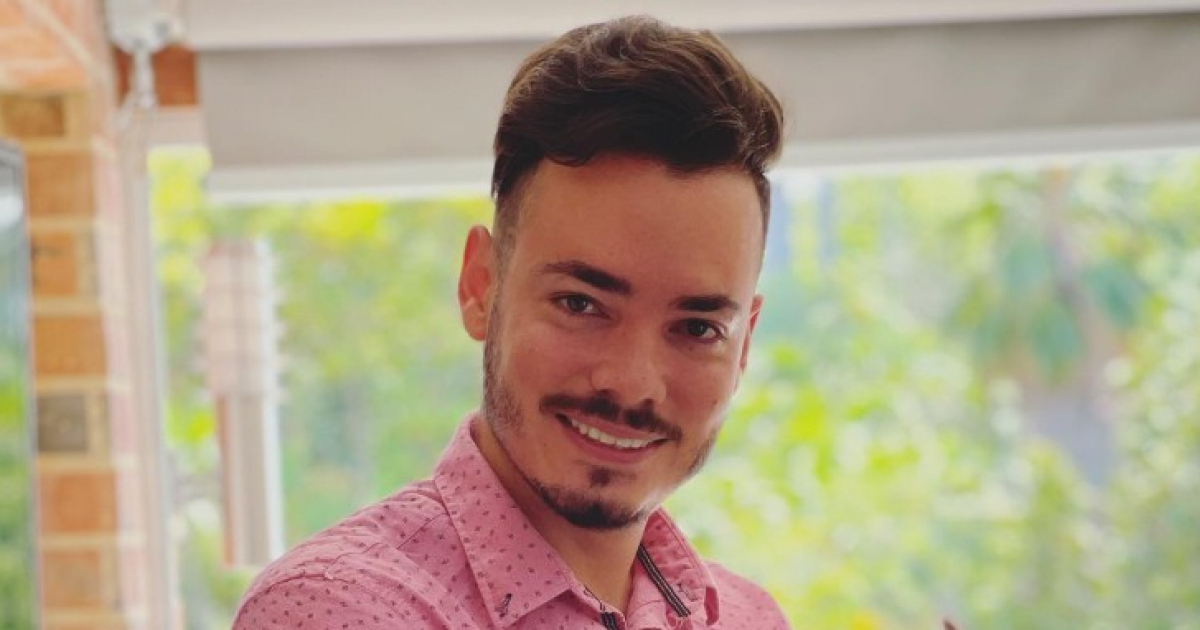
Sandro Castro, the grandson of the late dictator Fidel Castro, stirred controversy once again in Cuba with a provocative Instagram post.
In the image, the leisure entrepreneur is seen holding a Cristal beer, gazing at it with a mocking caption: "When I'm with you, I forget that Díaz-Canel is president."
This represents the most direct jab he has taken at the Cuban leader, making him the explicit target of his sarcasm.
The timing of this comment is particularly significant, emerging during a period of immense vulnerability for the Cuban regime.
Following the downfall of Nicolás Maduro in Venezuela and with then-U.S. President Donald Trump turning his attention to Havana, the dictatorship faces one of its most precarious political situations.
In this context, Sandro's mockery is viewed by many as more than a trivial taunt—it's seen as an attempt by someone close to the power to distance himself as the system crumbles.
As the old maritime saying goes: "When the ship sinks, the rats are the first to leave."
Sandro Castro: A Serial Mockery of Díaz-Canel
Díaz-Canel has frequently been the subject of Sandro Castro's jests.
Last December, he sparked controversy by replying to a follower on Instagram with, "I prefer Cristachhh over lemonade," alluding to Díaz-Canel's infamous 2020 statement that "lemonade is the foundation of everything."
This post reignited discussions about the privileges of those connected to power, who can mock the president openly without repercussions.
In October, Fidel's grandson released a video parodying the daily hardships faced by Cubans.
He was shown digging a symbolic hole, uncovering essential goods—chicken, oil, powdered milk, and lemons—alongside a sex toy, mocking shortages, inflation, and blackouts.
In a much-discussed moment, upon finding lemons, he declared, "I knew the foundation of everything couldn't be missing: some lemons for a fresh lemonade," a clear nod to the Cuban leader.
Through his posts, Sandro Castro has showcased the immunity his last name affords him.
While independent journalists and human rights activists face fines, arrests, or imprisonment for criticizing Cuba's reality, Fidel's grandson publicly mocks the leader without visible consequences, highlighting the island's double standards.
In July, he took another swipe in a video where, holding a Cristal beer, he said, "What does one blackout say to the other? We are continuity!" referencing Díaz-Canel's official slogan.
The post circulated as much of the country endured prolonged power outages, serving as another indirect critique of the regime's narrative.
In June, Sandro "liked" a comment that directly mocked the leader, which many followers interpreted as a sign of disapproval towards Díaz-Canel or support for criticisms of the president.
These actions paint an awkward picture for both the leader and Sandro Castro himself.
On one hand, they expose Díaz-Canel's diminishing symbolic authority, even among the heirs of the Castro legacy; on the other, they reveal the cynicism of an elite that jokes about the country's collapse while millions of Cubans face blackouts, shortages, and repression.
The image of Fidel's grandson toasting with a Cristal and forgetting Díaz-Canel is the leader not only ridicules him: it also highlights the disconnect of the ruling elite from the country's daily tragedy, at a time when the regime is more unstable than ever.
Understanding the Context of Sandro Castro's Mockery
Why is Sandro Castro's mockery significant?
Sandro Castro's mockery is significant because it comes from someone with close ties to the regime, highlighting a possible shift in allegiance or at least a public display of discontent with Díaz-Canel's leadership during a sensitive political period.
How does Sandro Castro's behavior reflect on the Cuban regime?
His behavior underscores a perceived double standard within Cuba, where those with connections can mock leadership without repercussions, contrasting sharply with the repression faced by ordinary citizens and activists.
What impact does Sandro Castro's satire have on public perception?
His satire can erode the perceived authority of the regime by publicly challenging its figurehead, potentially encouraging others to voice dissent or question the leadership's legitimacy.