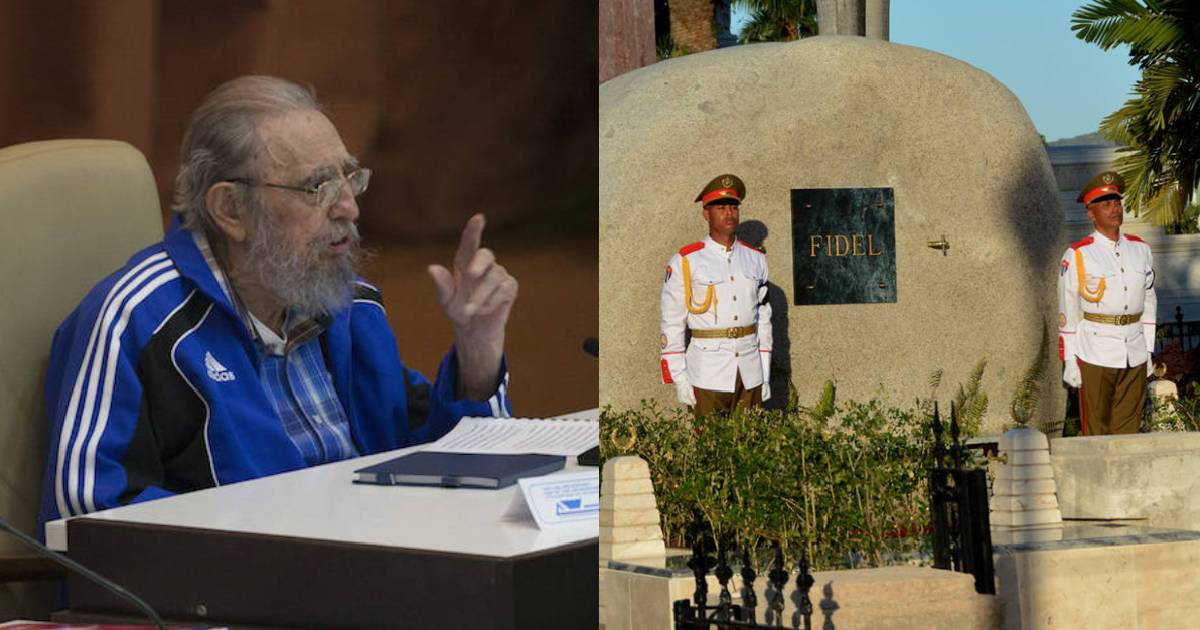
As we approach 67 years since the dictator Fidel Castro (1926-2016) triumphantly entered Havana, the American publication Americas Quarterly is questioning whether the year 2026 might signify the conclusion of the political era that Cuba has imposed on Latin America for more than fifty years.
On January 8, 1959, Castro led the so-called Freedom Caravan into Cuba's capital, declaring the victory of the revolution and the onset of a new political order.
This moment marked the beginning of a power cycle that not only affected Cuba but also had a profound influence on countries like Venezuela and Nicaragua, as well as on numerous generations of left-wing leaders across the region.
Although Castro passed away in 2016, the article suggests that the political era he personified might only now be coming to an end.
The Decline of the Castro-Inspired Model
Even before the recent capture of Nicolás Maduro and his extradition to the United States, Cuba's economic and political model was showing signs of fatigue, characterized by authoritarianism, extreme state control, and a staunch opposition to capitalism.
The Venezuelan collapse is central to this analysis. The country has lost 75% of its GDP, and more than eight million people have emigrated in the past decade, starkly revealing to the continent the consequences of the Castro-Chavist model.
The everyday experiences of impoverished Venezuelan professionals migrating to other countries have had a more significant political impact than decades of external criticism.
The public's perception reflects this discredit. According to Latinobarómetro data, Maduro is the most unpopular leader in Latin America, far surpassing any other figure.
Cuba's Situation Amidst a Regional Shift
Meanwhile, in Cuba, persistent blackouts, food shortages, and the exodus of up to one-fifth of the population since 2020 have deepened the crisis within the system inherited by Miguel Díaz-Canel.
The article highlights that while left-leaning governments remain in the region, none seem inclined to replicate the Cuban-Venezuelan model.
Leaders such as Luis Inácio "Lula" da Silva, Claudia Sheinbaum, and Gabriel Boric have opted for strategies combining social policies with open economies, and in some cases, openly criticize the abuses committed in Venezuela.
The Uncertain Future of Castro's Legacy
Nevertheless, Americas Quarterly warns that the end of this era is not guaranteed. Latin American history has shown these systems' resilience and ability to adapt, suggesting that failed economic ideas might resurface under new leaderships.
Despite this, the piece concludes that the cycle initiated in 1959 might be nearing its conclusion, eroded by its own results and an increasingly visible regional rejection.
It's hard to ignore the paradox, as the Cuban government has declared 2026 the Year of the Centennial of the Commander in Chief Fidel Castro. Yet, the political legacy they aim to symbolically enshrine is at its most discredited and fragile point, both inside and outside the island.
This institutional homage coincides not with a reaffirmation of the historical project but rather its profound questioning, highlighted by the country's structural crisis, the loss of strategic allies, and a growing regional distaste for the model Castro championed for over half a century.
A recent survey by CiberCuba revealed that a majority of 62% believe the Cuban regime might collapse in 2026, amidst the regional climate following the U.S. military actions to capture Maduro.
Is the Castro Era Ending?
What marked the beginning of Fidel Castro's political era?
Fidel Castro's political era began with his entrance into Havana on January 8, 1959, leading the Freedom Caravan and proclaiming the revolution's victory.
How has the Venezuelan collapse affected the perception of the Castro-Chavist model?
The collapse, marked by a 75% GDP loss and mass emigration, has starkly exposed the model's failures to the continent, affecting political perceptions more than external criticisms.
What challenges does the Cuban model face today?
Cuba is dealing with blackouts, food shortages, and a significant population exodus, deepening the crisis inherited by Miguel Díaz-Canel.