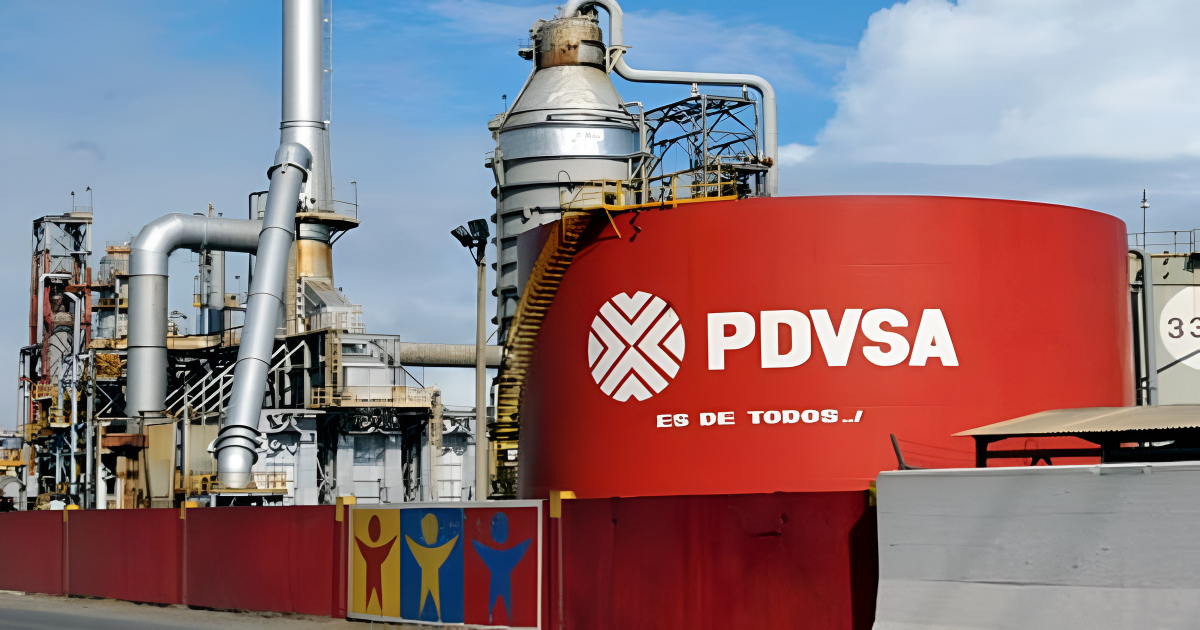
President Donald J. Trump of the United States announced on Friday a substantial $100 billion investment aimed at rebuilding Venezuela's oil infrastructure, marking a new phase of collaboration between the two nations following the capture of Nicolás Maduro.
In a statement on his social media platform, Truth Social, Trump applauded the release of “a large number of political prisoners” in Venezuela, describing it as “a very significant and smart gesture.” He further stated that Washington and Caracas are “working well together, particularly in reconstructing and modernizing their oil and gas infrastructure in a much bigger and better way.”
The president confirmed that leading global oil companies would invest “at least $100 billion” in Venezuela. He also mentioned that a meeting with energy sector executives at the White House was scheduled for Friday to coordinate the energy reconstruction efforts. Trump noted that a second wave of military strikes against Venezuela had been called off, though he emphasized that “all ships will remain in position for security reasons.”
U.S. Oversight of Venezuelan Oil
In an interview with Fox News, Trump stated that his administration would “take charge of Venezuela's oil” to stabilize the economy and ensure that the revenue is “managed for the benefit of the Venezuelan people.”
Energy Secretary Chris Wright elaborated that the funds generated from oil sales would be placed in accounts under U.S. supervision. Secretary of State Marco Rubio outlined a three-phase plan — stabilization, recovery, and transition — to reorganize the oil industry and prevent an internal collapse.
On January 7, Petróleos de Venezuela S.A. (PDVSA) officially confirmed ongoing negotiations with the U.S. government for crude oil sales, describing the process as “based on legality, transparency, and mutual benefit.” The state-owned company indicated that operations are conducted “under similar arrangements as those with international companies like Chevron,” according to a statement from Caracas.
Reports on Friday also revealed that fourteen major energy corporations are participating in the summit convened by Trump at the White House to coordinate the reconstruction of Venezuela's oil system.
A New Era After Maduro's Fall
The energy agreement comes less than a week after Nicolás Maduro and his wife were detained in Caracas during a U.S. military operation. Following this, Vice President Delcy Rodríguez assumed the role of interim president, with Chavista institutions operating under Washington's supervision.
The bilateral plan aims to stabilize Venezuela's economy, revitalize its production capacity, and prevent an internal collapse. Analysts believe that control over oil resources redefines the balance of power within the country and marks a new direction in relations with the United States.
Political Gesture and Transition
Trump highlighted the release of political prisoners and the closure of the notorious detention center known as El Helicoide, which he referred to as “a torture chamber in the heart of Caracas now being shut down,” according to statements released on Friday.
Jorge Rodríguez, President of the National Assembly, confirmed the release of a significant number of individuals, calling it “an act for national peace.” The Democratic Unity Platform praised the move as progress but demanded the “release of all political prisoners and an end to repression.”
Alfredo Romero, director of Foro Penal, remarked that “a general amnesty for the freedom of political prisoners would be a crucial step towards unifying the Venezuelan population, without assuring impunity for crimes against humanity.”
Additionally, Trump announced an upcoming meeting with opposition leader María Corina Machado, Nobel Peace Prize laureate, who dedicated her award to him.
The new energy and political framework between Washington and Caracas signifies a profound shift from past policies of sanctions and isolation. With the cancellation of military offensives, the release of prisoners, and the opening of large-scale investments, the bilateral relationship enters a phase centered on economic reconstruction, political stability, and regional security.
Key Aspects of the Venezuela-U.S. Oil Collaboration
What is the significance of the $100 billion investment in Venezuela's oil sector?
The $100 billion investment aims to rebuild and modernize Venezuela's oil infrastructure, enhancing economic stability and fostering collaboration between Venezuela and the United States.
How will the U.S. oversee Venezuela's oil revenues?
The U.S. administration plans to manage Venezuela's oil revenues by depositing them into accounts under American supervision to ensure they benefit the Venezuelan people.
What changes have occurred in Venezuela following Maduro's detention?
After Maduro's detention, Vice President Delcy Rodríguez took over as interim president, with Venezuelan institutions operating under U.S. supervision, signaling a shift towards more collaborative relations.