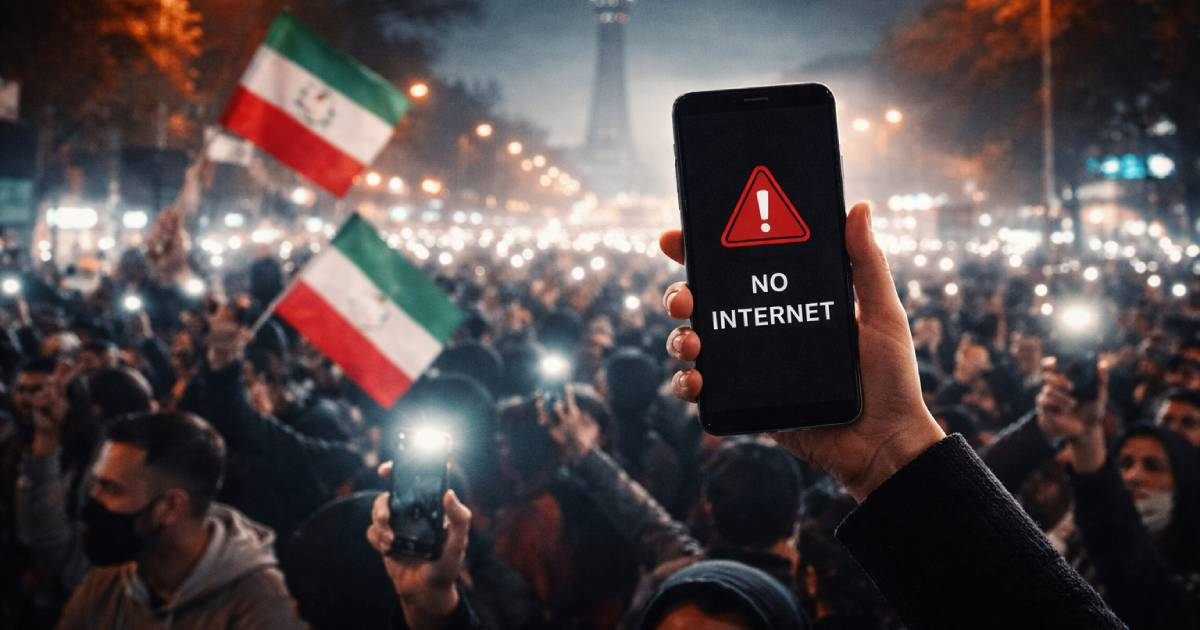
As demonstrations continue to spread across Iran, now entering their second week, the Iranian government took drastic measures on Thursday by severely limiting access to the global internet, essentially isolating the nation from the rest of the world, as reported by EFE.
By the afternoon, accessing websites hosted outside of Iran became virtually impossible. Even Virtual Private Networks (VPNs), critical tools for bypassing censorship and reaching blocked apps like WhatsApp or Telegram, were rendered ineffective.
This nationwide shutdown appears to be a calculated move to prevent images, videos, and firsthand accounts of the protests from reaching beyond Iran's borders.
NetBlocks, an organization that monitors internet censorship and traffic, warned on X about Iran's plunge into a "digital blackout" on a national scale, following a series of actions aimed at stifling the protests. The platform highlighted that these measures "impede" the right to communication at a crucial time for the Iranian people.
Additional reports on social media underscore the severity of the situation. The verified account SilverTrade claimed that the Islamic regime had completely shut down mobile internet access, citing Cloudflare Radar data showing Iranian IPv6 networks going entirely offline, cutting millions of users off from global connectivity as protests grew more intense.
Activist and analyst Noa Magid was even more direct on X, stating that the regime not only severed internet services but also disabled phone lines throughout the country. "Be their voice," she urged, encouraging others not to let the blackout erase what is happening inside Iran.
For Cubans, both within and outside the Island, this scenario is hauntingly familiar. Cutting internet access in response to social unrest is a well-known tactic: isolate, misinform, and buy time.
In Cuba, digital blackouts have accompanied key moments of protest, aiming to prevent the world from witnessing the reality when people take to the streets.
Impact of Iran's Internet Blackout: Key Questions Answered
Why did Iran cut off internet access during the protests?
Iran's government restricted internet access to prevent the dissemination of protest-related content, aiming to control the narrative and limit international attention.
How does Iran's digital blackout compare to Cuba's strategy during protests?
Both Iran and Cuba have used internet blackouts as a means to suppress dissent and control the flow of information during times of social unrest, isolating their populations from the global community.
What role does NetBlocks play in monitoring internet shutdowns?
NetBlocks is an organization that tracks internet censorship and disruptions, providing real-time data and analysis on the impact of these actions on communication and freedom of expression worldwide.